Determining whether electropolishing stainless steel tube is necessary depends on the application, required surface quality, and contamination-control standards. In high-purity sectors such as pharmaceuticals, biotechnology, and semiconductor processing, electropolishing helps reduce metallic contamination, improve surface cleanliness, and create a smoother internal finish that supports easier cleaning and lower particle retention. Standards such as ASTM A270 and ASME BPE may also influence the required surface condition. However, deciding when electropolishing is truly necessary involves more than meeting a target surface roughness value. Material grade, weld quality, process media, cleaning requirements, and inspection criteria all play an important role.
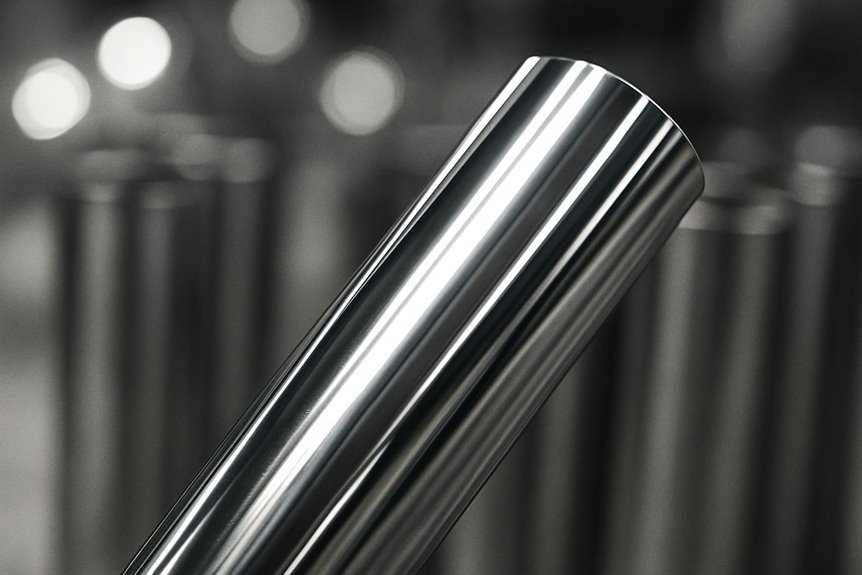
Electropolishing transforms the stainless steel tube's surface by acting as the anode in an electrolytic cell, where controlled current selectively removes microscopic surface high points. This process effectively reduces micro-roughness, eliminating mechanically disturbed surface material and embedded free iron.
Stainless steel tube electropolishing results in smoother shifts around microscopic peaks and valleys, enhancing surface cleanliness. The procedure facilitates the development of a favorable passive surface, essential for corrosion resistance. In high-chloride environments, selecting the proper stainless steel grade, such as 316L, helps reduce pitting corrosion risk after finishing.
Electropolished stainless steel tubing undergoes a meticulous sequence: pre-cleaning, electropolishing, rinsing, neutralization, final cleaning, drying, inspection, and clean packaging. For welded stainless steel mechanical tubing, ASTM A554 is a common reference specification covering dimensional and finish requirements. In hygiene-critical service, smooth, crevice-free surfaces support regulatory compliance by reducing areas where residues or microbes can accumulate.
A meticulous sequence ensures pristine electropolished stainless steel tubing: from pre-cleaning to inspection and clean packaging.
Poor rinsing or contamination post-process can negate the benefits, emphasizing the need for stringent control. Consequently, electropolishing offers a superior finish without adding a coating, ensuring ideal material performance. Regular cleaning and inspection help prevent surface corrosion that could compromise the tube after finishing. Scheduled visual inspections can also reveal early signs of residue, wear, or corrosion before they affect tube cleanliness or integrity.
Surface roughness plays an essential role in evaluating the quality of stainless steel tubing, yet focusing solely on Ra—an average measure of surface roughness—can be misleading.
While a lower Ra value can enhance cleanability, particle release, drainage, and resistance to product buildup, it does not encompass all aspects of surface quality.
Two electropolished stainless steel tubes with identical Ra values may differ markedly regarding pits, scratches, folds, and other defects.
In addition, Ra does not account for surface chemistry, contamination, or cleanliness after polishing.
Deposits, chlorides, and residual moisture can interfere with the passive oxide layer, making corrosion resistance dependent on more than surface profile alone.
For critical sanitary or high-purity tubing, Ra certificates and documented measurement methods help confirm that roughness requirements are consistent and traceable.
Thorough assessment involves visual inspections, treatment records, and cleanliness verification.
Compliance with ASTM A270 or ASME BPE can also help ensure sanitary stainless steel tubing meets documented requirements for cleanliness, materials, and fabrication quality.
Selecting non-toxic stainless grades that support cleanability standards can further reduce bacterial adhesion and help maintain hygienic performance.
Material Test Reports can further support traceability by documenting chemical analysis, mechanical properties, and compliance with required specifications.
Consequently, relying solely on Ra can overlook vital factors affecting the performance and integrity of the tubing.
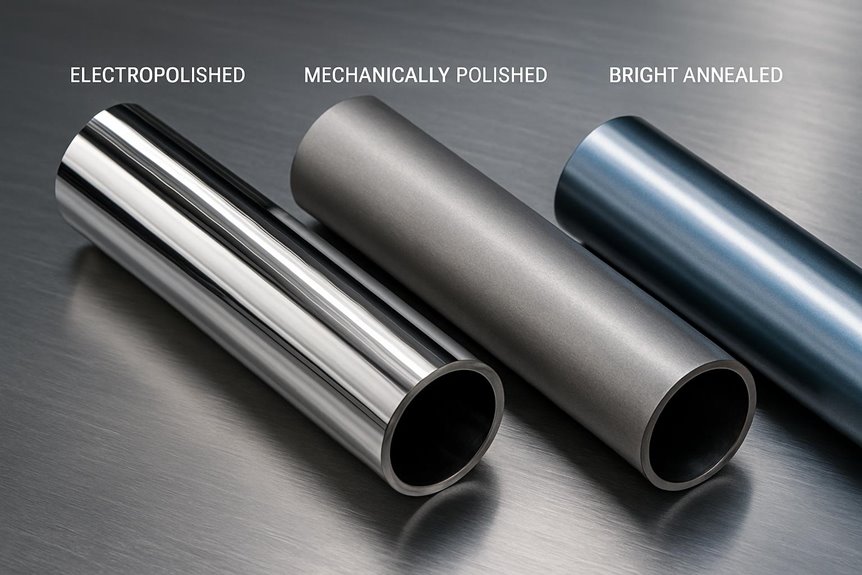
How does one determine the best finish for stainless steel tubing? The decision involves analyzing the production methods and strengths of each finish.
Bright annealed (BA) tubes achieve a clean, bright surface through controlled-atmosphere heat treatment but may not meet stringent roughness criteria.
Mechanically polished (MP) tubes use abrasive techniques for controlled smoothness, though they risk leaving directional markings or contamination. Proper quality control helps verify surface condition, dimensions, and compliance before a polishing method is selected.
Electropolished (EP) tubes, through electrochemical material removal, offer superior smoothness and cleanliness, albeit with higher costs and stricter process controls.
Bright annealed stainless steel tube is commonly produced to ASTM A269 and A249 standards, which define requirements for dimensions and mechanical properties.
It is essential to recognize that electropolishing often starts with a mechanically prepared or bright annealed surface, serving as a final treatment to enhance quality, not replace insufficient base-tube standards.
When evaluating the ideal finish for stainless steel tubing, it is important to distinguish between the processes of electropolishing and passivation, as they serve different purposes. Electropolishing removes a controlled layer of metal, enhancing the electropolished tube surface finish by reducing roughness and eliminating contaminants. In contrast, passivation chemically cleans the surface, fostering the passive oxide film without greatly altering surface topography. For sanitary or high-purity tubing, the specified Ra value is often used to verify that the internal surface is smooth enough to support effective cleaning and reduce contamination risk.
| Electropolishing | Passivation |
|---|---|
| Removes metal layer | No bulk metal removal |
| Reduces roughness | Minimal effect on roughness |
| Alters surface condition | Supports oxide film formation |
| Enhances surface finish | Primarily cleans surface |
| Can precede passivation | May follow electropolishing |
Unlike pickling, passivation cannot remove heavy scale or weld oxides, so heavily heat-tinted or scaled tubing may require a separate descaling step before final finishing. In chloride-rich or high-humidity service, even 304 stainless steel can develop pitting corrosion if contaminants remain on the surface. Surface finish selection should also account for cleanability and maintenance needs, since finishes such as satin finish offer a smooth, uniform sheen that is often easier to maintain. Regular maintenance protocols also help preserve surface integrity by preventing contaminant buildup and supporting long-term corrosion resistance.
Clarifying these differences guarantees precision in application and specification.
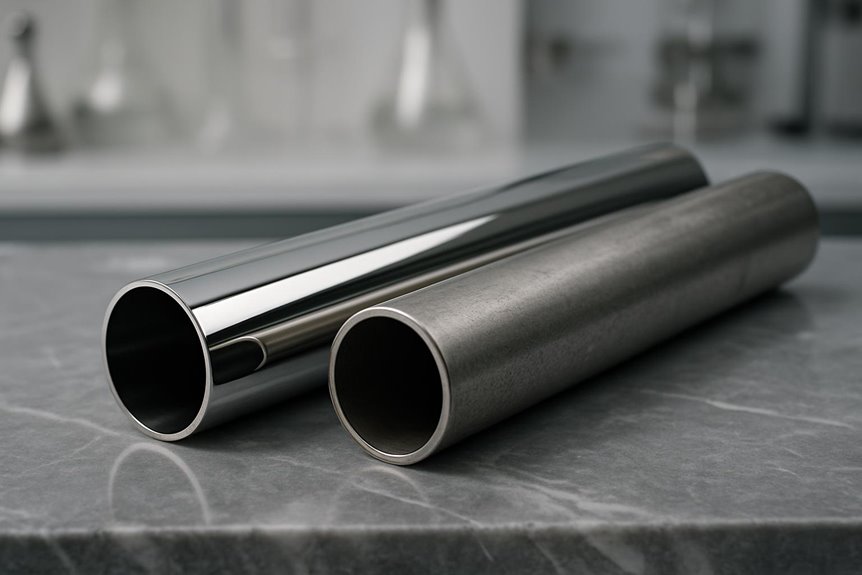
Why is electropolished tubing crucial in certain systems? Electropolishing stainless steel tube, including the 316L electropolished tube, is important when high performance is required.
Systems demanding product purity, such as pharmaceutical and biotech environments, benefit from its ability to minimize metallic contamination and residues. In applications where reliable cleaning is critical, the smooth, drainable surfaces of electropolished tubing support effective CIP/SIP processes. Its non-porous surface also helps resist bacterial adhesion, supporting contamination control in sterile processing environments.
For semiconductor gas systems, where particle control is paramount, the refined surface finish prevents unacceptable particle retention. Additionally, a high corrosion margin at the surface guarantees long-term durability in challenging environments. In food-contact systems, 304 stainless steel is also valued for corrosion resistance, durability, and easy sanitation.
The controlled internal finish, with a defined Ra value, is crucial for maintaining strict cleanliness standards in high-purity water and laboratory gas lines. In hygienic processing lines, tight dimensional tolerances and high-quality welds also help maintain cleanability and installation compatibility. Food and beverage facilities also rely on sanitary piping with smooth internal surfaces to support hygienic transfer, CIP/SIP cleaning, and contamination control. In medical applications, electropolished surfaces can help reduce bacterial adhesion and support sterilization requirements for medical stainless steel tubing.
316L stainless steel is a predominant choice for electropolished tubing due to its excellent general corrosion resistance and enhanced protection against localized corrosion, attributed to its molybdenum content.
Its low carbon content guarantees minimal carbide precipitation, making it ideal for welded systems which are common in high purity stainless steel tubing applications. Surface treatments such as passivation and electropolishing can further support corrosion resistance when the base alloy is compatible with the service environment.
This alloy is widely accepted in hygienic environments, important for sectors like pharmaceuticals and semiconductors requiring ep stainless steel tubing.
Relevant specifications such as ASTM A270 help define requirements for sanitary stainless steel tubing used in food, pharmaceutical, and other hygienic applications. A smooth surface finish can also reduce bacterial adhesion and improve cleanability in sanitary tubing systems.
While 304L may be used when process conditions allow, 316L's superior properties make it the preferred choice. ASTM requirements also define dimensional tolerances such as outer diameter and wall thickness, which help maintain fit and pressure integrity in tubing systems.
316L's superior properties make it the preferred choice, although 304L may suffice when conditions permit.
It is essential to select the correct grade, as electropolishing cannot offset an incompatible material. In welded tubing systems, 316L also helps reduce the risk of carbide precipitation that can compromise corrosion resistance near weld zones.
Establishing material compatibility is crucial before specifying the surface finish.
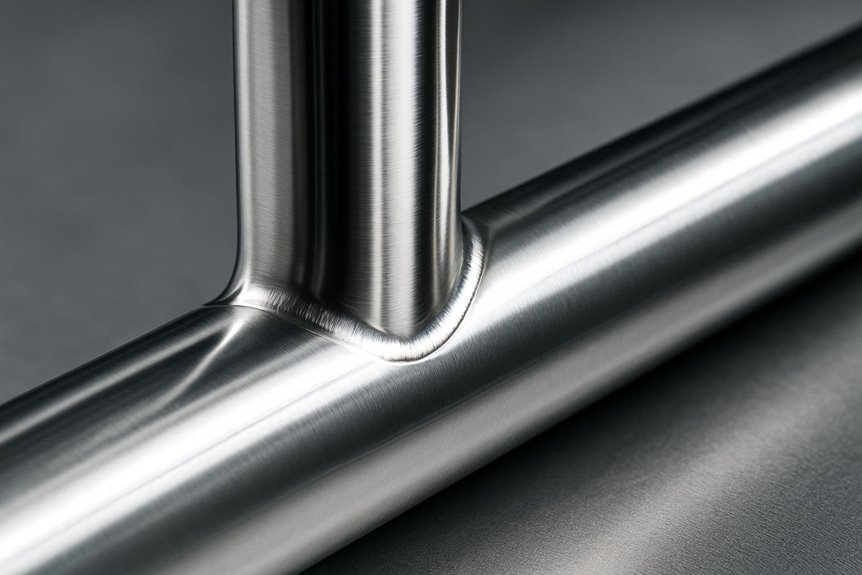
Ensuring the quality of the base tube and weld is critical before electropolishing. Sanitary electropolished tubing demands meticulous attention to the initial tube quality, as electropolishing cannot rectify fundamental defects such as deep scratches, weld undercuts, or poor geometry.
Dimensional consistency, controlled weld beads, and effective heat treatment are essential to prevent issues like excessive weld penetration and severe heat tint. Proper surface preparation and cleanliness are paramount, ensuring that contaminants do not compromise the electropolishing process. Thorough cleaning should include wire brushing, oil removal, and drying because base metal cleanliness directly affects weld and finish quality. Before finishing, effective heat management during welding helps prevent distortion and preserve material integrity.
For welded tubing, maintaining a precise longitudinal weld before reaching the electropolishing stage is crucial. Non-destructive methods such as x-ray examination can help identify structural flaws before final finishing. Material selection also matters because grades such as 316 stainless steel provide enhanced corrosion resistance in demanding environments. Post-weld verification may also include ultrasonic testing to detect hidden defects beneath the surface before electropolishing. This underscores electropolishing as an integral component of the manufacturing quality chain, not merely a post-production enhancement, ensuring optimal performance and surface integrity.
Standards and specifications for electropolished stainless steel tubing are critical to ensuring performance and compliance across various industries. ASTM A269 provides guidelines for seamless and welded austenitic stainless tubing for general service, while ASTM A270 caters to sanitary applications, highlighting hygienic requirements. ASTM A270 also defines chemical composition expectations for common austenitic grades such as 304 and 316, supporting corrosion resistance and hygienic performance.
ASME BPE outlines bioprocessing equipment norms, emphasizing surface conditions and finishing requisites. These standards are often integrated with project-specific requirements, which may include material grade, surface roughness (Ra), electropolishing specifics (ID-only or ID/OD), and additional criteria such as weld condition, cleaning procedures, and documentation. In food and beverage plants, electropolished tubing can support CIP systems by promoting smooth, hygienic circulation pathways for cleaning solutions.
For welded heat-exchanger or boiler tubing, ASTM A249 may also be relevant because it defines requirements such as material grade, dimensional tolerances, heat treatment, and testing, including hydrostatic testing. Sanitary tubing specifications may also require smooth, crevice-free interiors that help reduce contamination risk during hygienic fluid transport.
High-purity EP tube suppliers frequently combine ASTM and ASME BPE specifications, ensuring that "EP" is not treated as a standalone specification but as part of an extensive quality framework. This approach also supports consistency among manufacturers by aligning purchasing and inspection criteria with recognized stainless steel tube standards.
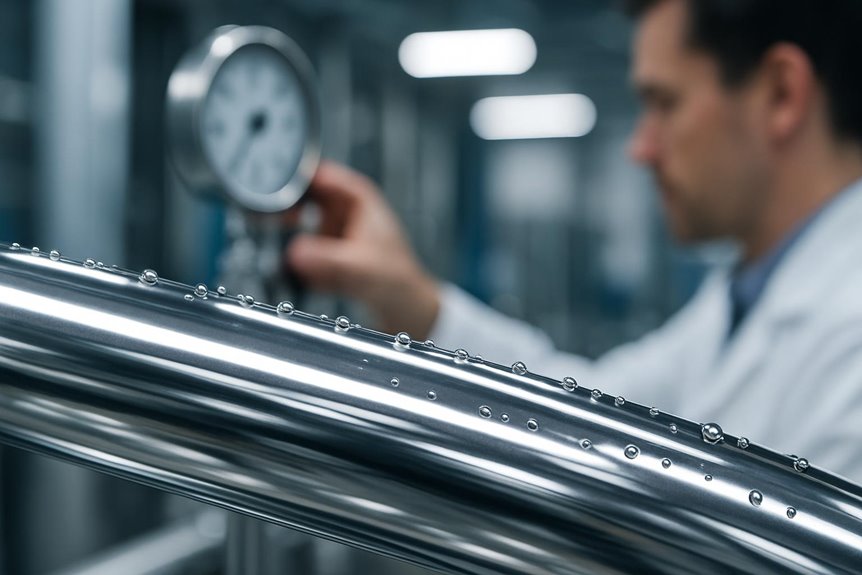
Verifying the quality of electropolished stainless steel tubing is paramount to maintaining stringent industry standards and guaranteeing peak performance. Critical aspects include confirming material grade and heat number, tube standard compliance, and final Ra values. Verification must cover the entire tube, including ID, OD, and weld zones. Surface checks for pits, scratches, and stains are essential. Documentation such as MTC, Ra reports, and inspection records must be meticulously reviewed. Additional inspections, like borescope analyses, are advised for thorough assessment. Complementary non-destructive testing methods can further confirm tube integrity and standards compliance without damaging the material. Use visual inspection as an initial check to identify surface-level defects before applying more advanced verification methods. Confirm that the selected stainless steel grade matches the service environment, since grades such as 304, 316, and 316L offer different levels of corrosion resistance. A properly finished surface also supports the passive layer, helping improve corrosion resistance and long-term tube performance.
After any chemical cleaning used during verification, thorough rinsing with deionized water helps remove residues that could leave mineral deposits or compromise corrosion resistance.
| Verification Item | Key Checkpoints |
|---|---|
| Material | Grade and heat number |
| Surface appearance | Pits, scratches, stains |
| Documentation | MTC, Ra report, inspection records |
Request actual surface roughness reports to guarantee authenticity and precision.
In industries where cleanliness reigns supreme, like pharmaceutical, semiconductor, and food processing, electropolished stainless steel tubing is the unsung hero. Its mirror-smooth surface deflects contamination, ensuring purity and efficiency in high-stakes environments.
Electropolishing enhances the durability of stainless steel tubes by removing surface imperfections and forming a thicker passive oxide layer. This process improves corrosion resistance, reduces contamination, and provides a smoother, brighter surface, ensuring longevity and reliability.
Electropolishing, the pinnacle of surface refinement, can indeed be applied to most stainless steel alloys, though effectiveness varies. Alloys like 304, 316, and 17-4 PH benefit most, achieving unparalleled smoothness and corrosion resistance.
Electropolishing stainless steel tubes increases costs due to specialized equipment, skilled labor, and stringent quality control. However, it enhances surface quality and corrosion resistance, offering long-term savings in maintenance and improved performance in demanding environments.
Electropolishing reduces environmental impact by decreasing chemical usage, minimizing waste, and enhancing material longevity. It lowers contaminant levels through precise electrochemical processes, aligning manufacturing practices with sustainability goals and improving overall efficiency in stainless steel production.
In high-performance environments, electropolishing of stainless steel tubes is indispensable. It minimizes contamination, enhances cleanliness, and guarantees smooth, drainable surfaces, vital for compliance with standards like ASTM A270 and ASME BPE. Why risk compromising system integrity with surface defects? While 316L stainless steel is often preferred, the quality of the base tube and weld is paramount before electropolishing. Ultimately, verifying electropolished tubes is essential to confirm they meet rigorous specifications and maintain system functionality.