Choosing stainless steel boiler tubes requires more than matching a familiar grade to a temperature chart. Boiler location, metal temperature, design pressure, water or steam chemistry, corrosion exposure, fabrication method, and long-term creep requirements all affect material selection.
A tube operating in an economizer does not face the same conditions as one installed in a superheater or reheater. Likewise, 304L or 316L may be appropriate where corrosion and weldability dominate the specification, while high-temperature grades such as TP304H, TP321H, or TP347H may be more appropriate where sustained heat and creep resistance control service life.
The specification should therefore begin with where the tube operates and what failure mechanism matters most.
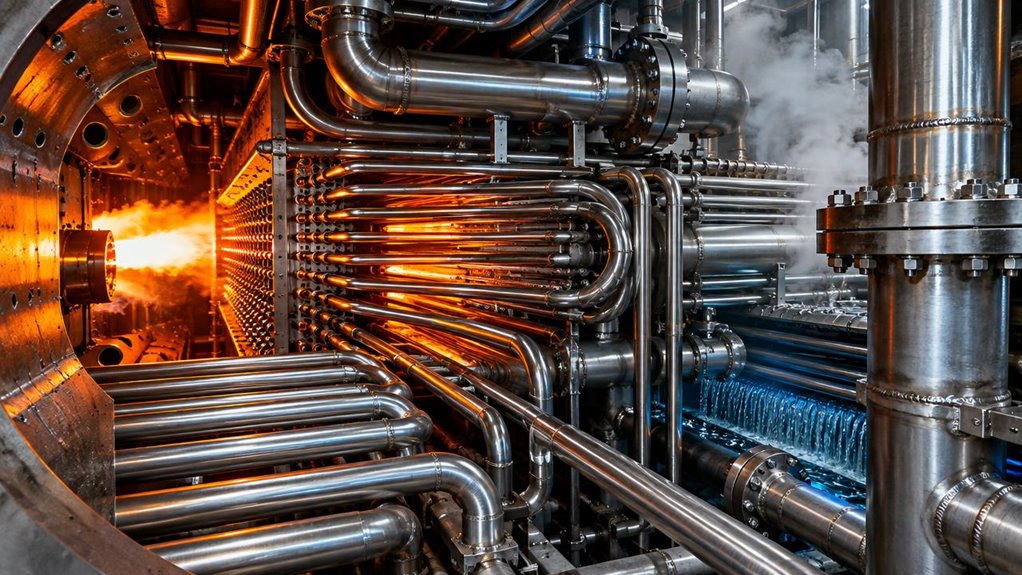
The term boiler tube is often used broadly, but tube service conditions vary significantly depending on location within the thermal system.
| Boiler Area | Main Tube Duty | Primary Selection Concern |
|---|---|---|
| Boiler / evaporator section | Heat water and generate steam | Pressure, corrosion, heat transfer |
| Economizer | Preheat feedwater | Water chemistry, corrosion, temperature |
| Superheater | Raise steam temperature | Creep strength, oxidation, temperature |
| Reheater | Reheat partially expanded steam | Creep and thermal cycling |
| Auxiliary heat-transfer sections | Recover or transfer heat | Corrosion and thermal performance |
In an economizer or water-side section, corrosion, feedwater chemistry, and pressure may dominate the specification. In a superheater or reheater, long-term high-temperature strength can become much more important.
This distinction is why grade selection should follow service position, rather than a generic supplier catalogue description.
Stainless steel is not automatically the best material for every boiler tube.
Carbon steels and chromium-molybdenum alloy steels remain widely used because they can provide excellent strength and cost performance where the operating temperature and corrosion environment allow it.
Stainless steel becomes more attractive when the system requires a combination of:
For example, 316L contains molybdenum, which can provide a useful corrosion advantage where chloride exposure increases the risk of localized attack. That same alloying principle is important when comparing 304 and 316 stainless steel tubing in other industrial applications.
However, stainless steel should still be justified by the actual environment. If corrosion conditions are mild and temperature strength is the main requirement, another alloy system may provide better overall value.
The correct comparison is therefore:
temperature + pressure + corrosion environment + service life + applicable code
rather than simply stainless steel versus carbon steel.
Grade selection usually separates into two broad situations:
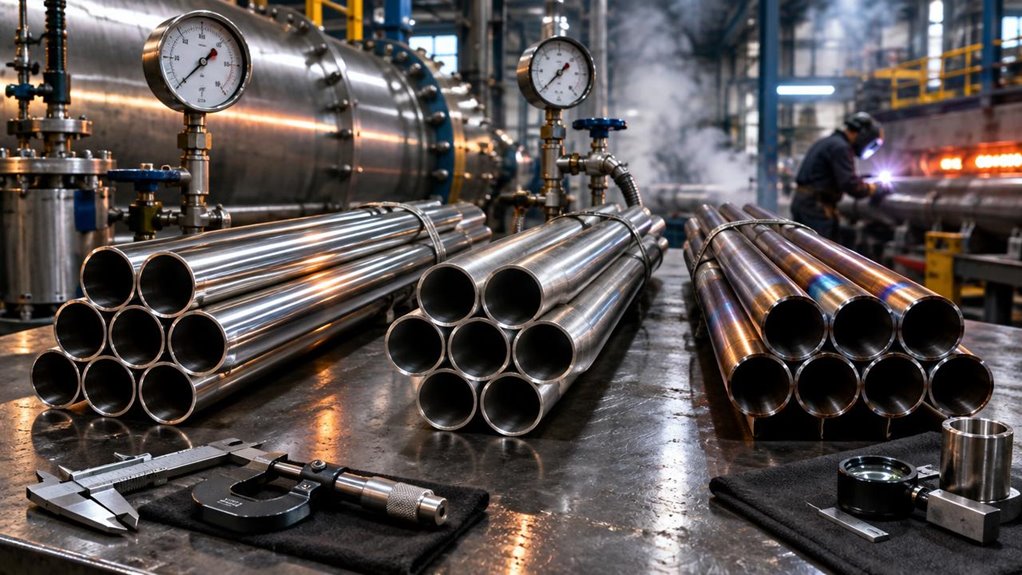
304L and 316L are low-carbon austenitic stainless steels commonly selected where corrosion resistance and welded fabrication are important.
The reduced carbon content helps limit sensitization during welding, which can support corrosion resistance around heat-affected zones.
304L may be appropriate where:
316L provides an additional corrosion margin where:
Where chloride attack is a concern, understanding how pitting and crevice corrosion develop is more useful than simply specifying 316L by default.
When tubes operate for long periods at elevated metal temperature, grade selection becomes more dependent on creep resistance and long-term allowable stress.
Grades such as:
are associated with high-temperature service requirements.
The H designation does not simply mean “better stainless steel.” It identifies chemistry and property requirements intended for elevated-temperature strength.
For superheater or reheater service, this distinction can be critical. A low-carbon grade selected primarily for corrosion and weldability should not automatically replace an H grade specified for creep performance.
A practical selection summary is:
| Service Priority | Typical Grade Direction |
|---|---|
| General corrosion resistance | 304 / 304L |
| Higher chloride resistance | 316 / 316L |
| Elevated-temperature strength | 304H / 316H |
| High-temperature stability | 321H / 347H |
| Severe boiler conditions | Project-specific high-temperature alloy |
The final grade should always follow the equipment design and allowable material properties at the actual operating temperature.
ASTM A213 and ASTM A249 are both relevant to boiler and heat-transfer tubing, but they cover different manufacturing routes.
| ASTM A213 | ASTM A249 | |
|---|---|---|
| Construction | Seamless | Welded |
| Material scope | Ferritic and austenitic alloy steels | Austenitic steels |
| Boiler service | Yes | Yes |
| Superheater service | Yes | Yes |
| Heat exchanger service | Yes | Yes |
| Main quality focus | Base-material integrity | Weld and base-material integrity |
ASTM A213 applies to seamless ferritic and austenitic boiler, superheater, and heat-exchanger tubing.
It is commonly specified where the equipment design requires seamless construction or high-temperature alloy grades within the standard.
ASTM A249 applies to welded austenitic boiler, superheater, heat-exchanger, and condenser tubing.
For Vinmay's welded-tube capability, this is the more directly relevant boiler-tube specification.
Its requirements cover the tube product rather than the complete boiler system. Grade, dimensions, heat treatment, mechanical properties, and required inspection still need to be defined in the purchase specification.
The requirements of ASTM A249 stainless steel tube should therefore be reviewed alongside the boiler design rather than treated as a generic quality label.
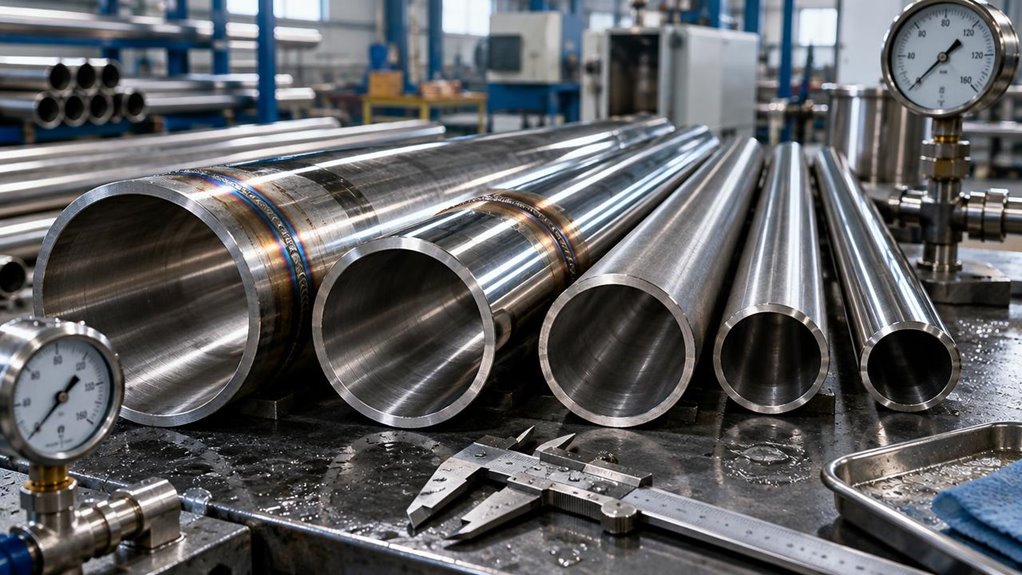
The choice between welded and seamless tubing should follow the governing standard and service requirements.
A welded stainless steel boiler tube may be suitable when:
A seamless boiler tube may be required when:
Neither route should be treated as universally superior.
The practical differences between welded and seamless stainless steel tubing matter only when they are considered together with grade, temperature, pressure, manufacturing quality, and inspection.
Boiler tube selection cannot rely on room-temperature mechanical properties alone.
At elevated temperature, material behaviour changes.
Important factors include:
Creep is slow, permanent deformation that develops under sustained stress at elevated temperature.
A tube can therefore remain below its short-term tensile limit and still deform over long service periods if the combination of temperature and stress is too severe.
High-temperature exposure can produce oxide scale on the tube surface.
Excessive oxidation can:
Repeated startups, shutdowns, and load changes create expansion and contraction.
These cycles can increase stress around:
The required heat treatment of stainless steel tubes also affects final microstructure and material performance, so the delivery condition should be checked against the relevant grade and product standard.
Tube dimensions directly influence both mechanical performance and heat transfer.
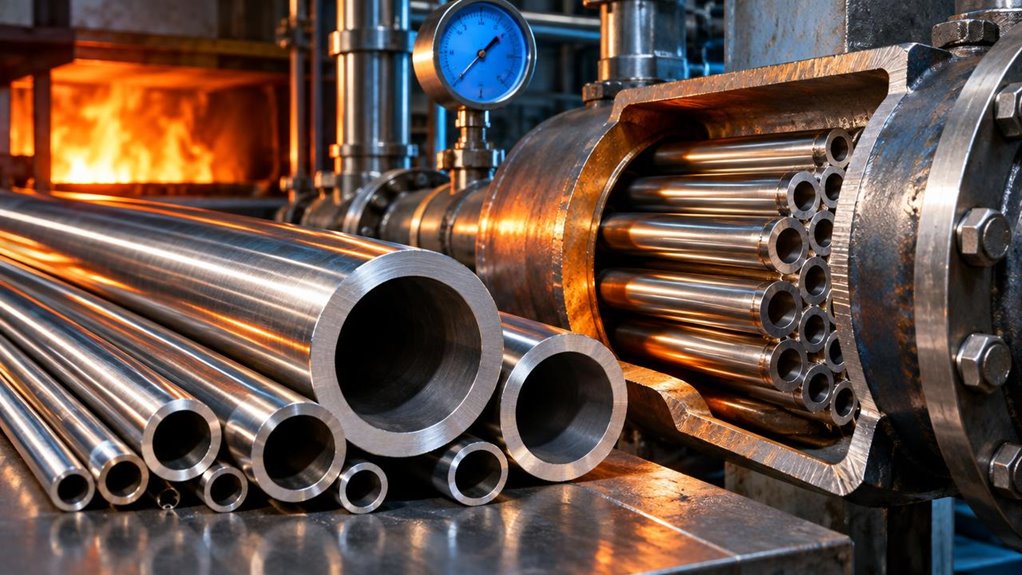
OD affects:
Wall thickness affects:
A thicker wall can increase mechanical margin, but it also creates greater resistance to heat transfer.
A thinner wall can improve thermal response, but leaves less material available to tolerate pressure, corrosion, erosion, or fabrication damage.
Wall thickness should therefore come from the equipment design—not from a generic “thicker is safer” rule.
Where pressure capability needs to be checked, the same variables explained in the stainless steel tube pressure rating article apply: OD, wall thickness, material strength, temperature, and the governing design method all affect the allowable pressure.
A failed boiler tube does not automatically mean stainless steel was the wrong material.
Failure analysis should identify the actual degradation mechanism. Industry guidance such as EPRI’s Boiler Reliability Optimization Guideline treats boiler tube failure as a root-cause problem involving material condition, operating environment, fabrication, water chemistry, temperature, and maintenance rather than material grade alone.
| Failure Mode | Possible Cause |
|---|---|
| Oxidation / scaling | Excessive metal temperature |
| Creep deformation | Sustained high-temperature stress |
| Pitting | Chlorides or deposits |
| Stress corrosion cracking | Aggressive environment plus tensile stress |
| Thermal fatigue | Repeated temperature cycling |
| Wall thinning | Corrosion or erosion |
| Weld-related defect | Manufacturing or fabrication issue |
| Premature leakage | Material, dimension, or service mismatch |
For example, pitting around deposits may indicate chloride concentration or poor water chemistry rather than insufficient overall stainless steel corrosion resistance.
Creep deformation points toward excessive temperature, long-term stress, or an unsuitable high-temperature material condition.
A weld-related failure may indicate fabrication, heat-treatment, or inspection issues rather than a problem with the base alloy itself.
The material grade, operating history, water chemistry, wall-loss pattern, temperature exposure, weld condition, and failure location should therefore be evaluated together before changing the tube grade or redesigning the system.
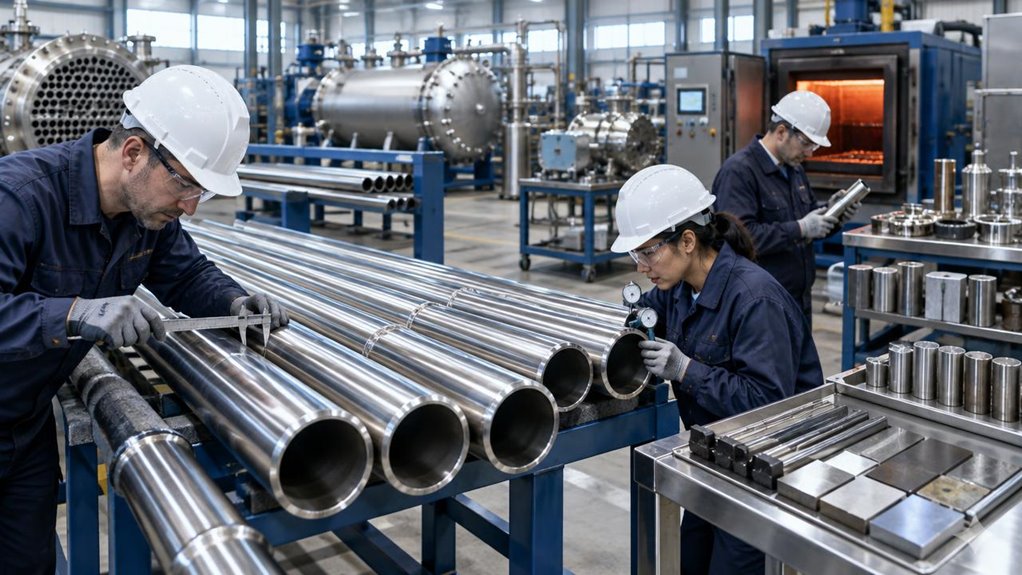
Before stainless steel boiler tubes are released for fabrication or installation, the delivered material should be checked against the purchase specification.
Verify:
Depending on the product standard and project requirements, tube integrity may be checked through eddy current testing, hydrostatic testing, ultrasonic examination, or another approved NDT method.
Where hydrostatic testing is specified, the test verifies pressure integrity under controlled conditions rather than defining the tube's final allowable operating pressure. Water quality and post-test drying also matter for stainless steel, particularly where chloride contamination is a concern.
The accompanying stainless steel mill test certificate should connect the physical tubes to:
An MTC showing the correct grade is not sufficient if traceability to the delivered material has been lost.
“316L stainless steel boiler tube” is not a complete purchase specification.
A reliable enquiry should define:
| Requirement | What to Specify |
|---|---|
| Service position | Boiler, economizer, superheater, reheater |
| Product standard | ASTM A213, A249, JIS G3463, or project requirement |
| Grade | TP304L, TP316L, TP304H, TP321H, TP347H, etc. |
| Construction | Welded or seamless |
| Outside diameter | Required OD |
| Wall thickness | Required wall |
| Length | Fixed or project-specific |
| Operating temperature | Normal and maximum temperature |
| Design pressure | Required pressure basis |
| Heat treatment | Required delivery condition |
| Surface condition | Pickled, BA, or specified finish |
| Testing | ECT, hydrostatic, UT, or project requirement |
| Documentation | MTC / EN 10204 requirement |
| Packaging | End and surface protection |
The boiler location and maximum metal temperature may influence grade selection as much as corrosion resistance.
A superheater tube and an economizer tube should therefore not be specified from the same assumptions simply because both are described as stainless steel boiler tubing.
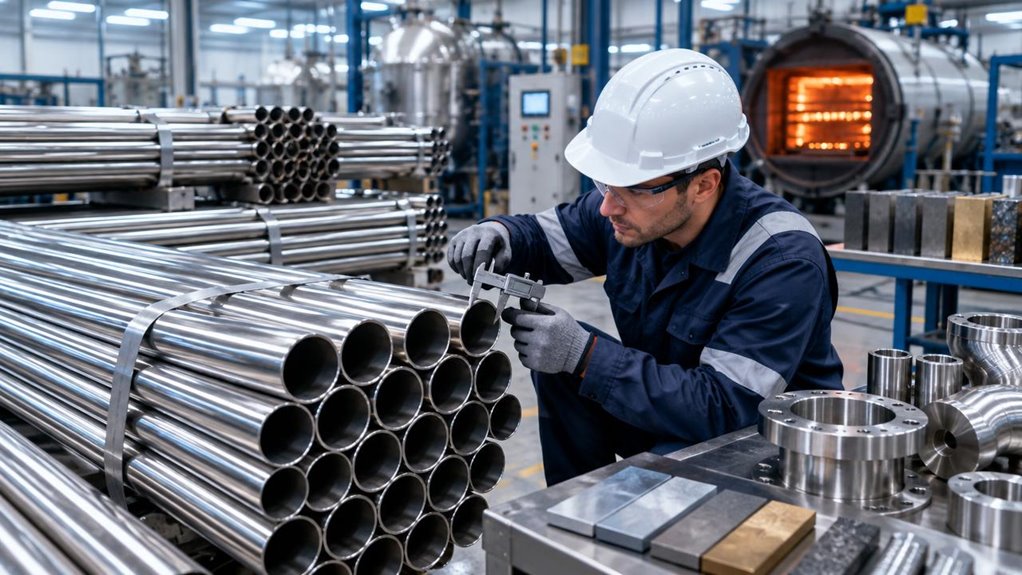
Vinmay manufactures welded stainless steel tubing in grades including 304, 304L, and 316L for applications where dimensional control, weld quality, heat treatment, and material traceability are important.
For welded boiler and heat-transfer tube enquiries, production requirements can be coordinated around:
Vinmay should not treat every boiler application as suitable for the same tube grade. Where a design calls for dedicated high-temperature H grades or another specialized alloy, grade availability and manufacturing capability should be confirmed against the project specification before quotation.
Contact Vinmay with the boiler location, product standard, stainless steel grade, OD, wall thickness, operating temperature, design pressure, length, and inspection requirements to discuss a suitable welded boiler tube specification.
A stainless steel boiler tube is a pressure-containing heat-transfer tube used in boiler, economizer, superheater, reheater, or related thermal equipment.
Its specification depends on the tube's location, operating temperature, pressure, corrosion environment, and applicable product standard.
There is no universal best grade.
304L or 316L may be suitable where corrosion resistance and welded fabrication are the main requirements.
High-temperature sections such as superheaters or reheaters may require grades such as TP304H, TP316H, TP321H, or TP347H where creep strength becomes more important.
304L is a low-carbon grade commonly selected to reduce sensitization during welding and support corrosion resistance.
304H has chemistry and property requirements intended for elevated-temperature strength and creep resistance.
The grades should not be treated as direct substitutes without checking the service conditions and applicable code.
Yes. ASTM A213 covers seamless ferritic and austenitic alloy-steel boiler, superheater, and heat-exchanger tubing.
Yes. ASTM A249 covers welded austenitic boiler, superheater, heat-exchanger, and condenser tubing.
Yes, where the equipment design and product specification permit welded tubing.
The tube must meet the required grade, dimensional, heat-treatment, mechanical-property, and inspection requirements.
These stabilized H grades are used where sustained elevated-temperature strength, creep resistance, and microstructural stability are important.
Actual suitability depends on the design temperature, pressure, operating environment, and governing material specification.
Depending on the standard and purchase specification, testing can include:
The required method should be defined before production and verified against the supplied MTC and inspection records.
Selecting stainless steel boiler tubes should begin with the tube's operating position and thermal duty.
304L or 316L may be appropriate where corrosion resistance and fabrication performance control the decision. Superheater and reheater service may require dedicated H grades where long-term creep strength and oxidation resistance become more important.
A complete boiler-tube specification should therefore combine:
boiler location + design temperature + pressure + corrosion environment + grade + OD + wall thickness + manufacturing route + product standard + inspection
The correct tube is not simply the most corrosion-resistant or most familiar stainless steel grade. It is the material and construction that match the actual thermal, mechanical, and environmental duty.