
Choosing the right stainless steel tube or pipe grade is not just a technical detail — it directly affects corrosion resistance, strength, weldability, service life, and overall project cost. Grades such as 201, 304, 316, and 316L may look similar on the surface, but their chemical composition and performance differences can lead to very different results in real use.
The good news is that grade selection becomes much easier once you understand how stainless steel grades are classified, what key alloying elements do, and where each grade performs best. Instead of choosing based only on price or habit, you can match the grade to the environment, durability requirements, and fabrication needs of your project.
In this guide, we’ll break down the major stainless steel tube and pipe grades, compare their composition and mechanical properties, explain the meaning of low-carbon and high-carbon variants, and show you how to choose the right grade with confidence.

Stainless steel tubes and pipes look nearly identical from the outside. Same finish, similar dimensions, and often a comparable price at first glance. But the grade — the alloy composition behind that surface — determines how the material actually behaves once it's in service.
Specify the wrong grade and the consequences depend on the environment. In a mild indoor setting, the cost might be premature surface rust and an earlier-than-expected replacement cycle. In a coastal installation, a chloride-rich processing line, or a food-contact system, the failure is faster and the stakes are higher: accelerated pitting, weld zone corrosion, or a hygiene compliance issue that shuts down production.
The common mistake isn't ignorance of the grades — it's treating the choice as a minor procurement detail rather than a performance decision. Grades like 201, 304, 316, and 316L may share the stainless steel label, but their chromium, nickel, and molybdenum content produce genuinely different results in corrosive or hygienic environments. Choosing by price alone, or defaulting to whatever was used on the last project, routinely leads to higher total costs once installation, maintenance, and downtime are accounted for.
Stainless steel tube and pipe grades are standardized classifications that define the material's chemical composition, mechanical properties, and performance characteristics. Each grade—such as 201, 304, 316, or 316L—represents a specific balance of alloying elements like chromium, nickel, molybdenum, and manganese, which together determine corrosion resistance, strength, ductility, and suitability for different environments.
Unlike the shape or size of a tube or pipe, the grade indicates how the material behaves under load, exposure to corrosive substances, temperature changes, and fabrication processes. For example, 304 stainless steel is widely used in general-purpose applications for its balanced corrosion resistance and formability, while 316 and 316L offer enhanced performance in chloride-rich or chemically aggressive environments.
Tube and pipe grades are essential for engineers, designers, and procurement professionals because selecting the correct grade ensures that the stainless steel will meet structural, environmental, and longevity requirements without unnecessary cost. Proper grade selection impacts everything from strength and durability to weldability and maintenance, making it a fundamental consideration in any project involving stainless steel tubes or pipes.
By understanding how grades are defined and what differentiates them, buyers can make informed, precise choices that align with both technical specifications and practical project requirements, setting the stage for more detailed comparisons of specific grades such as 201, 304, and 316.

Stainless steel grades are systematically classified based on their alloy composition and properties, with major categories including the 200 and 300 series, as well as advanced families like duplex and high-alloy grades.
The 200 series, exemplified by grade 201, emphasizes nitrogen to enhance formability, while the 300 series, including grades 304, 316, and 316L, focuses on austenitic structures for superior corrosion resistance.
Advanced options such as duplex grades and high-alloy variants like 904L and 310S offer specialized attributes for demanding environments, balancing elements like chromium, nickel, and molybdenum.
The 200 series stainless steels, exemplified by grade 201, utilize higher manganese and lower nickel content to offer a cost-effective solution for applications requiring less corrosion resistance. This composition makes them an economical choice within stainless steel pipe grades, especially where the mechanical properties of stainless steel are still essential, but the environment is less demanding.
In comparing 201 vs 304 stainless steel, grade 201 stands out for its affordability due to reduced nickel usage, although it may not match the corrosion resistance of 304. This trade-off is acceptable in less corrosive environments, where cost efficiency is prioritized over durability.
The 200 series is thus ideal for applications like kitchenware and automotive trim, where moderate corrosion resistance is adequate.
Renowned for their exceptional balance of strength and versatility, the 300 series stainless steels encompass grades such as 304, 304L, 316, and 316L.
These stainless steel tube and pipe grades are widely utilized due to their superior corrosion resistance, formability, and weldability.
The distinction between 304 vs 316 stainless steel lies in their chemical composition and specific applications.
Grade 304 is known for its excellent formability and is often employed in environments where corrosion is a minor concern.
Conversely, 316 contains molybdenum, enhancing its resistance to chlorides and making it ideal for marine and chemical processing applications.
The low-carbon variants, 304L and 316L, offer improved weldability, minimizing the risk of carbide precipitation during the welding process.
Classifying stainless steel involves understanding the distinct properties of its major families: austenitic, ferritic, martensitic, and duplex.
Austenitic grades such as 201, 304, 316, and 904L dominate stainless steel tubing materials due to their excellent corrosion resistance and formability. Their non-magnetic nature and high chromium and nickel content make them ideal for a wide range of applications.
Duplex grades stand out for their high strength and superior resistance to stress corrosion cracking, particularly in chloride-rich environments, making them suitable for more demanding conditions.
Ferritic and martensitic grades, while less central to tube and pipe use, offer unique benefits like higher hardness and better wear resistance, contributing to specific industrial applications where these properties are necessary.
Some grades include suffixes that modify their performance:
These classifications allow engineers to match the grade to the operational requirements, balancing corrosion resistance, strength, and fabrication needs.
Every stainless steel grade is defined by its chemical composition. Before comparing 201, 304, and 316, it helps to understand what the key elements actually do — because the performance differences between grades are a direct result of how these elements are balanced.
Chromium is what makes stainless steel stainless. When chromium content reaches approximately 10.5%, it reacts with oxygen to form a thin, stable oxide layer on the surface. This passive layer is self-repairing — scratch it, and it reforms in the presence of oxygen, continuing to protect the underlying metal.
All common tube and pipe grades contain at least 16% chromium. The difference between grades isn't whether chromium is present, but what else is added alongside it.
Nickel stabilises the austenitic structure that makes grades like 304 and 316 non-magnetic, tough, and formable. It also improves corrosion resistance in mildly acidic and oxidising environments.
The practical implication: higher nickel content means better overall performance — and higher material cost. This is why 201 was developed as a lower-nickel alternative, substituting manganese to reduce price. It's also why 316 costs more than 304, and why nickel market fluctuations directly affect stainless steel pricing.
Molybdenum is the element that separates 316 from 304. At 2–3% concentration, it significantly strengthens the passive oxide layer against chloride ions — the main cause of pitting and crevice corrosion in marine, coastal, and chemical processing environments.
Without molybdenum, even a well-specified 304 installation will begin to show pitting if chloride exposure is sustained. With it, 316 and 316L handle conditions that would degrade 304 within a fraction of the expected service life.
Manganese partially replaces nickel in the 200-series grades, keeping the austenitic structure intact at lower cost. Grade 201 contains 5.5–7.5% manganese against only 3.5–5.5% nickel, compared to 304's 8–10.5% nickel and minimal manganese.
The trade-off is straightforward: manganese maintains mechanical strength and formability, but it doesn't replicate nickel's contribution to corrosion resistance. Grade 201 is cheaper precisely because this substitution makes it less suitable for demanding environments.
The suffixes seen on grades like 304L, 316L, 304H, and 316H indicate a deliberate modification to carbon content — and the choice between them matters primarily in two situations: welding and high-temperature service.
The "L" suffix means the carbon content is held to a maximum of 0.03%, compared to 0.08% in the standard grade. The reason this matters is carbide precipitation: when stainless steel is heated during welding, carbon can combine with chromium to form chromium carbides at the grain boundaries. This depletes chromium from the surrounding area, weakening the passive layer exactly where the weld was made — a condition known as sensitisation.
Low-carbon grades reduce this risk significantly. For tube and pipe systems with welded joints, 316L is often the default specification over standard 316, even when the environment doesn't strictly require it, because the weldability improvement costs nothing extra in most supply contexts.
The "H" suffix indicates carbon content held between 0.04% and 0.10%. Higher carbon improves creep resistance — the material's ability to resist slow deformation under sustained load at elevated temperatures. This makes "H" grades relevant in petrochemical, power generation, and furnace applications where tubes and pipes operate continuously above 500°C.
For standard structural, industrial, or sanitary tube and pipe applications, "H" grades are rarely specified. The performance advantage only appears at temperatures well beyond normal operating ranges.
| Element | Primary role | Which grades it distinguishes |
|---|---|---|
| Chromium | Forms the passive oxide layer; baseline corrosion resistance | All grades (minimum ~16%) |
| Nickel | Stabilises austenitic structure; improves toughness and corrosion resistance | 304 and 316 vs 201 |
| Molybdenum | Resists chloride-induced pitting and crevice corrosion | 316 and 316L vs 304 |
| Manganese | Partial nickel substitute; maintains structure at lower cost | 201 vs 300-series |
| Carbon (low) | Reduces sensitisation risk in welded joints | 304L, 316L |
| Carbon (high) | Improves creep resistance at elevated temperatures | 304H, 316H |
How does one decide between 304L, 316L, 304H, and 316H stainless steel grades? The choice hinges on specific application requirements, particularly concerning welding, corrosion resistance, and high-temperature strength.
For those prioritizing welding and corrosion resistance, 304L and 316L are ideal due to their lower carbon content, which minimizes carbide precipitation.
Understanding these distinctions allows for informed material selection, ensuring performance aligns with operational demands.
The choice between “L” and “H” grades therefore, becomes a strategic decision based on the specific conditions faced.
With the elements and suffixes clear, the next step is seeing how they combine — and what the actual performance differences look like across the common grades side by side.
To help engineers and buyers quickly understand the differences between 201, 304, 316, and 316L, this comparison is split into four focused tables: chemical composition, mechanical properties, corrosion resistance, and practical considerations. Dividing the information this way makes each set of differences easier to scan and digest.
All mechanical values reflect typical annealed conditions. Actual performance may vary depending on tube or pipe form and applicable standards. Corrosion ratings are relative indicators between grades and do not guarantee absolute performance for any specific environment.
The chemical makeup of a stainless steel grade largely determines its corrosion resistance, weldability, strength, and cost. Understanding these differences is critical for selecting the right grade for your environment and application.
Key points:
| Grade | Chromium (Cr) | Nickel (Ni) | Manganese (Mn) | Molybdenum (Mo) | Carbon (C) | Key Notes |
|---|---|---|---|---|---|---|
| 201 | 16–18% | 3.5–5.5% | 5.5–7.5% | 0% | 0.15% | Cost-effective; lower corrosion resistance |
| 304 | 18–20% | 8–10.5% | 2% | 0% | 0.08% | General-purpose corrosion resistance |
| 316 | 16–18% | 10–14% | 2% | 2–3% | 0.08% | Excellent corrosion resistance, especially chlorides |
| 316L | 16–18% | 10–14% | 2% | 2–3% | 0.03% | Low-carbon version of 316, better weld corrosion resistance |
Key takeaway: Understanding these elemental differences is essential for choosing the correct grade for your environment and application.
Stainless steel grades differ not only in corrosion resistance but also in mechanical performance, which is critical when selecting a grade for structural or load-bearing applications.
| Grade | Tensile Strength (MPa) | Yield Strength (MPa) | Elongation (%) | Hardness (HRB) | Key Notes |
|---|---|---|---|---|---|
| 201 | 520–650 | 275–310 | 30–45 | 75–90 | Strong due to Mn; limited corrosion resistance |
| 304 | 520–720 | 205–215 | 40–60 | 70–90 | Balanced strength, formability, and corrosion resistance |
| 316 | 515–690 | 205–215 | 40–60 | 70–90 | Slightly higher toughness; excellent corrosion resistance |
| 316L | 485–690 | 170–200 | 40–60 | 70–90 | Lower carbon; weld zones resist sensitization |
Key takeaway: Select 201 for cost-effective structural use in mild environments; choose 304 or 316/316L for applications requiring superior corrosion protection.
All stainless steel grades form a chromium-rich passive layer that protects against corrosion, but the effectiveness varies depending on alloy composition.
| Grade | General Corrosion | Chloride / Pitting Resistance | Weld Zone Sensitivity | Practical Summary |
|---|---|---|---|---|
| 201 | Fair | Low | Moderate | Indoor or mild environments; not for chloride-rich use |
| 304 | Good | Moderate | Moderate | General-purpose; may rust in coastal or chemical exposure |
| 316 | Very Good | High | Moderate | Marine, chemical, or hygienic environments |
| 316L | Very Good | High | Low | Weld zones retain corrosion resistance; ideal for sanitary applications |
Key takeaway: Corrosion performance is often the deciding factor when choosing between 304 and 316/316L for industrial, marine, or hygienic applications.
When choosing between stainless steel grades, several factors must be evaluated: cost, availability, and suitability for specific applications. Generally, the cost hierarchy is 201 < 304 < 316/316L, making 201 ideal for budget-sensitive projects, 304 the versatile workhorse, and 316/316L essential for challenging environments like chloride-rich, chemical, or sanitary applications.
Availability also varies: 304 is widely stocked, while 316L may require special ordering for welded or specialty tubes. Understanding these practical trade-offs helps contextualize each grade before diving into detailed profiles.
| Grade | Weldability | Formability | Availability | Relative Cost | Best Use | Avoid For |
|---|---|---|---|---|---|---|
| 201 | Limited | Good | Good | Lowest | Indoor decorative tubing, light structural work, budget-sensitive projects | Moist or chloride-exposed environments, food-contact systems, outdoor applications |
| 304 | Good | Good | Excellent | Moderate | General industrial applications, food-contact tubing, architectural projects, standard pipework | Seawater, continuous chloride exposure, strong acids |
| 316 | Good | Good | Good | Higher | Marine, chemical processing, coastal installations, pharmaceutical systems | Extensive welded systems without proper post-weld treatment |
| 316L | Excellent | Good | Good | Higher | Welded marine systems, sanitary applications, food processing, pharmaceutical | Sustained service above ~500°C under load |
Key takeaway: This overview provides a snapshot of how grades compare across performance, environment, and cost, offering a quick reference for decision-making before reviewing the detailed profiles of each grade.
With the grade differences laid out across composition, performance, and cost, the next section puts each grade in context — a focused profile of where each one fits best, and where it should not be specified.
Grade 201 was developed as a cost-reduction alternative to 304, substituting manganese for a significant portion of the nickel content. The result is a grade that delivers acceptable mechanical strength and a clean 2B stainless finish at a lower material cost — making it a practical choice when the environment is mild and the budget is constrained.
Works well for: Indoor structural and decorative tubing, furniture frames, handrails, automotive trim, and general fabrication where moisture and chemical exposure are minimal. 201 welded pipe is widely used in these settings, though welding requires careful technique — see the full guidance on 201 welding considerations before specifying it for fabricated assemblies.
Avoid for: Coastal or marine installations, any application with sustained humidity or chloride exposure, food-contact or hygienic systems, and outdoor use in polluted or industrial atmospheres. The reduced nickel content means the passive layer is less robust — 201 will rust under conditions that 304 handles without issue. Additionally, applications requiring 201 stainless steel welding in corrosive or outdoor environments are not recommended, as the risk of sensitisation and corrosion increases.
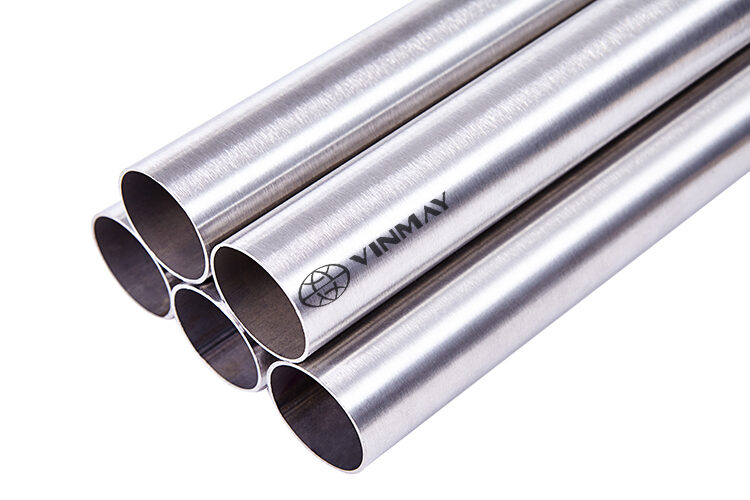
304 is the most widely used stainless steel grade for tubes and pipes. Its chromium-nickel balance delivers reliable general corrosion resistance, good formability, and consistent weldability across a broad range of applications. It is widely available, competitively priced relative to its performance level, and well-supported by fabrication and testing standards globally.
Works well for: Food processing equipment, architectural tubing, kitchen and catering installations, general industrial pipework, and water systems in non-aggressive environments. The 304 round tube, square tube, and rectangular tube — available across a full range of standard sizes — cover most fabrication needs. For welded systems, understanding 304 welded pipe applications helps clarify where the grade performs reliably. A detailed breakdown of 304 mechanical properties is available for structural design reference, and its service life expectations are well-established under standard conditions.
Avoid for: Seawater or coastal environments, applications with sustained chloride exposure, and concentrated acid contact. 304 can rust when chlorides are consistently present. On the question of hygienic applications — 304 is not a surgical grade, and for pharmaceutical or critical food-contact systems, 316L is typically the correct specification.
316 builds directly on 304 by adding 2–3% molybdenum, which substantially improves resistance to chloride-induced pitting and crevice corrosion. This makes 316 the preferred grade wherever 304 would be marginal — marine environments, chemical processing, pharmaceutical manufacturing, and any installation exposed to de-icing salts, seawater spray, or aggressive cleaning agents.
Works well for: Marine and offshore pipework, chemical and petrochemical processing lines, coastal architectural installations, and pharmaceutical equipment. The full 316 tube range covers standard forms including square, rectangular, and structural tube. Detailed 316 tube mechanical properties and a full overview of 316 tube performance characteristics are available for specification reference, along with 316 welded pipe options for fabricated systems. For expected durability in service, see 316 stainless steel life expectancy.
Avoid for: Applications where 304 is genuinely sufficient — specifying 316 in a mild indoor environment adds cost without adding meaningful performance. For systems with extensive welding, 316L is generally the better choice over standard 316.

316L is the low-carbon variant of 316, with maximum carbon held at 0.03% rather than 0.08%. In most operating conditions, 316 and 316L perform identically — the difference only becomes relevant at the weld. During welding, the lower carbon content of 316L significantly reduces the risk of chromium carbide precipitation at grain boundaries, preserving corrosion resistance in and around the heat-affected zone.
Works well for: Any application that specifies 316 and involves welded construction — which in practice means most 316 tube and pipe installations. Pharmaceutical pipework, food and beverage processing lines, marine fabrications, chemical plant piping, and hygienic systems where weld integrity is critical. 316L welded pipe is the standard specification for these environments precisely because it removes a failure mode without adding cost in most supply contexts.
Avoid for: High-temperature service above approximately 500°C where sustained load is applied — in those conditions, the lower carbon content reduces creep resistance, and 316H becomes the appropriate specification instead. For ambient and moderate-temperature applications, 316L is almost always the preferable choice over standard 316.
Each grade has a defined performance range — but the right choice depends less on the grade itself than on the environment it will operate in. The profiles above describe what each grade can do; the next section translates that into a direct question: given a specific set of conditions, which grade should you actually specify?
In selecting stainless steel grades for various environments, critical consideration must be given to the specific conditions each setting presents.
Dry indoor environments may require different grades compared to humid or outdoor settings, while coastal and chloride-rich areas demand resistance to corrosion.
For environments with chemical exposure or food-contact requirements, grades must be chosen to guarantee durability and compliance with hygiene standards.
In controlled indoor settings with no meaningful moisture, chemical exposure, or hygiene requirements, Grade 201 is a viable option where cost is the primary constraint. It delivers adequate strength and a clean stainless appearance for decorative, structural, and light fabrication applications.
Where appearance consistency over time matters — or where the indoor environment includes occasional cleaning with mild agents — 304 is the more reliable specification. The modest cost difference between 201 and 304 is often recovered within the first maintenance cycle.
Default grade: 201 for budget-driven, non-critical applications. 304 where longevity and appearance retention matter.
Outdoor exposure introduces variables that 201 cannot reliably handle: rain, condensation, airborne particulates, and temperature cycling all accelerate corrosion on lower-nickel grades. In these conditions, 304 is the minimum practical specification.
The chromium-nickel balance in 304 maintains the passive layer through wet-dry cycles and moderate atmospheric exposure. For urban or industrial outdoor installations — where pollution and sulphur compounds are present alongside moisture — 304 performs well across a normal service life.
Default grade: 304. Step up to 316 if the outdoor environment is within several kilometres of the coast or involves industrial chemical exposure.
Chloride ions from sea air and seawater attack the passive layer in a specific way — initiating pitting at microscopic defects and propagating corrosion beneath the surface before it becomes visible. Grade 304 is not adequate for sustained coastal exposure; the molybdenum content in 316 and 316L is what prevents this mechanism from taking hold.
For marine pipework, offshore installations, coastal architectural structures, and any application within direct reach of salt spray, 316 or 316L is the correct starting point — not an upgrade. In highly aggressive marine environments such as submerged seawater service or splash zones, duplex or super duplex grades should be evaluated.
Default grade: 316L for welded systems, 316 for non-welded. Consider duplex for submerged or continuous seawater contact.
Chemical environments require case-by-case assessment because performance depends on the specific chemical, its concentration, and the operating temperature — not just the grade family. General guidance holds, but it should always be verified against compatibility data for the actual process fluid.
For mild chemical exposure — dilute cleaning agents, weak acids, process water with low chloride content — 304 is often sufficient. Where acid concentration, temperature, or chloride levels increase, 316L provides meaningfully better resistance through its molybdenum content. For stronger acidic conditions involving sulphuric, phosphoric, or acetic acid, neither 304 nor 316L may be sufficient, and grades such as 317L, 904L, or Alloy 20 should be evaluated.
Default grade: 304 for mild exposure. 316L for moderate. Specialty grades for aggressive acid service — confirm compatibility before specifying.
Food processing, beverage production, dairy, and pharmaceutical applications share two requirements that drive grade selection: corrosion resistance against repeated exposure to cleaning chemicals and process fluids, and surface integrity that supports effective sanitation.
Both 304 and 316L are used in food-contact and hygienic systems, and both meet standard regulatory requirements. The distinction comes down to the cleaning regime and the process fluid. Food-grade 304 performs reliably in applications where chloride-based sanitisers are used sparingly and rinsed thoroughly. Where chlorinated cleaning agents are applied frequently, or where the product itself contains salt or acid — sauces, brines, fermented products — 316L provides the additional resistance needed to prevent pitting at the surface, which would otherwise create sites for bacterial retention.
For pharmaceutical manufacturing and any system subject to sanitary tubing standards, 316L is typically the specified grade, supported by surface finish and documentation requirements that go alongside the material specification.
Default grade: 304 for standard food contact with controlled cleaning. 316L for frequent chlorinated cleaning, saline or acidic products, and pharmaceutical service.
| Environment | Minimum grade | Notes |
|---|---|---|
| Dry indoor, non-critical | 201 | Only where corrosion risk is genuinely absent |
| Dry indoor, appearance-critical | 304 | Better long-term surface retention |
| Humid or outdoor | 304 | Minimum for wet-dry cycling |
| Coastal / near-marine | 316L | Molybdenum essential for chloride resistance |
| Submerged seawater | Duplex | 316L may be insufficient |
| Mild chemical exposure | 304 | Verify against specific fluid |
| Moderate chemical / chlorinated cleaning | 316L | Standard specification for most process lines |
| Strong acid service | 317L / 904L+ | Confirm compatibility — do not assume |
| Food contact, standard | 304 | Suitable with controlled cleaning regimes |
| Food contact, saline / acidic products | 316L | Prevents pitting at product-contact surfaces |
| Pharmaceutical / sanitary | 316L | Industry standard specification |
For most tube and pipe projects, one of the four grades above will be the right answer. When the environment pushes beyond what 316L can reliably handle — extreme chloride concentrations, sustained high temperatures, or mechanical loads that demand higher yield strength — the next step is evaluating advanced grades.
For most tube and pipe applications, 304 and 316L cover the full range of requirements. There are environments, however, where even 316L reaches its performance limits — where chloride concentrations are extreme, temperatures are sustained at high levels, or mechanical loads demand strength that austenitic grades cannot deliver efficiently. In those cases, the following grades are worth evaluating.
Duplex grades have a mixed microstructure — roughly equal parts austenite and ferrite — which produces a combination of properties that neither family achieves alone. Yield strength is approximately double that of 316L, meaning wall thickness can be reduced without sacrificing structural integrity. More importantly, duplex grades offer significantly better resistance to chloride stress corrosion cracking — a failure mode that affects austenitic grades like 316L in high-chloride, high-temperature environments under tensile stress.
Specify duplex when: The application involves high-chloride exposure combined with mechanical stress — offshore pipework, seawater handling systems, chemical plant piping operating above 50°C, and desalination equipment. Also relevant where the higher strength allows a meaningful reduction in wall thickness and therefore overall system weight.
Not necessary when: The environment is within the reliable range of 316L and mechanical loads are standard. Duplex is more expensive, less widely stocked, and requires more controlled welding procedures — the performance premium should be justified by the operating conditions.
904L is a high-alloy austenitic grade developed specifically for aggressive acid environments where 316L is insufficient. Its elevated nickel and molybdenum content — combined with the addition of copper — gives it strong resistance to reducing acids, particularly sulphuric acid across a wide concentration range. It also performs well in phosphoric and acetic acid service, and in chloride-containing environments more aggressive than 316L can handle.
Specify 904L when: The process fluid involves sulphuric acid at moderate to high concentrations, phosphoric acid, or other reducing acids where 316L shows unacceptable corrosion rates. Also used in aggressive seawater service and chemical processing lines where both acid and chloride exposure are present simultaneously.
Not necessary when: The acid exposure is mild or the chloride content alone is the primary concern — in many of these cases 316L or duplex is sufficient at lower cost. 904L carries a significant price premium and is less commonly stocked than standard grades; it should be specified only when the corrosion data justifies it.
310S is specified for high-temperature service, not for corrosion resistance in the conventional sense. Its high chromium content (24–26%) and elevated nickel (19–22%) give it exceptional oxidation resistance at sustained temperatures up to approximately 1100°C, along with good resistance to thermal cycling and carburisation. At ambient and moderate temperatures, it offers no meaningful advantage over 316L and is considerably more expensive.
Specify 310S when: Tubes or pipes operate continuously at elevated temperatures — furnace components, heat exchangers, radiant tubes, and high-temperature process lines in petrochemical and power generation applications. Also relevant where resistance to carburisation or sulphidation at high temperature is required.
Not necessary when: Operating temperatures are within the normal range for 316L. Specifying 310S for ambient or moderate-temperature applications adds cost with no performance return.
The decision to move beyond 316L should be driven by specific evidence — not general caution. Useful triggers include prior corrosion failures in comparable service, published corrosion rate data showing 316L exceeding acceptable limits for the process fluid, operating temperatures above 500°C under sustained load, or design requirements that benefit from the higher yield strength of duplex grades.
If the operating conditions sit comfortably within 316L's established performance range, upgrading to a specialty grade adds cost and procurement complexity without improving outcomes. When conditions are genuinely uncertain, consulting material compatibility data or requesting supplier technical input before finalising the specification is a more reliable approach than defaulting upward out of caution.
The choice of grade directly affects cost, as higher alloy content and specialty grades command higher prices.
The cost difference between grades reflects their alloy content, and alloy content is directly tied to raw material markets. Nickel and molybdenum are the two elements that move stainless steel prices most significantly — both are traded globally, and their prices fluctuate with mining output, energy costs, and industrial demand.
Grade 201 is the least expensive because its nickel content is low — manganese, which is far cheaper, does much of the structural work. Grade 304 carries a moderate premium reflecting its 8–10.5% nickel content. Grade 316 and 316L cost more again, because they combine higher nickel with 2–3% molybdenum — both expensive alloying elements. Specialty grades like 904L and duplex carry further premiums reflecting their more complex compositions and lower production volumes.
The practical implication for procurement: the price gap between 304 and 316L narrows and widens with nickel and molybdenum markets. A period of high nickel prices can make the step-up from 304 to 316L significantly more expensive than it appeared when the project was budgeted. For large-volume orders, locking in pricing early when alloy surcharges are favourable is worth considering. Current pricing for 316 tube will always reflect prevailing market conditions rather than a fixed differential.
Availability also affects effective cost. Grades like 304 and 316L are produced in high volume globally and are consistently available from stock suppliers and mills with short lead times. Specialty grades — 904L, 310S, duplex in less common dimensions — may require longer lead times, minimum order quantities, or sourcing from specific manufacturers. Factoring availability into the specification decision, particularly for time-sensitive projects, avoids situations where the technically correct grade creates a procurement bottleneck.
| Grade | Main Cost Driver | General Availability | Price Position |
|---|---|---|---|
| 201 | Lower nickel content | High | Lower cost |
| 304 | Moderate nickel content | Very high | Medium cost |
| 316 / 316L | Nickel + molybdenum | Moderate to high | Higher cost |
| 321 | Titanium-stabilised alloy | Limited | Higher cost |
| 430 | No nickel | High | Lower to medium cost |
In practical sourcing, the cheapest grade is not always the most cost-effective choice. A lower-cost grade may save money upfront, but if it is used in the wrong environment, corrosion, replacement, and downtime can make the total cost much higher over time.
Understanding cost is important, but knowing expected service life helps determine overall value and maintenance planning.
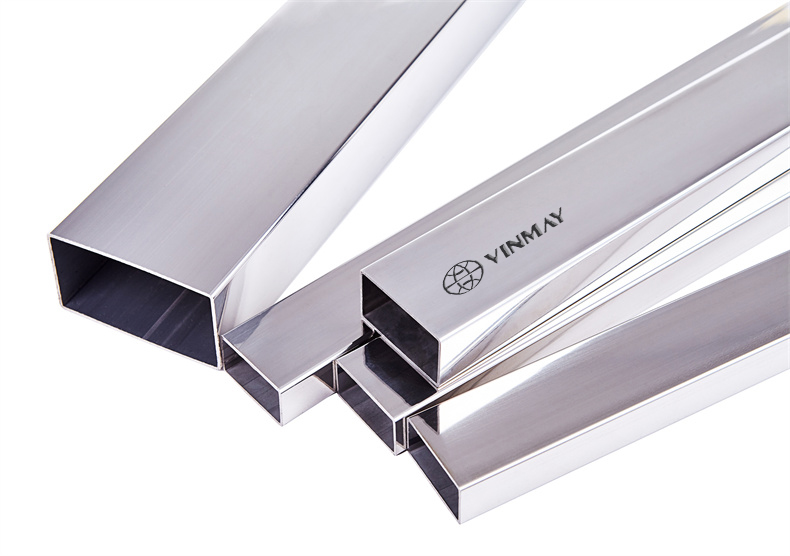
Durability serves as a critical factor in evaluating the life expectancy of stainless steel grades. Grade 201 demonstrates adequate longevity in mild indoor conditions but deteriorates rapidly in wet or corrosive environments.
In contrast, grade 304 exhibits robust durability across various settings, though it faces challenges with chloride exposure. Grades 316 and 316L extend service life in demanding environments due to superior corrosion resistance.
Key factors influencing durability include:
These considerations underscore the importance of matching stainless steel grades with specific environmental demands to optimize performance and lifespan.
Once a grade is selected, verifying that the supplied tubes and pipes match the specified grade ensures quality and reliability.
To guarantee the accuracy of stainless steel tube and pipe grades, one must consider Material Test Certificates, which provide detailed specifications verified by the manufacturer.
Positive Material Identification (PMI) testing is essential for confirming alloy composition directly on-site.
Additionally, Chemical Composition Reports and Supplier Traceability play critical roles in verifying the material's authenticity and origin, guaranteeing compliance with industry standards.
Material Test Certificates (MTCs) serve as critical documentation for verifying the grade of stainless steel tubes and pipes. They provide essential data such as chemical composition and mechanical properties, guaranteeing compliance with specified standards.
MTCs are indispensable in quality assurance and control, offering a reliable method to authenticate material specifications.
Key components of MTCs include:
These certificates are fundamental in maintaining rigorous industry standards and guaranteeing product reliability.
While Material Test Certificates provide detailed documentation of stainless steel specifications, Positive Material Identification (PMI) offers a practical method for on-site verification of these properties.
PMI testing is vital for confirming the elemental composition of stainless steel tubes and pipes, guaranteeing compliance with specified grades. By employing techniques such as X-ray fluorescence (XRF) or optical emission spectrometry (OES), PMI precisely identifies alloy elements like chromium, nickel, and molybdenum.
This process is significant in environments where material integrity is paramount, such as in petrochemical, pharmaceutical, and construction industries.
PMI testing mitigates the risk of material mix-ups and assures that the stainless steel components meet the necessary standards, thereby maintaining quality control and adherence to engineering specifications.
Chemical composition reports serve as a definitive tool for verifying whether stainless steel tubes and pipes meet the stringent limits of specified grades. These reports provide detailed insights into the elemental makeup of materials, ensuring compliance with industry standards.
Verification through chemical composition includes:
Such reports are indispensable for maintaining control over material quality and ensuring reliability in applications.
Traceability in stainless steel tube and pipe supply chains is essential for verifying the material's grade and guaranteeing quality assurance. It integrates various elements such as raw material identification, production batch records, test data, and final supply documentation. By connecting these components, traceability provides a thorough view of the product's history, facilitating precise grade verification.
Suppliers should maintain meticulous records that document each phase of production and testing. This includes linking raw material certifications with subsequent processing stages and test results.
Utilizing unique identifiers, such as heat numbers or batch codes, guarantees that each product can be traced back through its entire lifecycle. Such traceability not only confirms compliance with specifications but also enhances confidence in the supply chain's integrity.
For global projects, understanding international grade equivalences ensures you’re specifying the right material across different standards.
Stainless steel grades are specified under different naming systems depending on the country and industry context. The AISI designations (201, 304, 316, 316L) are most common in English-language specifications, but European EN/DIN numbers and UNS identifiers appear in international projects and mill documentation.
| AISI grade | UNS number | EN / DIN equivalent | Nominal composition |
|---|---|---|---|
| 201 | S20100 | 1.4372 | Cr16–18, Ni3.5–5.5, Mn5.5–7.5 |
| 304 | S30400 | 1.4301 | Cr18–20, Ni8–10.5 |
| 304L | S30403 | 1.4307 | Cr18–20, Ni8–12, C≤0.03 |
| 316 | S31600 | 1.4401 | Cr16–18, Ni10–14, Mo2–3 |
| 316L | S31603 | 1.4404 | Cr16–18, Ni10–14, Mo2–3, C≤0.03 |
These equivalents are close but not identical — permissible ranges for individual elements differ between standards, and mechanical property requirements vary by testing methodology. For projects where both AISI and EN compliance must be demonstrated, confirm that the supplied material meets both sets of limits, not just one, and ensure the MTC references the correct standards for the jurisdiction.
For sourcing from Chinese mills — which supply a significant proportion of global stainless steel tube and pipe volume — GB standard designations apply domestically, though most export-oriented manufacturers produce to ASTM or EN specifications and can provide documentation accordingly. Chinese 316 tube supply from established mills typically comes with full MTC documentation referencing ASTM A554, A269, or equivalent standards depending on the tube type and end use.
Stainless steel tube sizes impact performance by affecting flow rate, pressure resistance, and structural integrity. Larger diameters enhance flow capacity, while wall thickness determines durability and pressure tolerance, influencing overall efficiency and application suitability in various industrial settings.
Awash with versatility, stainless steel tubes find their purpose in construction, automotive, and food processing. Grade 304 suits general use; 316 resists corrosion in marine environments; 321 withstands high temperatures, ensuring reliability across varied applications.
Welding affects stainless steel tube quality by potentially altering its microstructure, leading to changes in corrosion resistance and mechanical properties. Precise control of heat input and post-weld treatments can mitigate adverse effects, ensuring ideal performance and durability.
Maintaining stainless steel tubes is akin to tuning a fine instrument; regular inspections, cleaning with non-abrasive solutions, and monitoring for corrosion prevent degradation. Industry data shows consistent upkeep extends lifespan by up to 20%, ensuring peak performance.
Stainless steel tubes are indeed recyclable. Their composition allows for efficient recovery and reuse, minimizing waste and promoting sustainability. The recycling process retains the material's integrity, ensuring that performance standards are maintained in subsequent applications.
In the labyrinth of stainless steel tube and pipe grades, selecting the ideal material is paramount. Understanding grades is not just beneficial—it's the linchpin for achieving peak performance and longevity. Each grade's unique chemical composition dictates its corrosion resistance and mechanical strength, demanding precise selection. With an almost Herculean impact on cost-effectiveness and durability, informed decision-making guarantees materials withstand diverse environmental conditions. Remaining vigilant in verification and understanding grade equivalents fortifies successful application.




[…] surface-level defects before applying more advanced verification methods. Confirm that the selected stainless steel grade matches the service environment, since grades such as 304, 316, and 316L offer different levels of […]
[…] in TP304, TP304L, TP316, and TP316L. These 300 series grades are valued for their combination of corrosion resistance, formability, and […]