ASTM A269 covers seamless and welded austenitic stainless steel tubing for general corrosion-resistant, low-temperature, and high-temperature service. The standard defines key requirements for material grade, outside diameter, nominal wall thickness, heat treatment, chemical composition, dimensional tolerances, and quality testing.
Common grades include 304, 304L, 316, and 316L. Each tube must also undergo either hydrostatic testing or a nondestructive electric test, together with any applicable mechanical checks required by the standard.
ASTM A269 does not define the design of the complete pressure system, so tube selection still depends on the actual service conditions and project requirements. Important purchasing checks include the MTC, surface finish, dimensions, length, testing requirements, and traceability. The sections below explain how to evaluate each of these points in practice.
ASTM A269 stainless steel tube is a product specification for nominal-wall-thickness seamless and welded austenitic stainless steel tubing intended for general corrosion-resistant service and for low- or high-temperature applications.
ASTM A269 defines stainless tubing requirements for corrosion-resistant service across varied temperature applications.
It defines controlled requirements for material form, manufacturing route, heat treatment, chemistry, and verification so purchasers can specify tubing with predictable compliance. The standard applies to astm a269 stainless steel tubing supplied as tube products, including astm a269 seamless tube, rather than to assembled piping systems.
ASTM A269 should thus be understood as a material and tube-quality standard, not a complete design code. Along with ASTM A249 and EN10217-7, it is commonly associated with stainless steel tubing for pressure applications where grade selection, tolerances, and quality control are important.
It does not independently establish system pressure ratings, joint design, support spacing, installation rules, or service-specific engineering limits. Those decisions remain under the applicable project specification, design code, and responsible engineering authority. Accurate specification of outer diameter, wall thickness, length, and material grade is still essential for procurement and engineering review. Related ASTM tube standards often define dimensional controls such as wall thickness tolerance to support consistent manufacturing and inspection.
In welded ASTM A269 tubing, production commonly involves roll-forming and longitudinal seam welding, with inside bead removal used to improve internal surface quality.
Like other ASTM tube specifications, ASTM A269 supports product reliability by defining testing and inspection expectations that help verify material integrity and compliance.
When corrosion resistance, dimensional consistency, and verified tube quality are needed for general service, ASTM A269 is often the appropriate specification. It is commonly selected for instrumentation lines, utility tubing, general process tubing, corrosion-resistant fluid service, and low- or high-temperature applications where seamless or welded austenitic stainless tubing is acceptable. Common grades covered under this specification include 304 stainless steel, 304L, 316, and 316L, allowing buyers to choose different corrosion-resistance levels for the service environment.
Buyers gain control because ASTM A269 tubing requires heat treatment, composition compliance, dimensional limits, and tube-by-tube hydrostatic or nondestructive electric testing. For sanitary or hygienic service, ASTM A270 may be considered instead because it emphasizes sanitary applications, surface quality, and cleanliness for industries such as food processing, pharmaceuticals, and biotechnology.
Regular inspection and proper surface treatment, including passivation, can further support corrosion resistance and help reduce the risk of localized attack in demanding service. For 316 tubing, molybdenum in the alloy improves resistance in chloride environments, which is why it is often selected for marine, chemical, and pharmaceutical uses.
Another standard may be better when the service condition is more specialized. In ASTM A269 vs A213 decisions, ASTM A213 is typically considered for boiler, superheater, heat-exchanger, or severe high-temperature pressure service requiring seamless tubing and different wall-basis requirements.
For healthcare-related components, buyers may also need tubing that supports biocompatibility and strict cleanliness expectations for safe contact with patients or sterile fluids.
Project codes, pressure design, temperature, and inspection obligations should govern the final selection.
ASTM A269 tubing is commonly specified in TP304, TP304L, TP316, and TP316L. These 300 series grades are valued for their combination of corrosion resistance, formability, and weldability.
TP304 and TP304L are widely used for general corrosion resistance, while TP316 and TP316L offer improved resistance in chloride-containing environments. In 316 stainless steel, molybdenum content helps enhance resistance to pitting and crevice corrosion in chloride exposure.
The “L” grades indicate lower carbon content, which helps reduce carbide precipitation during welding. This makes 304L and 316L useful where enhanced weldability and reduced sensitization risk are important. Both 304 and 316 stainless steels have a typical density of about 8.0 g/cm³.
For 316-based tubing, the addition of 2-3% molybdenum improves resistance to corrosion compared with 304 stainless steel.
Among austenitic stainless steels, TP304 and TP304L are two of the most common grades supplied under ASTM A269 for seamless and welded tubing in general corrosion-resisting service.
TP304 provides a balanced chromium-nickel composition, typically used where clean surfaces, formability, and dependable oxidation resistance are required.
TP304L is the low-carbon version, specified when purchasers want tighter control over carbide precipitation after welding or heat exposure.
Under ASTM A269 TP304L requirements, chemical limits, heat treatment condition, hardness, and required tube testing remain central acceptance points.
These requirements align with ASTM standards that help verify chemical composition, heat treatment, and other attributes for stainless steel grade selection.
Buyers should match ASTM A269 tube sizes, wall thickness, tolerances, and finish to the pressure, routing, and fabrication plan.
Clear ordering details reduce substitutions and help inspection teams verify that delivered tubing matches the intended grade and service envelope. For many 304 stainless tubing applications, surface finish also affects corrosion resistance, cleanability, and overall performance.
In related ASTM A554 mechanical tubing, defined dimensional tolerances help ensure consistent fit and suitability across round and square tube applications.
In related stainless tubing applications, wall thickness strongly influences structural performance, weight, welding approach, and resistance to applied force.
Because 304 stainless steel is widely valued for corrosion resistance and low maintenance, it is often selected for architectural, industrial, medical, and marine-related tubing applications.
For applications needing higher resistance to chlorides and more aggressive media than TP304 or TP304L can provide, TP316 and TP316L are common ASTM A269 choices. Their molybdenum content improves pitting and crevice-corrosion resistance, giving specifiers firmer control in marine, chemical, textile, and process-fluid systems.
TP316 suits services where standard carbon limits are acceptable; ASTM A269 TP316L lowers carbon to reduce carbide precipitation concerns after welding or thermal exposure. This lower carbon level helps improve weldability and resistance to intergranular corrosion in fabricated tube assemblies.
Under ASTM A269, both grades must meet composition, heat-treatment, hardness, and required tube testing provisions, including hydrostatic or nondestructive electric testing. In high-temperature applications, 316 stainless steel can resist oxidation in intermittent service up to 870°C and continuous service up to 925°C, supporting structural integrity in demanding equipment.
Selection should account for fluid chemistry, temperature, pressure, fabrication route, and inspection expectations. Regular inspection of tube surfaces and weld areas can help identify early signs of corrosion damage and support long-term service reliability. Its austenitic structure also provides strong impact resistance, helping tube assemblies tolerate sudden loading or vibration without brittle fracture.
When ordering seamless or ASTM A269 welded tube, grade designation, dimensions, finish, and any supplementary requirements should be stated explicitly and clearly. Specifying the required surface condition, such as polished, mill, or brush finish, can help align corrosion performance, cleanability, and appearance with the service environment.
Compare welded and seamless ASTM A269 tubing by how each route forms the tube and controls final quality, rather than treating either option as universally superior.
Seamless ASTM A269 stainless steel tube is produced from solid hollowed stock and reduced to size, avoiding a longitudinal weld. Welded tubing is formed from strip and joined along a seam, then sized to meet ASTM A269 tube tolerances. In corrosive service, 316 stainless steel is often selected because its molybdenum content improves resistance in marine and chemical processing environments.
Seamless tubing eliminates a longitudinal seam, while welded tubing forms, joins, and sizes strip to specification.
Selection depends on controlled variables. Welded tubing requires attention to seam integrity, weld bead condition, and consistency around the weld zone. ASTM A269 compliance also relies on dimensional checks and inspection controls that help confirm finished tubing meets required performance expectations.
Seamless tubing is often chosen where purchasers want uniform structure without a weld seam. Welded products can offer tighter dimensional repeatability and cost efficiency in common sizes. For austenitic stainless grades, preheating is generally unnecessary, while ferritic or martensitic grades may require it to reduce cracking or distortion risks.
Modern welding methods such as TIG, MIG, and laser welding have improved the reliability of welded stainless steel tubing for many industrial applications. Proper heat management during welding also helps limit distortion and supports consistent weld quality.
Both routes require specified inspection and acceptance controls, so application pressure, corrosion exposure, size availability, and budget drive selection.
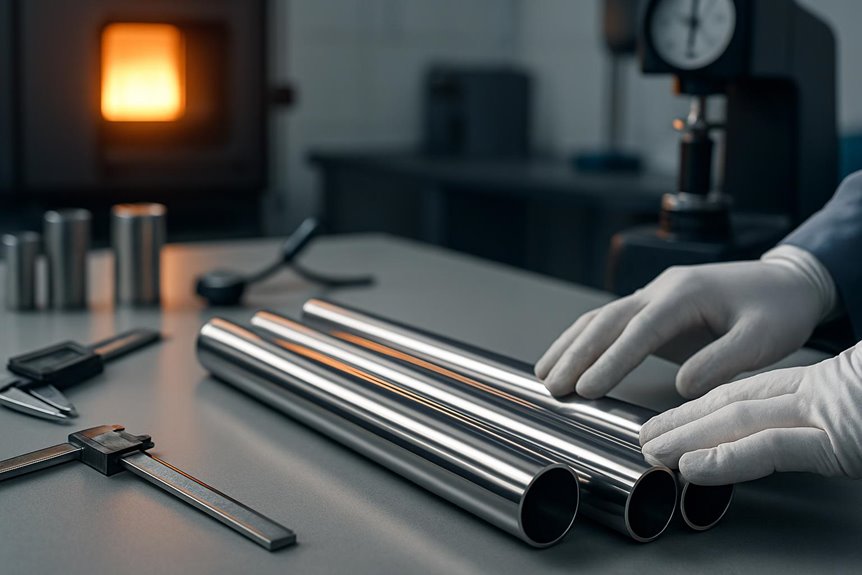
ASTM A269 tubing is supplied in a heat-treated condition, providing a controlled material condition before final inspection and acceptance. Proper heat treatment helps establish the required microstructure, mechanical properties, and corrosion performance after welding or forming.
The exact inspection requirements depend on the applicable ASTM A269 edition, stainless steel grade, tube dimensions, and whether the product is welded or seamless.
| Requirement area | What is verified |
|---|---|
| Heat-treated condition | Required material condition before supply |
| Mechanical and formability tests | Flaring, flange, hardness, and reverse-flattening tests where applicable |
| Tube integrity | Hydrostatic or permitted nondestructive electric testing |
Flaring and flange tests evaluate the tube’s ability to deform without cracking, while hardness testing confirms compliance with specified material limits. For welded tubing, reverse-flattening testing provides additional verification of weld integrity.
Each tube is also subject to an applicable integrity test, typically either hydrostatic testing or a permitted nondestructive electric test according to the standard and order requirements. These inspections form part of the wider stainless steel tube quality control process, alongside checks for outside diameter, wall thickness, length, surface condition, and traceability.
Where hydrostatic testing is specified, the test records should clearly identify the material and applicable test conditions. This provides documented evidence of pressure integrity but should not be confused with the tube’s final allowable operating pressure rating, which depends on dimensions, material properties, temperature, and the applicable design requirements.
Additional purchaser, project, or code requirements may introduce further inspection or acceptance criteria beyond the base ASTM A269 requirements.
Dimensions are central to ASTM A269 ordering because the tubing is specified by outside diameter, nominal wall thickness, length, and the applicable dimensional tolerances. This gives the purchaser direct control over fit, flow area, pressure capability, and installation allowance.
The outside diameter defines interface requirements with fittings, instruments, and supports. Nominal wall thickness controls strength, weight, and internal bore, subject to permitted variation. Length may be ordered as specific, random, or cut lengths, depending on project handling and fabrication needs. ASTM standards also address material composition, pressure-related requirements, and heat treatment, making dimensional tolerances only one part of full specification compliance.
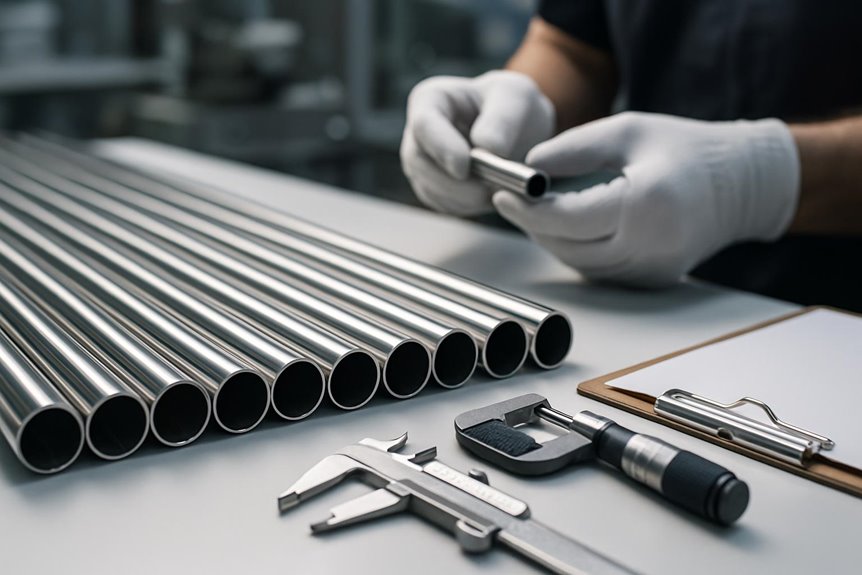
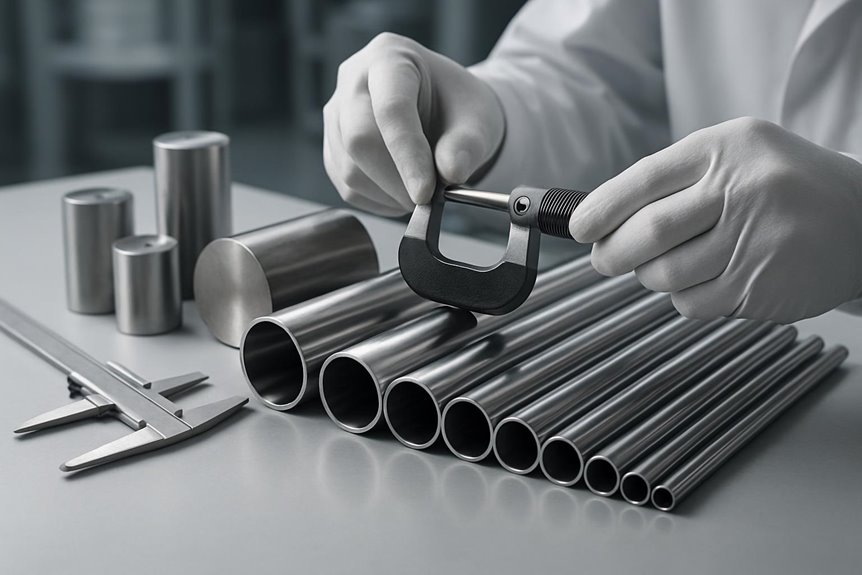
ASTM A269 tube sizing should not be treated as NPS pipe sizing. Pipe is commonly ordered by nominal pipe size and schedule, while A269 tubing is controlled by actual OD and wall callouts. Accurate OD measurement with calipers or micrometers helps confirm fit and compatibility with connectors and other components. ASTM A269 compliance may also involve quality control steps such as non-destructive testing to verify weld integrity and tube reliability.
For heat exchanger, condenser, and similar service, ASTM A269 size selection should also reflect pressure capability and temperature exposure. Material suitability should also be checked against the process medium because chloride exposure can affect stainless steel corrosion resistance in service.
For background on that distinction, see the internal pipe-vs-tube article before finalizing purchasing descriptions.
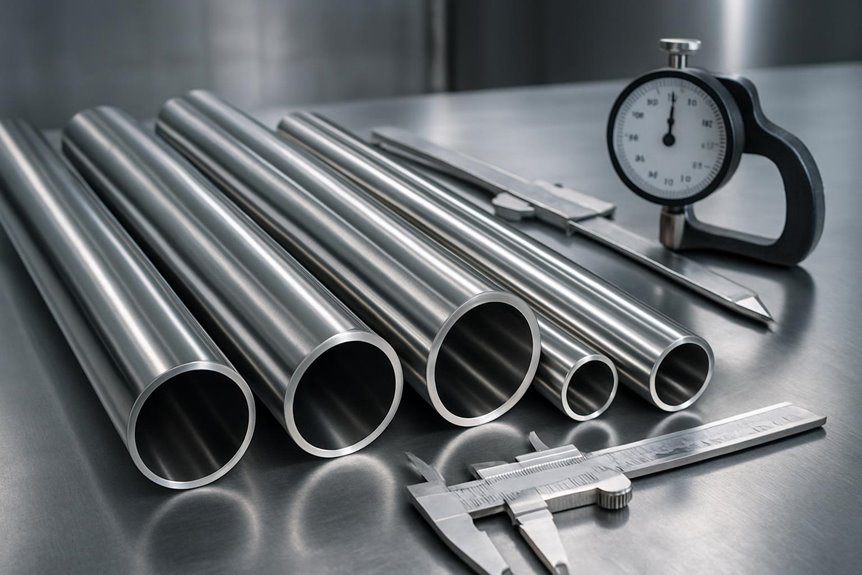
Three ASTM stainless tubing specifications are often considered together, but they serve different purchasing and service needs.
ASTM A269 covers seamless and welded austenitic tubing for general service, with average wall thickness, corrosion resistance, cleanliness, and controlled finishes such as bright annealed or pickled surfaces. It is common in instrumentation, chemical processing, food, and pharmaceutical lines. In sanitary service, Material Test Reports help verify chemical composition, mechanical properties, and compliance with required specifications.
ASTM A213 is narrower in intent: seamless ferritic or austenitic tubing for severe boiler, superheater, and heat-exchanger duty. It uses minimum wall thickness and emphasizes elevated-temperature service. For hygienic duties, 316L stainless steel is often preferred where stronger corrosion resistance and weldability are needed in demanding pharmaceutical or biotechnology environments.
ASTM A249, by contrast, is associated with welded austenitic boiler, heat-exchanger, condenser, and pressure-vessel tubing. In sanitary or hygienic applications, surface finish can be just as important as alloy grade because roughness affects cleanability, corrosion resistance, and product purity.
For water-supply applications, EN10312 welded stainless tubes place particular emphasis on hygienic performance, corrosion resistance, and inspection methods such as eddy current testing.
The practical control point is purchase specification. Buyers should match product form, wall basis, finish, service environment, and required testing before accepting material certification. In chloride-bearing or humid environments, specifying an appropriate alloy and maintenance plan can help reduce pitting corrosion and extend tube service life.
Does ASTM A269 define a pressure rating for tubing? No. ASTM A269 defines the stainless steel tube product: manufacturing route, heat treatment, chemistry, dimensions, tolerances, and required testing.
It does not assign a universal working pressure or burst pressure. Pressure capability must be calculated for the selected tube and service. Stainless steel is often selected for plumbing and industrial systems because corrosion resistance helps support long service life with reduced maintenance.
ASTM A269 does not set a universal pressure rating; pressure must be calculated for the specific tube and service.
The controlling inputs are outside the ASTM A269 designation itself: outside diameter, wall thickness, grade, temperature, allowable stress, joint method, corrosion allowance, and the governing piping or instrument system design rules. ASTM standards for tubing often include dimensional tolerances because variations in outside dimensions and wall thickness affect fit, fabrication, and structural performance. ASTM A269 covers both seamless and welded stainless steel tubing for general service applications across various industries.
Unlike pipe, stainless steel tube is commonly specified by outside diameter and wall thickness, which are central inputs in pressure calculations. In pipe specifications, pipe schedule indicates wall thickness and therefore affects pressure capacity, flow area, weight, and cost.
A 316L tube and a 304 tube with the same size may not have the same allowable pressure under identical temperature conditions.
For controlled selection, pressure should be verified by calculation or engineering data. See the related stainless steel tube pressure rating guide.
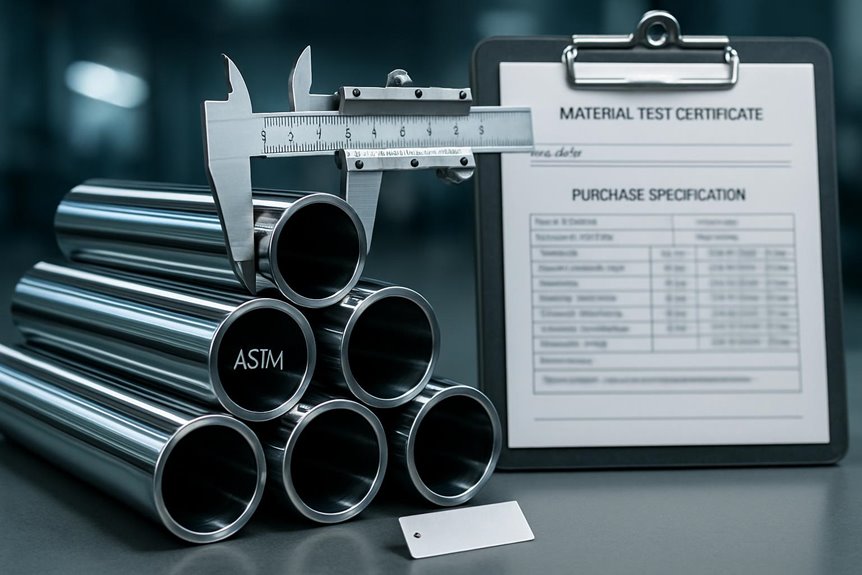
For ASTM A269 tubing, the purchase specification and mill test certificate should align on the key technical requirements. The purchase order defines what must be supplied; the MTC confirms what was actually manufactured and tested.
At minimum, verify the ASTM A269/A269M designation, stainless steel grade, heat number, manufacturing route, tube dimensions, heat-treatment condition, required integrity test, chemical composition, mechanical properties, surface finish, length, and documentation requirements.
| Control Point | What to Verify on the MTC | What to Define in the RFQ / Purchase Order |
|---|---|---|
| Material identity | ASTM A269/A269M, grade, heat number | Required grade and standard |
| Manufacturing route | Welded or seamless construction | Specify welded or seamless if required |
| Dimensions | OD, wall thickness, length | Define dimensions and applicable tolerances |
| Heat treatment | Reported heat-treated condition | State any required delivery condition |
| Integrity testing | Nondestructive electric or hydrostatic test, where applicable | Specify the required test or acceptance requirement |
| Material properties | Chemical composition and mechanical results | State any project-specific acceptance requirements |
| Surface condition | Finish or treatment shown where applicable | Define BA, pickled, polished, or other required finish |
| Traceability | Heat number and certificate reference | Require full heat traceability and MTC documentation |
| Delivery | Quantity, length, marking, packaging where documented | Define cutting, marking, packaging, and export requirements |
The most important check is consistency across the inquiry, purchase order, delivered tube, and MTC. A certificate can contain valid material data but still be unsuitable if the heat number, dimensions, grade, or manufacturing condition do not match the actual shipment.
For controlled projects, documentation requirements should therefore be agreed before production. This creates clear acceptance criteria and allows discrepancies to be identified before material is released for shipment rather than after it arrives.
Spec errors with ASTM A269 usually come from treating the standard as something it is not. A common mistake is confusing A269 tube with A312 pipe, then ordering by pipe schedule instead of outside diameter and wall thickness. That weakens dimensional control from the start.
Another error is assuming A269 is a heat-exchanger standard. It is for general-service seamless and welded austenitic stainless tubing, not a substitute for application-specific heat-exchanger requirements.
It also should not be treated as a pressure-rating standard. Pressure suitability must be confirmed by design code, service conditions, wall thickness, and engineering calculation.
Control also fails when heat treatment or required integrity testing is overlooked. Each tube requires hydrostatic or nondestructive electric testing.
Finally, an MTC has little value unless traceability is checked.
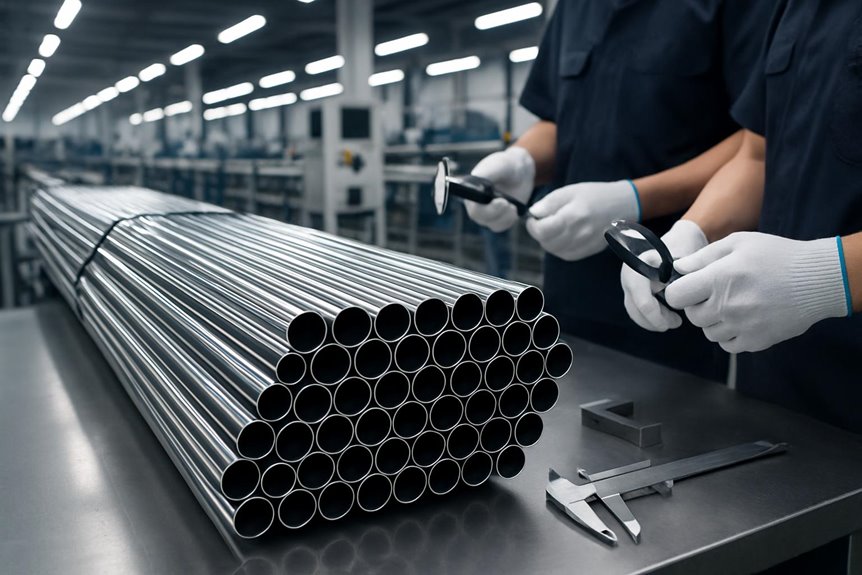
Vinmay supplies ASTM A269 stainless steel welded tubing in 304, 304L, and 316L, with production controls focused on dimensional consistency, weld quality, heat treatment, and surface finish.
Tube specifications can be coordinated around the required OD, wall thickness, length, finish, and testing requirements before production and release. Where applicable, Vinmay can provide eddy-current or other specified integrity testing together with MTC documentation and heat-number traceability to support material verification and project records.
Custom lengths, controlled packaging, and export preparation can also be arranged to suit downstream fabrication, inventory planning, and international delivery.
To confirm the appropriate specification, provide Vinmay with the required grade, OD, wall thickness, surface finish, length, quantity, and testing requirements.
Contact Vinmay to review your ASTM A269 tubing specification and confirm available manufacturing, inspection, and documentation options.
Yes. ASTM A269 tubing can suit food-grade applications, assuming proper stainless grade, finish, cleaning, and regulatory controls are specified. Like a spotless cafeteria dictator, it demands documented chemistry, heat treatment, testing, and corrosion resistance.
Yes. ASTM A269 tubes can be supplied in coils when ordered that way. The purchaser should specify coil form, size, wall thickness, grade, finish, length, tolerances, and required testing to maintain procurement control.
ASTM A269 tubing is available with mill, annealed, pickled, polished, bright annealed, and custom surface finishes. Selection should be specified at purchase, enabling control over cleanliness, appearance, corrosion performance, and downstream fabrication requirements.
To keep corrosion at bay, ASTM A269 tubing should be stored dry, covered, and off the floor. It should remain separated from carbon steel, chemicals, moisture, and abrasion, with controlled handling and clean supports.
No. ASTM A269 does not mandate special export packaging. The buyer should specify packaging controls, such as bundles, wooden cases, end caps, moisture protection, markings, and documentation, to meet shipping, customs, handling, and storage requirements.
ASTM A269 stainless steel tube remains a practical choice where corrosion resistance, dimensional consistency, and verified tube integrity are essential. Its value lies in clear requirements for grades, heat treatment, testing, and inspection, but buyers still need accurate specifications and careful MTC review. One notable point is that austenitic stainless steels account for roughly 70% of global stainless steel production, highlighting why ASTM A269 grades such as 304 and 316 are so widely used across demanding industrial applications.