Hydrostatic test stainless steel pipe procedures are used to verify structural integrity and leak-proof performance by pressurizing pipes with water under controlled conditions. This test helps identify leaks, cracks, and manufacturing defects while supporting compliance with applicable ASTM and ASME requirements. Proper preparation, accurate pressure calculations, and detailed inspections are essential. After testing, effective water removal and corrosion prevention measures help maintain stainless steel pipe performance and traceability.
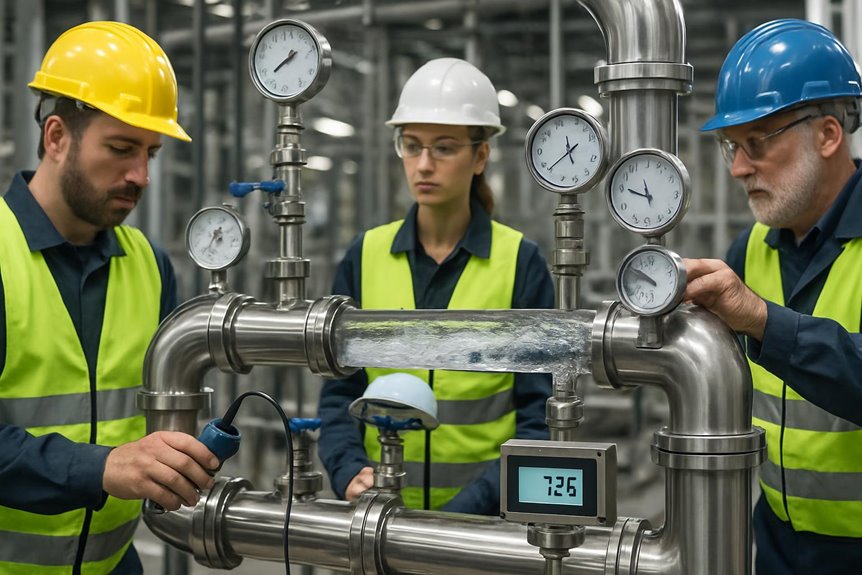
Hydrostatic testing for stainless steel pipe is a pressure-testing method used to verify the pipe’s structural integrity, pressure resistance, and leak-tight performance before it enters service. The test involves filling the pipe with water, removing trapped air, and applying a controlled internal pressure according to the requirements of the applicable standard or project specification.
Water is commonly used as the test medium because it is nearly incompressible, allowing pressure behaviour to be evaluated safely compared with gas-based testing methods. During the test, the pipe is inspected for leaks, pressure loss, deformation, or other signs of weakness that could affect long-term reliability.
For stainless steel process pipes and tubes, hydrostatic testing is often part of the final quality-control process, helping verify manufacturing consistency, weld integrity, and compliance with relevant standards such as ASTM, EN, or project-specific requirements.
Ensuring the pressure integrity of stainless steel pipes is essential for safe and reliable operation in industrial piping systems. A hydrostatic test of stainless steel pipe verifies the pipe’s ability to withstand internal pressure by identifying potential issues such as leaks, weld defects, and structural weaknesses before the pipe enters service.
During hydrostatic testing, the pipe is filled with water and pressurized according to the applicable specification or project requirements. This allows manufacturers and inspectors to confirm pressure resistance, connection integrity, and overall manufacturing quality under controlled conditions.
Hydrostatic testing forms an important part of stainless steel pipe quality inspection, working alongside other evaluations such as material verification, dimensional inspection, and non-destructive testing. Together, these checks help ensure the pipe meets the required performance standards for its intended application.
Accurate control of pipe dimensions, including wall thickness and outer diameter, is also important because these factors directly influence pressure capacity, flow performance, and compatibility with the final piping system.
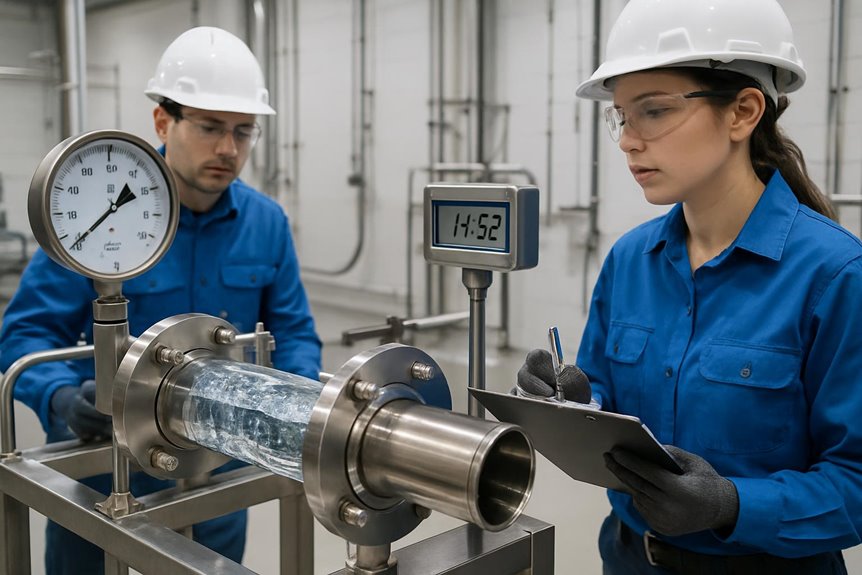
The hydrostatic testing of stainless steel pipes begins with meticulous preparation, ensuring all pipes are thoroughly cleaned and air is completely expelled from the system. Test pressure is then carefully applied, reaching 1.5 times the design pressure, and maintained for a specified duration to assess the pipe's integrity. Following the pressure hold, a detailed inspection is conducted to identify any leaks or deformations, ensuring compliance with industry standards.
Preparing stainless steel pipes for hydrostatic testing demands meticulous attention to detail and adherence to standards. The stainless steel pipe hydro test procedure begins with thorough preparation to guarantee accurate results. Key steps include:
These steps are critical to maintaining control over the testing process and guaranteeing reliable outcomes. Regular inspections can also help identify pitting corrosion early, reducing the risk of leaks or failures during service.
During the stainless steel pipe hydro test procedure, pressure is gradually increased using calibrated testing equipment until the required test pressure is reached.
The testing process generally includes:
The required pressure level and holding duration are determined by the relevant specification, such as ASTM product standards or project-specific requirements. The test pressure is not always a fixed multiplier of design pressure, as requirements vary depending on the pipe standard, material, dimensions, and service application.
For stainless steel tubes and pipes, hydrostatic testing is often combined with other quality verification methods, including dimensional inspection, material verification, and non-destructive testing, to provide a complete assessment of product integrity.
After the hydrostatic test is completed, the stainless steel pipe must be inspected to confirm that it meets the required acceptance criteria.
The inspection process typically includes:
For stainless steel piping systems, proper post-test treatment is especially important because retained water containing chlorides or contaminants may contribute to localized corrosion. Early identification of defects and corrosion risks can help prevent future failures, including issues such as stainless steel pipe leakage.
A complete hydrostatic testing process therefore does more than confirm pressure resistance—it helps ensure the stainless steel pipe is ready for safe installation and long-term service.
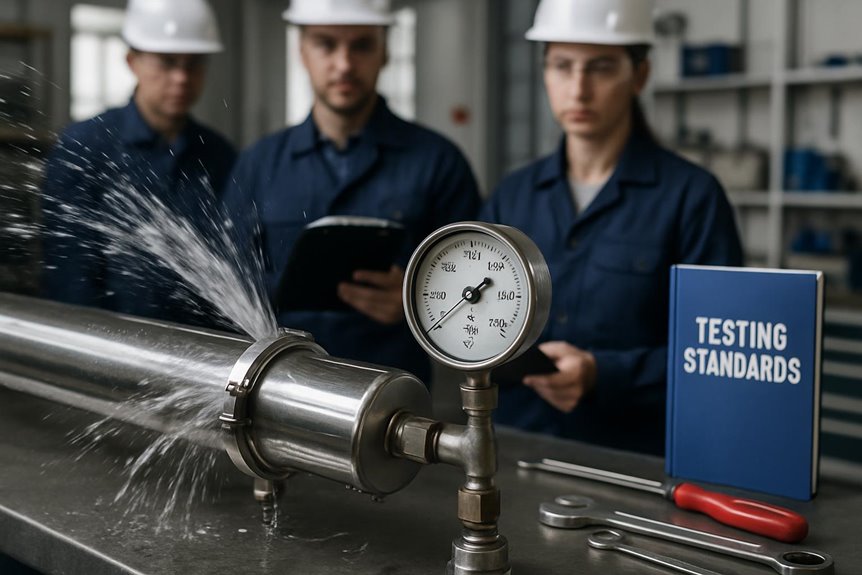
Determining the correct hydrostatic test pressure requires evaluating multiple design and material factors to verify that a stainless steel pipe can safely withstand pressure beyond its normal operating conditions.
The calculation typically begins with the design pressure, which establishes the minimum pressure requirement for the system. The pipe’s material strength, including the specified minimum yield strength, is then considered to ensure the applied test pressure remains within acceptable limits.
Other critical factors include wall thickness, pipe size, and dimensional specifications, as these directly affect the pipe’s pressure-bearing capability. The selected testing standard defines the required test pressure, duration, and acceptance criteria, ensuring the procedure aligns with the applicable engineering requirements.
The operating temperature and service conditions may also influence the final test parameters, as material strength can change under elevated temperatures. By considering these factors together, hydrostatic testing provides reliable verification of pipe integrity, leak resistance, and long-term service performance.
Hydrostatic testing of stainless steel pipes is governed by rigorous standards, including ASTM product standards, ASME B31.3 for process piping, and EN standards for tubes and pipes. Each standard specifies the minimum requirements for test pressures, procedures, and safety measures to guarantee the integrity and reliability of the piping systems. Compliance with these standards is essential for meeting both safety regulations and performance expectations in industrial applications. ASTM requirements may also address mechanical properties, dimensional tolerances, and non-destructive testing to verify tube quality and performance. Dimensional tolerances help ensure pressure integrity and reliable fit during installation.
When evaluating the quality and safety of stainless steel pipes, adherence to ASTM product standards is essential, especially for hydrostatic testing. These standards guarantee consistent quality and reliability across various applications. ASTM standards specify procedures, test pressures, and conditions for testing stainless steel pipes. Key aspects include:
For welded mechanical tubing, ASTM A554 establishes requirements for dimensions, mechanical properties, and surface finish.
These standards provide a structured framework, confirming that each pipe meets rigorous quality checks before deployment.
ASME B31.3, a critical standard for process piping, establishes stringent requirements for hydrostatic testing of stainless steel pipes. This standard guarantees the integrity and safety of piping systems by mandating specific procedures and pressure levels. Testing involves pressurizing pipes to 1.5 times their design pressure to identify any potential leaks or weaknesses. Stainless steel’s corrosion resistance supports long-term reliability in demanding process, marine, and chemical-processing environments.
Key aspects include:
| Parameter | Requirement |
|---|---|
| Test Pressure | 1.5x Design Pressure |
| Minimum Test Duration | As per specifications |
| Temperature Considerations | Ambient conditions |
ASME B31.3 differentiates itself by focusing on the entire piping system, assuring compliance with both product standards and system codes. This holistic approach guarantees not only the material's quality but also its performance within a complete system, enhancing operational reliability and safety.
In addition to the robust requirements outlined in ASME B31.3, the European standards provide an extensive framework for hydrostatic testing of stainless steel pipes, guaranteeing adherence to EN specifications. These standards guarantee that the testing process meets the rigorous demands of safety and reliability specific to the European context. Key EN standards detail the procedures and criteria for testing, offering a thorough approach to quality assurance.
These standards guide the industry to uphold quality and safety in hydrostatic testing. Material selection may also consider the superior corrosion resistance of 316 stainless steel, particularly in marine and chemical processing environments.
Post-hydrostatic testing, the quality of water used plays a vital role in determining corrosion risks, particularly with chloride contamination which can lead to pitting in stainless steel pipes. Additionally, microbiologically influenced corrosion (MIC) presents a threat if water sources harbor bacteria that facilitate corrosive biochemical reactions. Effective drying and preservation strategies are essential to mitigate these risks, ensuring the removal of residual moisture and application of protective coatings to prolong the lifespan of the piping system. Regular cleaning and inspection are especially important because even 304 stainless steel can rust under harsh, chloride-rich conditions due to pitting corrosion.
Although hydrostatic testing is essential for guaranteeing the integrity of stainless steel pipelines, it presents potential risks related to chloride contamination. Chlorides in the test water can lead to pitting and stress corrosion cracking, particularly in stainless steel. This necessitates meticulous water quality management and adherence to standards.
These measures guarantee the longevity and safety of the piping infrastructure. Stainless steel’s self-healing chromium film also supports corrosion resistance, but it cannot replace proper water-quality control during and after testing.
Chloride contamination is not the only concern during hydrostatic testing; microbiologically influenced corrosion (MIC) also poses significant risks to stainless steel pipelines. MIC results from microbial activity that can degrade metal surfaces, leading to unexpected failures. Key contributors include bacteria such as sulfate-reducing bacteria (SRB) and iron-oxidizing bacteria (IOB). These microorganisms can thrive in stagnant water, particularly if the water quality is not controlled.
To mitigate MIC, it is essential to adhere to stringent water quality standards, ensuring minimal microbial presence. Regular monitoring of microbial levels and the use of biocides can effectively reduce the risk. Standards such as NACE MR0175 provide guidelines for managing MIC, emphasizing the importance of maintaining a clean and controlled testing environment. Selecting materials with strong corrosion resistance can also improve the long-term reliability of sanitary piping systems.
Making certain the proper drying and preservation of stainless steel pipes after hydrostatic testing is vital to mitigate corrosion risks. Residual moisture can lead to corrosion if not addressed promptly. Effective drying techniques are important to maintain integrity and prolong service life.
After drying, store pipes off the ground in a well-ventilated, low-humidity environment to protect the passive oxide layer from moisture and contaminants.
These methods align with industry standards to promote ideal pipe preservation, safeguarding against future corrosion and maintaining compliance with regulatory requirements.
No single inspection method can fully evaluate stainless steel pipe quality. Each inspection technique verifies a different aspect of material performance, manufacturing quality, and service reliability.
Hydrostatic testing evaluates the pipe’s ability to withstand internal pressure by filling it with water and applying a controlled test pressure. It is primarily used to identify leaks, pressure-related weaknesses, and sealing issues that may affect the pipe during operation.
Other inspection methods address different quality requirements:
| Inspection Method | Primary Purpose | What It Verifies |
|---|---|---|
| Hydrostatic Testing | Pressure integrity verification | Leak resistance and ability to withstand specified test pressure |
| Positive Material Identification (PMI) | Material verification | Alloy grade and chemical composition |
| Non-Destructive Testing (NDT) | Defect detection | Weld quality, cracks, inclusions, or discontinuities |
| Dimensional Inspection | Specification compliance | Outside diameter, wall thickness, length, and tolerances |
| Mill Test Certificate (MTC) Review | Traceability confirmation | Material heat number, chemical analysis, mechanical properties, and production records |
For pressure-bearing stainless steel piping systems, hydrostatic testing is an important final verification step because it evaluates the assembled pipe under conditions closer to actual service. However, it should be used together with material verification, weld inspection, dimensional checks, and documentation review to provide complete quality assurance.
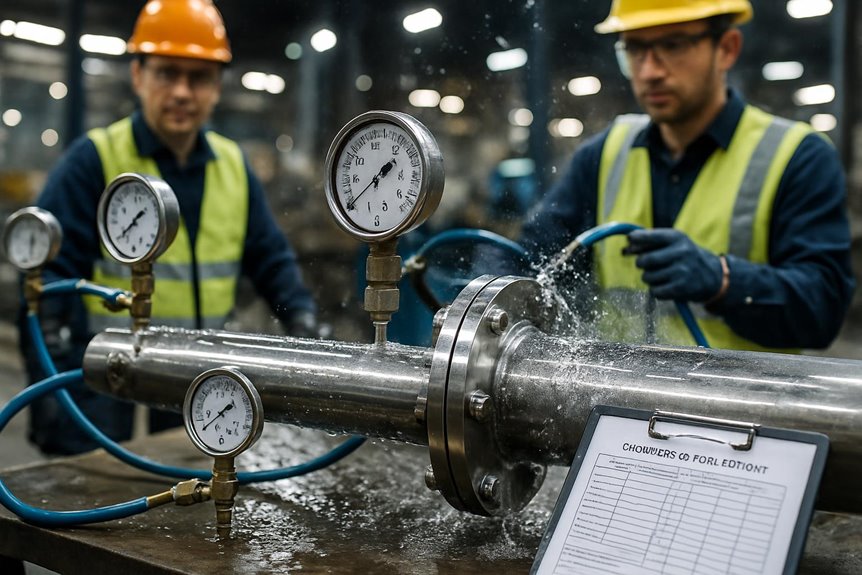
A thorough hydrostatic test report is essential for validating the integrity and safety of stainless steel pipes. It serves as a detailed document detailing the test conditions and results, guaranteeing compliance with industry standards. Key elements to include are:
Pipe schedule should also be recorded because wall thickness influences pressure capacity, internal diameter, weight, and overall performance.
These components guarantee the report provides a complete verification of the testing procedure, offering assurance in the pipe’s performance and adherence to applicable standards.
Incorrect hydrostatic testing practices can reduce the reliability of stainless steel pipes and create corrosion or quality-control issues after testing. Avoiding these common mistakes helps ensure the pipe remains suitable for long-term service.
Using unsuitable test water is one of the most important concerns for stainless steel systems. Water with excessive chloride content or contaminants can increase the risk of localized corrosion, including pitting corrosion, especially if moisture remains trapped inside the pipe after testing.
Failing to properly drain and dry stainless steel pipes after hydrostatic testing can leave residual moisture inside the system, creating conditions that may affect corrosion resistance. This is particularly important for applications requiring high cleanliness, such as sanitary stainless steel tubing and process piping systems.
Another common issue is incorrect test pressure calculation. The applied pressure must be appropriate for the pipe material, wall thickness, design conditions, and applicable testing standard. Insufficient or excessive pressure may result in unreliable test results or unnecessary stress on the piping system.
Maintaining material traceability throughout testing is also essential. Test records should remain connected to the correct pipe identification, heat number, and documentation, including the relevant stainless steel mill test certificate (MTC).
Finally, overlooking weld quality can hide potential weak points in welded stainless steel pipes. Weld condition, heat-affected zones, and post-weld treatment should be considered alongside pressure testing to ensure overall pipe integrity. Proper pickling and passivation of stainless steel can help restore corrosion resistance after fabrication and welding processes.
By controlling water quality, drying procedures, pressure parameters, documentation, and weld quality, hydrostatic testing becomes a reliable verification step rather than simply a final inspection requirement.
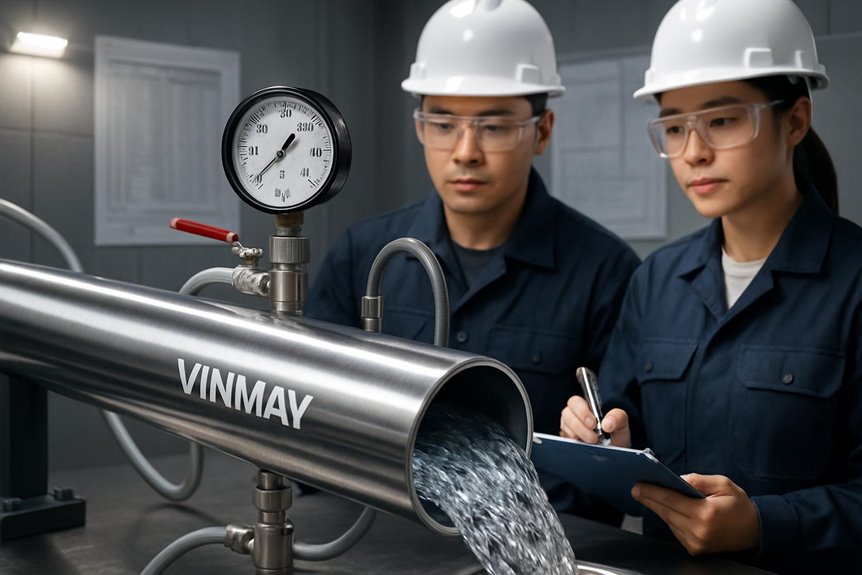
Reliable stainless steel tube performance depends on more than pressure testing alone. Material traceability, welding consistency, dimensional accuracy, and surface condition all influence long-term service reliability.
Vinmay applies controlled manufacturing and inspection procedures throughout production to support consistent tube quality, including:
These quality controls help ensure Vinmay stainless steel tubes are suitable for demanding applications where pressure integrity, corrosion resistance, and consistent performance are critical.
For more information about Vinmay’s manufacturing capabilities, stainless steel tube standards, and inspection processes, contact our team to discuss your application requirements.
Hydrostatic testing impacts the environment by potentially introducing contaminants through water discharge. Significantly, 30% of tests may increase local corrosion risks. Standards-focused controls and precise inhibitor use mitigate ecological effects, ensuring regulatory compliance and environmental safety.
The costs associated with hydrostatic testing include equipment rental, water usage, labor, and disposal fees. Compliance with standards may require additional expenses for calibration, certification, and potential repairs, ensuring the stainless steel pipe meets safety and reliability criteria.
Hydrostatic testing can be conducted in extreme weather, though 70% of failures occur under such conditions. Precautions include using antifreeze solutions and adjusting pressure calculations to address temperature-induced material changes, ensuring compliance with ASME and API standards.
A hydrostatic test typically takes 30 to 60 minutes, depending on pipe specifications and standards. This includes filling, pressurizing, and holding periods, ensuring thorough inspection for leaks and structural integrity under controlled conditions.
Personnel conducting hydrostatic tests require training in safety protocols, pressure equipment regulations, and proper handling of testing instruments. They must understand inspection standards, data analysis, and emergency procedures to guarantee compliance and maintain system integrity.