Stainless Steel 304 is one of the most widely used austenitic stainless steel grades in industrial, architectural, sanitary, and general fabrication applications. Its popularity comes from a practical balance of mechanical strength, ductility, weldability, corrosion resistance, and cost efficiency.
When selecting 304 stainless steel tubes, understanding the material’s mechanical properties is essential. Tensile strength, yield strength, elongation, hardness, and stiffness directly affect how the tube performs during bending, welding, forming, installation, and long-term service. These values also help buyers and engineers determine whether Grade 304 is suitable for structural frames, handrails, sanitary processing lines, water systems, decorative tubing, or other project requirements.
This guide explains the key stainless steel 304 mechanical properties, what they mean in real applications, and how factors such as cold working, tube dimensions, manufacturing method, and applicable material standards can influence final performance. Because actual values may vary by product form and specification, buyers should always confirm project requirements with the relevant standard and mill test certificate.
Stainless Steel 304 is an austenitic stainless steel primarily alloyed with chromium and nickel. Its chemical composition gives the material its well-known combination of corrosion resistance, formability, weldability, and mechanical performance.
Chromium is the key element responsible for corrosion resistance. When exposed to oxygen, it forms a thin passive oxide layer on the steel surface, helping protect the material from rust and oxidation in many indoor, industrial, food-processing, and general water-service environments. Nickel helps stabilize the austenitic structure of the steel, improving ductility, toughness, and resistance to cracking during forming and welding.
The typical chemical composition of Stainless Steel 304 is shown below:
| Element | Typical Composition |
|---|---|
| Chromium (Cr) | 18.0–20.0% |
| Nickel (Ni) | 8.0–10.5% |
| Carbon (C) | Maximum 0.08% |
| Manganese (Mn) | Maximum 2.00% |
| Silicon (Si) | Maximum 1.00% |
| Phosphorus (P) | Maximum 0.045% |
| Sulfur (S) | Maximum 0.030% |
| Nitrogen (N) | Maximum 0.10% |
| Iron (Fe) | Balance |
The relatively low carbon content helps maintain weldability and reduces the risk of carbide precipitation during welding. For applications involving extensive welding or corrosive service around welded areas, Stainless Steel 304L may be preferred because it has a lower maximum carbon content than standard 304.
Although the chromium and nickel content provide good general corrosion resistance, Stainless Steel 304 is not suitable for every environment. In applications exposed to high chloride levels, salt spray, seawater, or aggressive chemical media, Grade 316 stainless steel may offer better resistance because of its added molybdenum content.
For stainless steel tube projects, buyers should confirm the required grade, chemical composition limits, applicable standard, and mill test certificate before placing an order. This helps ensure the material meets both mechanical-performance and corrosion-resistance requirements for the intended application.
Stainless Steel 304 offers a reliable combination of strength, ductility, and formability, making it suitable for a wide range of stainless steel tube and fabrication applications. In its annealed condition, Grade 304 provides sufficient mechanical performance for architectural tubing, handrails, sanitary systems, water pipes, equipment frames, and general industrial components.
The table below shows commonly referenced mechanical and physical properties for annealed Stainless Steel 304. Actual values may vary depending on the product form, wall thickness, cold-working level, manufacturing process, and applicable material standard.
| Property | Typical Value for Annealed Stainless Steel 304 | Why It Matters |
|---|---|---|
| Tensile Strength | ≥ 515 MPa | Indicates the maximum stress the material can withstand before fracture. |
| Yield Strength, 0.2% Offset | ≥ 205 MPa | Shows the stress level at which permanent deformation begins. |
| Elongation | ≥ 40% | Reflects ductility and the material’s ability to bend, form, and draw without cracking. |
| Hardness | ≤92 HRB (≤201 HB) | Helps indicate resistance to indentation, wear, and machining forces. |
| Modulus of Elasticity | Approx. 193 GPa | Used to evaluate stiffness and expected deflection under load. |
| Density | Approx. 7.9–8.0 g/cm³ | Important for weight calculations, handling, and structural design. |
| Melting Range | Approx. 1,400–1,450°C | Relevant to high-temperature processing and welding considerations. |
For most stainless steel tube projects, tensile strength, yield strength, and elongation are the most important values to review first. Together, they show whether the material can carry the required load, resist permanent deformation, and remain workable during bending, welding, or fabrication.
These figures should be used as general reference values rather than final project specifications. Buyers should confirm the required standard, dimensions, mechanical-property limits, and material certification before placing an order. Mill test certificates are particularly important for projects involving structural loads, sanitary processing, pressure service, or regulated applications.
Buyers sourcing internationally often need to cross-reference 304 against Chinese (GB) or European (EN) designations. The table below shows how the same grade maps across standard systems:
| Standard | Grade Designation | Tensile Strength | Yield Strength (0.2%) | Elongation | Hardness |
|---|---|---|---|---|---|
| ASTM | 304 | ≥515 N/mm² | ≥205 N/mm² | ≥40% | ≤92 HRB |
| GB (China) | 06Cr19Ni10 | ≥520 N/mm² | ≥205 N/mm² | ≥40% | ≤200 HV |
| EN (Europe) | 1.4301 | 500–700 N/mm² | ≥190 N/mm² | ≥45% | ≤215 HV |
These designations refer to the same underlying 18/8 austenitic composition — the differences in listed values largely reflect how each standard defines its testing and reporting ranges, rather than a difference in the material itself.
The mechanical properties of Stainless Steel 304 help determine how the material performs during fabrication, installation, and long-term use. While actual values can vary depending on tube size, wall thickness, manufacturing process, cold working condition, and applicable standard, tensile strength, yield strength, elongation, and hardness are the most important values to consider when selecting 304 stainless steel tubes and fabricated components.
Tensile strength refers to the maximum pulling force a material can withstand before it fractures. For annealed Stainless Steel 304, the minimum tensile strength is commonly around 515 MPa, although the final value may vary according to the product standard and manufacturing conditions.
In practical applications, tensile strength indicates how well 304 stainless steel resists breaking under pulling, stretching, vibration, or mechanical loads — relevant for handrails, frames, and fabricated brackets that experience repeated loading from daily use, vibration, or installation stress. Adequate tensile strength helps ensure the material withstands these forces without sudden failure.
Yield strength is the stress level at which a material begins to deform permanently. Below this point, Stainless Steel 304 can generally return to its original shape after the load is removed. Once the yield strength is exceeded, the material may bend, stretch, or distort permanently.
For annealed 304 stainless steel, the minimum 0.2% offset yield strength is commonly around 205 MPa. This value is particularly important when selecting tubes or fabricated components for load-bearing applications.
In tube structures, frames, brackets, supports, and formed components, yield strength helps engineers assess whether the material can carry expected loads without losing its shape. A tube may not fracture under a certain load, but it can still become permanently bent or distorted if its yield strength is exceeded. For this reason, yield strength is often more relevant than tensile strength when evaluating structural stability, deflection control, and long-term dimensional performance.
Elongation measures how much a material can stretch before breaking, while ductility describes its ability to deform without cracking. Stainless Steel 304 typically has high elongation in the annealed condition, commonly reaching 40% or more depending on the applicable standard and product form.
This high ductility is one of the main reasons why 304 stainless steel is widely used for bending, forming, drawing, welding, and custom fabrication — allowing manufacturers to process tubes and sheets into curved handrails, shaped frames, and complex welded assemblies with a lower risk of cracking during production. For buyers, this translates into greater flexibility when a project requires custom tube bending, tight-radius forming, or deep drawing.
Hardness describes a material's resistance to indentation, scratching, and surface wear. In the annealed condition, Stainless Steel 304 has moderate hardness and is relatively easy to cut, bend, form, and fabricate compared with many higher-strength stainless steel grades.
However, 304 stainless steel also has a strong work-hardening characteristic. During cold working processes such as rolling, bending, drawing, stretching, or forming, its strength and hardness increase. This can improve resistance to deformation and wear, but it also reduces ductility and makes further processing more difficult.
For example, cold-worked 304 stainless steel tube may offer higher strength for certain mechanical or structural applications. At the same time, it may require more force during additional bending or forming operations. When specifying 304 stainless steel tubes, buyers should therefore consider whether the priority is easier fabrication, higher strength, improved surface hardness, or a balance between these requirements.

In addition to strength and hardness, the physical properties of Stainless Steel 304 influence tube weight, stiffness, thermal movement, and performance in changing operating conditions. These factors matter most for long pipe runs, fabricated tube assemblies, and systems exposed to temperature cycling.
| Physical Property | Typical Value | Design Consideration |
|---|---|---|
| Density | 7.9–8.0 g/cm³ | Affects tube weight, handling, and support spacing |
| Modulus of Elasticity | ~193 GPa | Indicates stiffness and helps calculate deflection under load |
| Thermal Conductivity | ~16.2 W/m·K | Influences the heat transfer rate |
| Coefficient of Thermal Expansion | ~17.2 × 10⁻⁶ /K | Relevant to expansion/contraction in heated systems |
| Electrical Resistivity | ~0.72 × 10⁻⁶ Ω·m | Relevant to grounding and electrical applications |
| Melting Range | 1,400–1,450°C | Indicates high-temperature stability, not continuous service limit |
With a density of approximately 7.9–8.0 g/cm³, 304 is heavier than aluminum but offers considerably greater strength and rigidity. This matters when calculating the total weight of long tube runs, handrail systems, and fabricated assemblies, since it affects freight cost, handling, and support spacing.
A modulus of elasticity of approximately 193 GPa indicates how much a tube flexes under load before permanent deformation. Higher modulus means greater stiffness — important for architectural railings, frames, and long-span structures. However, stiffness isn't determined by material grade alone: tube diameter, wall thickness, span length, and support spacing all significantly influence deflection, so buyers should evaluate the complete tube specification rather than material grade in isolation.
Like other austenitic stainless steels, 304 expands and contracts with temperature change (coefficient of thermal expansion ~17.2 × 10⁻⁶ /K). In long pipe runs or systems with repeated heating and cooling, this movement should be accounted for through expansion loops, flexible joints, or sliding supports — particularly relevant for hot-water lines and heat-treatment equipment.
Separately, the 1,400–1,450°C melting range should not be mistaken for a usable operating temperature limit — mechanical strength, oxidation resistance, and creep performance all decline well before that point. For sustained high-temperature service, 304H or another heat-resistant grade may be more suitable than standard 304.
Thermal conductivity and electrical resistivity are lower priorities for most tube and pipe applications, but can matter in heat exchangers, cooling systems, or grounding-related components where heat transfer rate or conductivity is a specific design requirement.
304's chromium-rich passive film delivers broad general corrosion resistance, but warm chloride exposure can drive pitting corrosion, and stress corrosion cracking risk increases above roughly 60°C. Routine cleaning and proper maintenance help preserve the passive layer over time. Compared with galvanized steel, 304 offers superior long-term corrosion resistance; for marine or heavily chlorinated environments, 316 stainless is the safer choice.
For heat resistance, 304 resists oxidation intermittently up to about 870°C and continuously up to about 925°C, though prolonged exposure in the 425–860°C range should be avoided to limit carbide precipitation and preserve corrosion resistance.
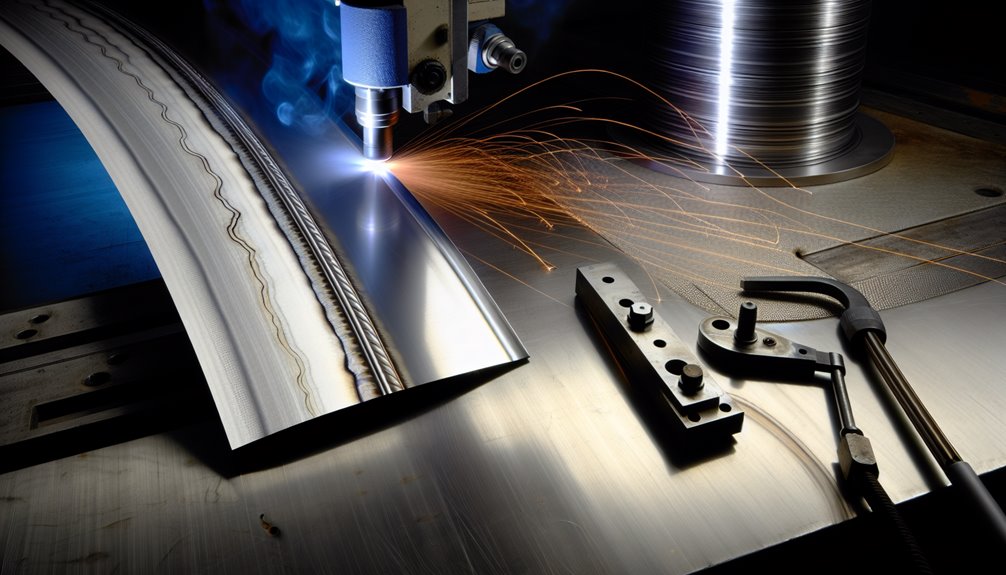
Although stainless steel 304 has well-established mechanical property ranges, its final strength, hardness, and ductility can vary significantly depending on how the material is manufactured and processed. Buyers should therefore evaluate not only the material grade, but also the delivery condition, forming process, tube type, dimensions, and relevant specifications.
Annealed 304 stainless steel is heated and cooled under controlled conditions to relieve internal stress and restore ductility after forming or rolling. In the annealed condition, Grade 304 offers a balanced combination of tensile strength, yield strength, elongation, and formability. This makes it suitable for applications that require bending, welding, deep drawing, expanding, or further fabrication.
Cold working changes these properties. Processes such as cold rolling, drawing, bending, or forming increase the strength and hardness of 304 stainless steel through work hardening. However, this also reduces elongation and makes the material less ductile. Cold-worked 304 may be preferred when higher strength or improved resistance to deformation is required, but it may not be the best choice for parts that need extensive additional forming after delivery.
For this reason, buyers should confirm whether they require annealed, lightly cold-worked, or higher-strength cold-worked 304 stainless steel before placing an order.
Both welded and seamless 304 stainless steel tubes can provide reliable mechanical performance when they are produced according to the correct standard and quality requirements. The choice should be based on the application rather than the assumption that one manufacturing method is always better.
Welded stainless steel tubes are commonly used for decorative, architectural, sanitary, furniture, handrail, and general industrial applications. Their mechanical properties depend on strip quality, welding control, weld bead treatment, heat treatment, dimensional accuracy, and surface finish.
Seamless stainless steel tubes are often selected for higher-pressure, higher-temperature, or more demanding industrial applications. However, seamless construction alone does not guarantee better performance in every situation. Buyers should still confirm the required mechanical properties, wall thickness tolerance, testing requirements, and applicable specification.
For either tube type, a mill test certificate and a clear product standard are important for verifying chemical composition and mechanical property compliance.
Mechanical property requirements aren't identical across every specification — ASTM A554, A269, A270, and A312 each define slightly different criteria depending on intended use, and wall thickness can affect how consistently a given property is achieved across a tube's cross-section. Always confirm which standard governs your project before finalizing a specification, rather than assuming "304" alone fully defines the requirement.
304, 304L, and 304H are closely related austenitic stainless steel grades. Their room-temperature mechanical properties are generally similar, but differences in carbon content affect welding performance and suitability for elevated-temperature service.
| Grade | Main Difference | Mechanical Property Consideration | Best Suited For |
|---|---|---|---|
| 304 | Standard carbon content | Provides a balanced combination of strength, ductility, and formability | General stainless steel tubes, decorative applications, fabrication, and industrial equipment |
| 304L | Lower carbon content | Similar room-temperature strength to 304, with lower risk of carbide precipitation after welding | Welded tubing, tanks, piping, and fabricated components |
| 304H | Higher carbon content | Designed to provide improved strength and creep resistance at elevated temperatures | Heat exchangers, boilers, furnace components, and high-temperature piping |
For most general tube and pipe applications, 304 and 304L offer very similar mechanical performance. The main reason to choose 304L is not higher strength, but improved resistance to intergranular corrosion in welded areas. Its lower carbon content helps reduce the risk of sensitisation during welding.
304H is typically selected for elevated-temperature service. Its higher carbon content helps improve high-temperature strength, but it is not usually the preferred option for applications requiring extensive welding or maximum corrosion resistance in weld zones.
When selecting between these grades, buyers should consider the service temperature, welding requirements, corrosion environment, and applicable material standard rather than comparing mechanical-property values alone.
304 and 316 stainless steel have similar mechanical properties in the annealed condition. In most standard product forms, 316 is not selected because it provides significantly higher tensile or yield strength than 304.
The main difference is corrosion resistance. Grade 316 contains molybdenum, which improves resistance to chlorides, pitting, and crevice corrosion. This makes it a better choice for coastal environments, marine equipment, chemical processing, and applications exposed to salt water or chloride-containing chemicals.
For indoor, decorative, food-grade, general water, and many industrial applications, 304 stainless steel often provides a practical balance of mechanical performance, corrosion resistance, and cost. Grade 316 should be considered when the operating environment presents a higher corrosion risk rather than simply when higher strength is required.
When selecting between 304 and 316 stainless steel tubes, evaluate the actual service environment, chloride exposure, temperature, fabrication requirements, and project budget.
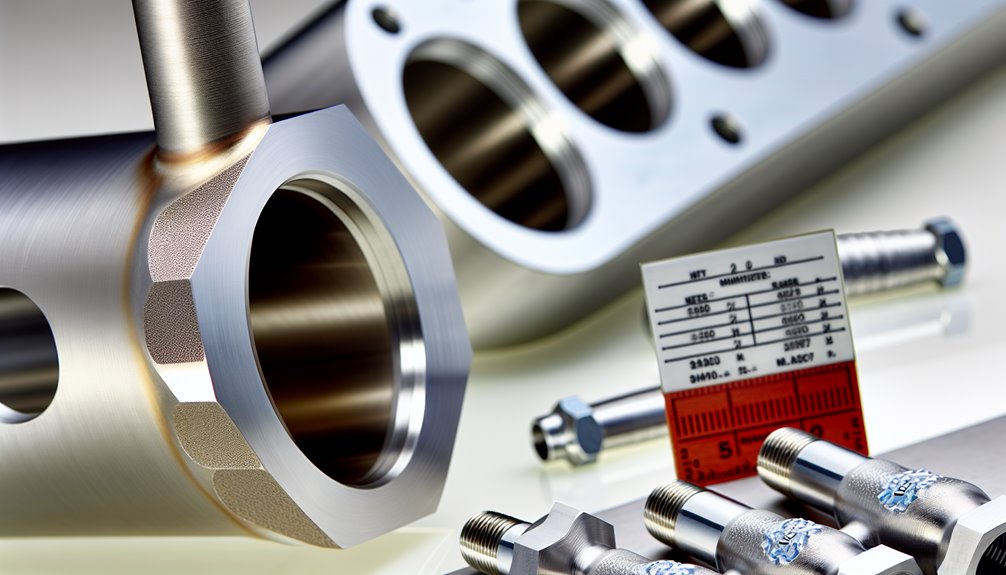
The balanced strength, ductility, hardness, and weldability of 304 stainless steel make it suitable for a wide range of tube applications. However, the final selection should also consider wall thickness, surface finish, fabrication method, and service environment.
304 stainless steel tubes are widely used for handrails, balustrades, railings, furniture frames, shop fittings, and architectural structures. Their strength supports everyday use, while good formability allows bending, welding, polishing, and fabrication into custom designs.
For food, beverage, dairy, pharmaceutical, and hygienic processing systems, 304 stainless steel offers a smooth, cleanable surface and reliable weldability. It is commonly used where cleanliness, corrosion resistance, and ease of maintenance are important.
304 stainless steel tubes can be used in many water supply and building service applications because of their corrosion resistance and long service life. However, water chemistry, chloride concentration, temperature, and installation conditions should be assessed before final material selection.
304 stainless steel is also used in general industrial equipment, heat transfer systems, and moderate-temperature applications. For higher temperatures, higher pressure, or more aggressive chemical environments, buyers should confirm the required material grade, product standard, and mechanical-property requirements before sourcing.
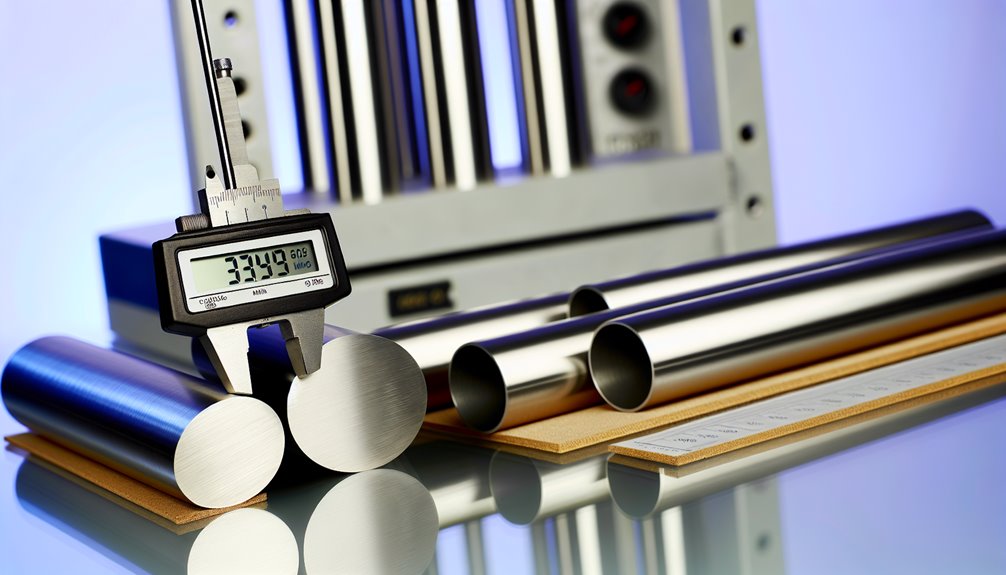
When sourcing 304 stainless steel tubes, specifying only the material grade is not enough. Different applications may require different standards, dimensions, finishes, and testing requirements.
Common standards include ASTM A554 for decorative welded tubing, ASTM A269 for general service tubing, ASTM A270 for sanitary tubing, and ASTM A312 for pressure and high-temperature pipe applications. The correct standard should match the intended service conditions and project requirements.
Buyers should also confirm the following details before ordering:
A complete specification helps ensure the supplied stainless steel tubes meet the required performance, fabrication, and quality standards.
They identify 304 by verifying grade stamps or certificates, performing a magnet test (weakly magnetic after cold work), applying a copper sulfate test (no copper deposit), checking Moly presence via spot test, and confirming density and spark test characteristics.
Electropolished or fine 2B/BA finishes are preferred; lower Ra (<0.5 µm) minimizes biofilm. They resist corrosion, clean rapidly, and endure CIP/SIP. Avoid rough-brushed finishes. Specify passivation, full weld polishing, and crevice-free design to maintain hygienic control.
304 typically prices 100% below 316, with the gap widening when nickel and molybdenum surge. Over time, both track global alloy surcharges; 316’s molybdenum premium adds volatility. Buyers hedge via contracts, dual-qualification, and substitution strategies.
He schedules quarterly inspections, immediate chloride removal, and biannual passivation; contrasts daily cleaning with weekly lubrication, mandates prompt repair of scratches, and annual risk assessments. He controls the environment: avoid stagnant chlorides, limit heat, and guarantee drainage. Documentation and training enforce consistency, maximizing service life.
Yes. 304 stainless steel is fully recyclable without inherent property degradation; composition can be restored via controlled remelting and alloying. Closed-loop segregation, certified scrap streams, and melt chemistry verification guarantee consistent corrosion resistance, mechanical properties, and surface finish across cycles.
Read More: The Reality of 304 Stainless Steel Surgical Grade
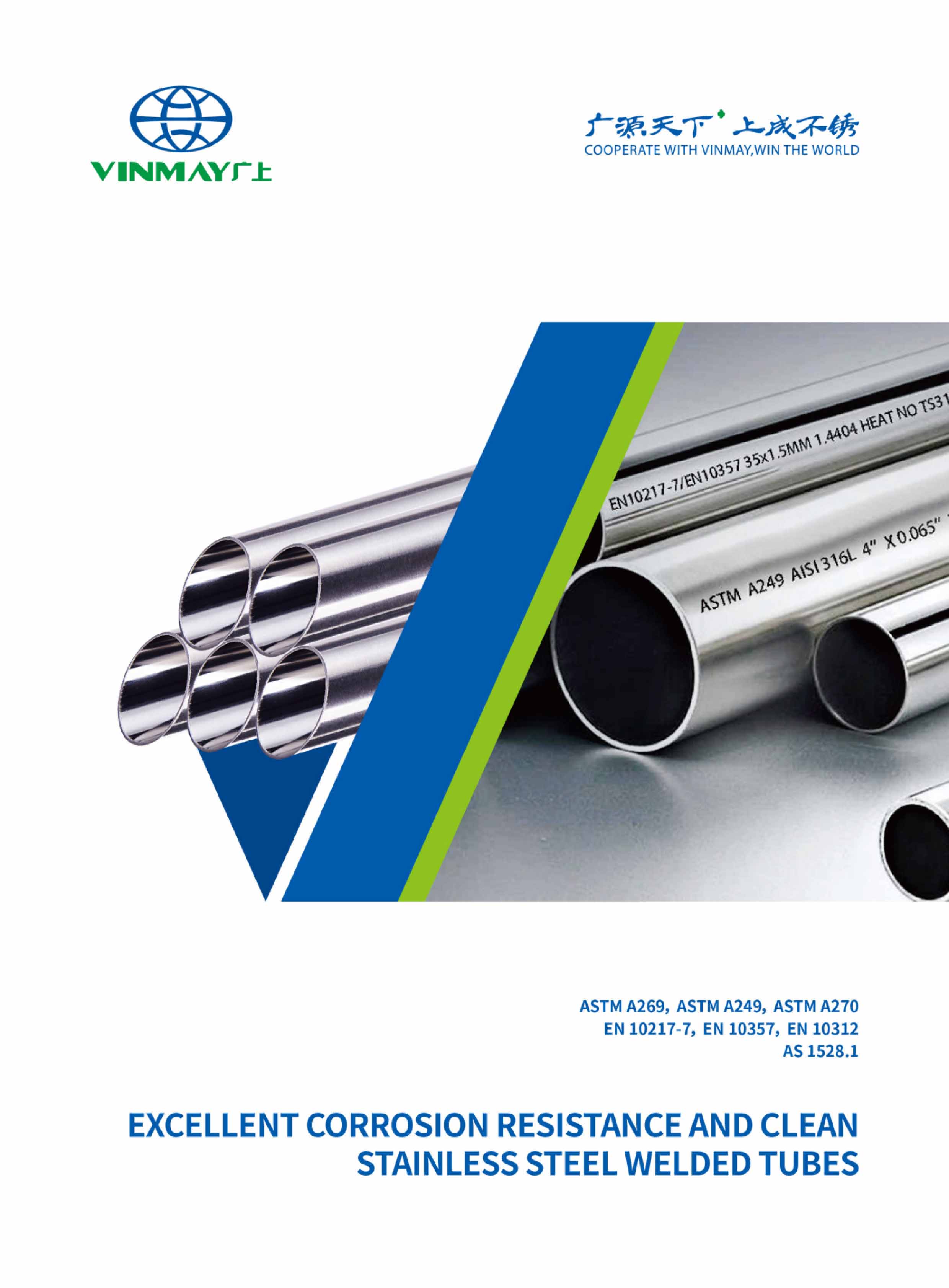
Vinmay is your trusted source for certified 304/304L stainless steel welded tubes and handrail fittings, produced under globally recognized standards including ASTM A270/A249/A269/A554, EN10357/EN10217-7, and DIN11850.
We supply sanitary, construction, water, and heat-treatment tubing, as well as matching handrail fittings, available in 201, 304, 304L, and 316L grades. Each batch is verified through video inspections, free samples, and comprehensive measurement toolsets to ensure dimensional accuracy and material conformity prior to purchase.
Our products meet ASTM/EN/DIN certifications, covering construction, sanitary, and process applications.
📧 Contact: marketing@vinssco.com
📍 Address: No. 6 Jingang Rd, Foshan, China