
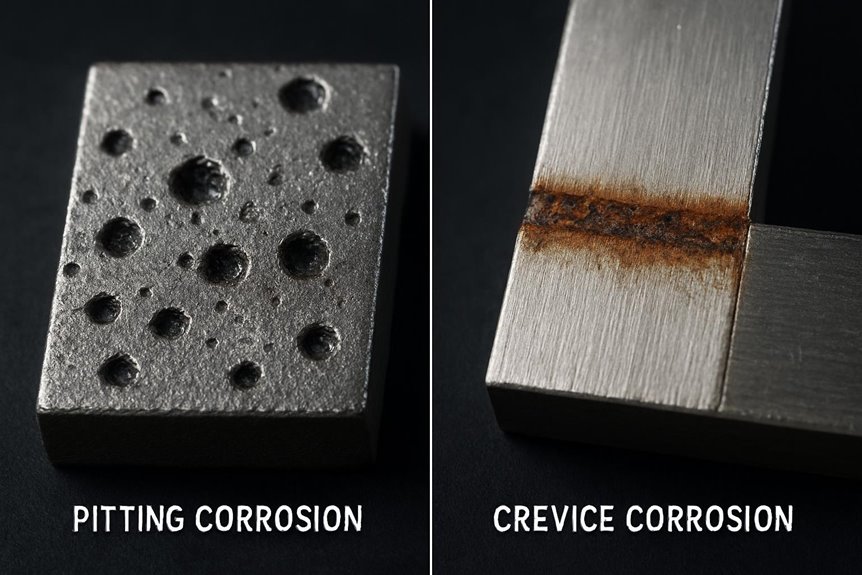
Pitting and crevice corrosion are distinct forms of localized degradation in stainless steel, both compromising its protective oxide layers. Pitting occurs through breakdown in open areas, aggravated by chloride ions. In contrast, crevice corrosion develops in oxygen-depleted confined spaces, like joints, where aggressive ions concentrate. Material selection, such as higher molybdenum content in 316 stainless, is essential for resistance. Strategic design and regular maintenance mitigate risks. Exploring further reveals insights into prevention strategies.
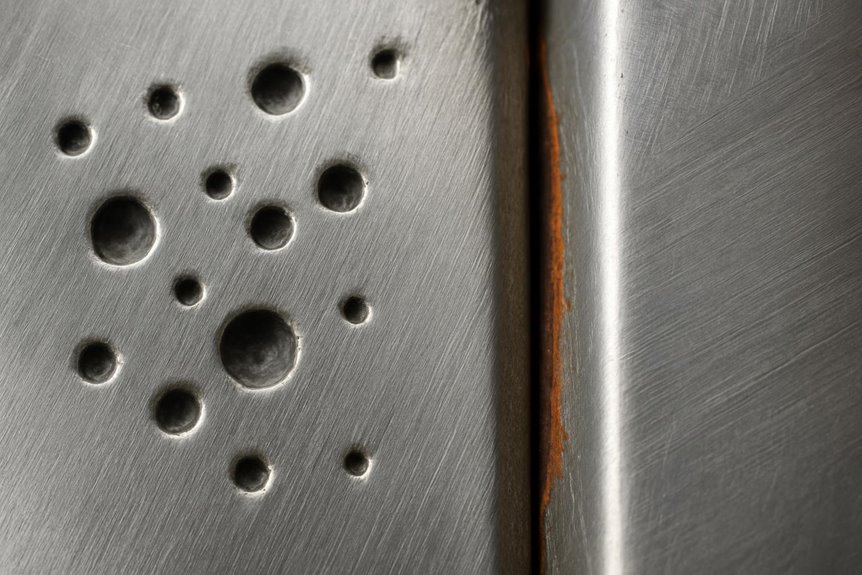
Localized corrosion in stainless steel underscores the vulnerability of materials that otherwise exhibit robust resistance due to their passive oxide layers. This phenomenon manifests mainly as pitting corrosion and crevice corrosion, both of which exploit weaknesses in the protective film. Even highly corrosion-resistant grades such as 304 stainless steel can rust when moisture and chlorides compromise the passive surface.
Localized corrosion reveals the hidden vulnerabilities of stainless steel, challenging its normally strong passive oxide layer.
Pitting corrosion in stainless steel occurs when chloride ions penetrate the oxide layer, initiating localized electrochemical attacks that form deep cavities. These pits can propagate rapidly and compromise structural integrity. The molybdenum in 316 stainless steel improves resistance to pitting in chloride-rich environments.
Conversely, crevice corrosion in stainless steel occurs in confined spaces such as joints or beneath deposits, where oxygen is restricted, leading to aggressive localized environments. Such conditions deplete oxygen and enrich chlorides, accelerating corrosion. Regular inspection of joints and welds helps identify corrosion or damage before localized attack compromises sealing or structural performance.
In high-chloride environments, selecting 316L stainless steel can improve resistance to localized attack due to its higher molybdenum content.
Surface treatments such as passivation can further enhance corrosion resistance by strengthening the protective oxide layer.
Understanding these mechanisms is essential for selecting appropriate alloys and implementing preventive measures in corrosive environments.
Pitting corrosion represents a significant threat to the integrity of stainless steel, characterized by the localized breakdown of its protective oxide layer. This form of localized corrosion in stainless steel initiates when environmental factors compromise the metal's passive film, leading to small, concentrated cavities. A high-quality surface finish helps reduce initiation sites where localized corrosion can begin.
Understanding the mechanisms of pitting corrosion is essential for selecting materials with higher Pitting Resistance Equivalent Number (PREN) values. In harsh chloride-rich environments, 316 stainless steel’s molybdenum content improves pitting resistance compared with grades such as 304 stainless steel. Its molybdenum content of about 2.0–3.0% is a key reason 316 stainless steel performs well in chloride environments.
Grade 316 stainless steel is also widely used in marine environments such as docks and coastal infrastructure because of its strong resistance to saltwater corrosion. For welded components exposed to chlorides, 316L stainless steel can reduce carbide precipitation risk while maintaining corrosion resistance comparable to 316.
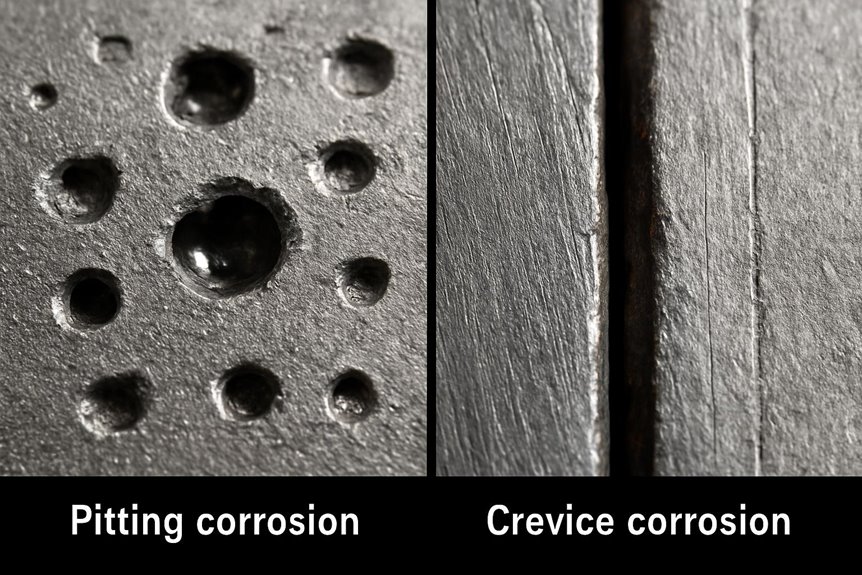
When confined spaces within metal structures create restricted oxygen flow, crevice corrosion emerges as a significant threat to material integrity. This form of corrosion occurs in tight joints, beneath fastener heads, or under debris and sediment accumulation, where the protective oxide film on metals like stainless steel becomes compromised.
As oxygen levels drop, aggressive ions such as chlorides concentrate, resulting in localized acidification that undermines stainless steel passivation. The environment inside these crevices becomes chemically hostile, accelerating material degradation. Accumulated deposits can trap moisture against stainless steel surfaces, interfering with the protective oxide layer and increasing the likelihood of localized corrosion. Regular inspections and cleaning help remove debris and residues before they create surface contamination that promotes crevice corrosion.
Crevice corrosion often goes undetected until significant damage occurs, necessitating diligent inspection and strategic design to minimize or seal crevices. Selecting stainless steel components with accurate wall thickness specifications can support pressure capacity and improve long-term reliability in corrosive service conditions. Applying protective coatings such as clear sealants or rust inhibitors can help create a barrier against trapped moisture and aggressive environmental contaminants. Understanding the mechanisms and locations of crevice corrosion is essential for maintaining structural reliability and longevity in challenging environments. Regular monitoring of water chemistry, including chloride levels, can help identify conditions that increase the risk of localized corrosion.
Although corrosion mechanisms can vary, both pitting and crevice corrosion represent significant challenges in maintaining the integrity of metal structures.
In the comparison of pitting corrosion vs crevice corrosion, both exhibit distinct initiation mechanisms and inspection challenges. Pitting corrosion arises from the localized breakdown of the protective passive layer, whereas crevice corrosion occurs in confined spaces with restricted oxygen flow.
Key differences include:
The molybdenum content in 316 and 316L stainless steel improves resistance to chloride-induced pitting and crevice corrosion.
Compared with 304 stainless steel, 316 stainless steel is often preferred in marine and chemical processing environments because its molybdenum improves resistance to harsh chloride exposure.
Stainless steel’s passive oxide layer can help resist localized corrosion by self-repairing when sufficient oxygen is available. A smooth surface finish can also improve hygiene and corrosion resistance by reducing roughness where contaminants may accumulate.
For components such as rectangular tubing, choosing the appropriate wall thickness can support mechanical strength and influence welding techniques in demanding service conditions.
Understanding these differences aids in effective prevention and control strategies.
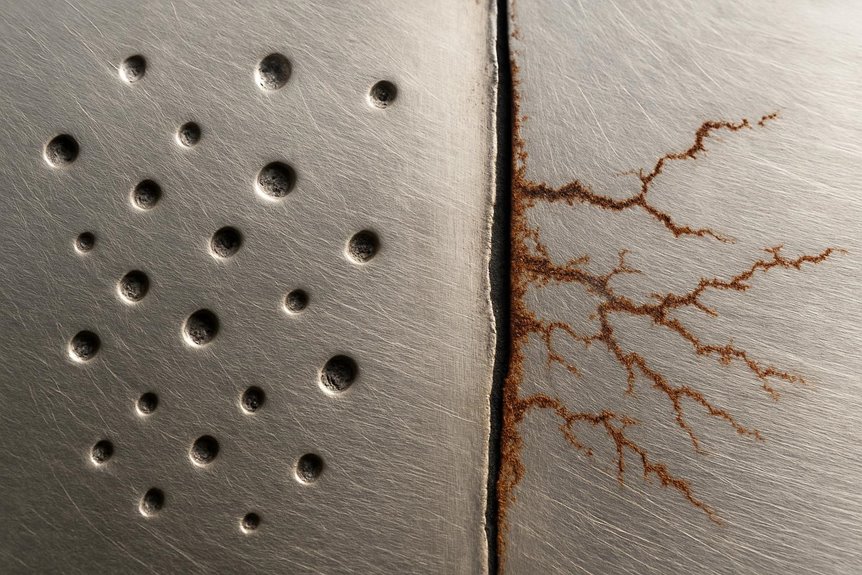
Stainless steel's susceptibility to localized corrosion is primarily due to chloride exposure, which compromises the integrity of its passive oxide layer.
This protective layer, essential for corrosion resistance, can break down under specific environmental conditions such as high temperatures and low pH, leading to accelerated corrosion processes like pitting and crevice corrosion. Tubes produced to ASTM A269 are commonly specified for general-service stainless tubing where consistent quality and corrosion performance are important.
The presence of chlorides, prevalent in coastal and industrial environments, exacerbates this vulnerability by fostering aggressive electrochemical reactions. Even alloys such as 201 stainless steel rely on a chromium-rich oxide film for rust prevention, and damage or contamination can leave the surface vulnerable to localized attack.
For 304 stainless steel rectangular tubing, surface treatments such as passivation can help fortify corrosion resistance by restoring and enhancing the protective oxide layer. Because 304 contains higher nickel content than 201, it generally provides better corrosion resistance in demanding environments.
In marine environments, 316 stainless steel offers improved resistance to pitting and crevice corrosion because its molybdenum content helps withstand chloride-rich saltwater exposure.
A significant factor contributing to the vulnerability of stainless steel to localized corrosion is the presence of chloride ions, which can aggressively attack the material's protective oxide layer.
Chloride corrosion of stainless steel is especially problematic because it undermines the alloy's ability to resist environmental factors. Regular cleaning with mild detergents can help preserve a 2B finish and reduce surface contamination that may contribute to localized corrosion.
The Pitting Resistant Equivalent Number (PREN) is a critical metric in evaluating corrosion resistance:
Because 316 stainless steel contains molybdenum and offers superior corrosion resistance compared with 304 stainless steel, it is often preferred for more aggressive chloride environments.
In medical applications, alloys such as 316LVM are valued for biocompatibility and resistance to corrosion from bodily fluids.
In pharmaceutical environments, 316L stainless steel is often selected for its low carbon content, high purity, and strong resistance to corrosion in controlled processing systems.
For tube-based systems exposed to chlorides, compliance with international standards such as ASTM, DIN, and JIS helps ensure appropriate material quality, dimensions, and mechanical performance.
Understanding these elements allows for informed decisions when selecting materials for environments prone to chloride exposure, ensuring longevity and reliability.
The passive oxide layer on stainless steel, a critical barrier against corrosion, can become compromised under certain environmental conditions. This breakdown often leads to localized corrosion types like pitting and crevice corrosion.
For duplex stainless steel, the vulnerability arises when the chromium-rich oxide film is damaged, exposing the underlying metal to aggressive agents. Chlorides are particularly notorious for penetrating this protective layer, initiating rapid corrosion. Regular visual inspection can help identify early surface-level signs of localized attack before defects progress.
Once the barrier's integrity is breached, electrochemical reactions facilitate further metal deterioration. In duplex stainless steel corrosion scenarios, the presence of ferritic and austenitic microstructures may influence corrosion resistance. Because duplex pipes combine austenitic and ferritic properties, they are often selected for marine environments where strength and corrosion resistance are both critical.
Understanding the passive layer's susceptibility is essential for selecting materials and implementing corrosion control measures, ensuring component longevity and structural integrity. Stainless steel grades such as 316 stainless steel are often chosen for chloride-rich or marine environments because molybdenum improves resistance to localized corrosion. In aggressive service environments, localized corrosion can also contribute to corrosion fatigue, reducing the fatigue life of stainless steel components under cyclic loading. For sanitary and industrial piping, evaluating chemical compatibility is also essential to prevent reactions that can accelerate material degradation.
Understanding the breakdown of the passive oxide layer on stainless steel sets the stage for examining the environmental conditions that render these materials susceptible to localized corrosion.
Key factors include:
In particular, stainless steel 304 relies on a chromium-rich passive film but becomes vulnerable to chloride pitting and stress corrosion in warm chloride environments, especially above 60°C (140°F).
Its typical 18/8 composition of chromium and nickel supports durability and corrosion resistance, but it does not eliminate the risk of localized attack under aggressive chloride exposure.
For chloride-rich or marine service, 316 stainless steel is often selected because its molybdenum content improves corrosion resistance compared with 304.
The added molybdenum content in 316 stainless steel increases resistance to pitting and crevice corrosion in seawater and chemical processing environments.
These conditions facilitate the formation of localized attack sites, undermining structural integrity.
Because 304 stainless steel contains roughly 17.5–19.5% chromium, its chromium content helps form the passive oxide layer that provides oxidation and corrosion resistance.
The interplay of these factors necessitates meticulous material selection and proactive design strategies to mitigate risks in challenging environments.
Control over these variables is vital for maintaining system longevity and performance.
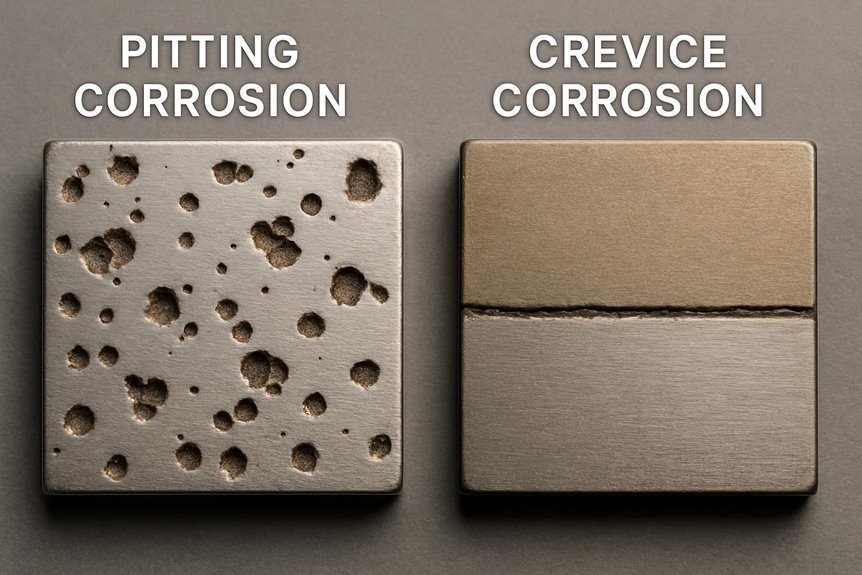
Alloy composition markedly influences corrosion resistance, with elements such as chromium, nickel, and molybdenum playing essential roles.
For example, 304 stainless steel offers baseline resistance but is outperformed by 316L due to its molybdenum addition, enhancing protection against pitting. Its classic 18% chromium and 8% nickel composition helps form a protective passive layer that supports corrosion resistance in many structural and fabrication applications.
Duplex stainless steels, with higher chromium and nitrogen levels, exhibit superior performance, often assessed using the Pitting Resistance Equivalent Number (PREN) to quantify their robustness in corrosive environments. In square tubing and similar fabricated forms, wall thickness can also influence strength and long-term corrosion performance in demanding applications.
In applications requiring hygiene or biocompatibility, 316L stainless steel is often selected because it resists harsh cleaning, saline exposure, and sterilization better than many standard food-grade alloys. Lower-nickel grades such as Stainless Steel 201 can be cost-effective, but their corrosion resistance is more limited in harsh or highly polluted environments. In chloride-rich service conditions, 316 stainless steel’s 2–3% molybdenum content helps improve resistance to localized corrosion mechanisms such as pitting and crevice attack.
304 stainless steel, renowned for its versatility and corrosion resistance, is primarily composed of iron, chromium, and nickel. This alloy's composition provides a robust protective oxide layer, enhancing its resistance to oxidation and various forms of corrosion. In structural forms such as rectangular tubes, 304 stainless steel is often produced to ASTM A554 standards for reliable fabrication and construction use.
The chromium content, typically around 18%, forms a passive film that shields the metal from environmental factors. Nickel, approximately 8-10%, contributes to the alloy's ductility and toughness. ASTM A270 specifies Grade 304 chemistry with up to 0.08% carbon, 18.00-20.00% chromium, and 8.00-10.50% nickel for hygienic applications. ASTM A554 also defines surface finish requirements for welded stainless steel mechanical tubing, supporting consistent quality in visible architectural and fabrication applications.
Compared with 304, 316L stainless steel provides greater corrosion resistance because its molybdenum content improves performance in more aggressive environments.
These characteristics make 304 stainless steel a preferred choice for applications requiring a balance of strength and corrosion resistance, although not suitable for extreme chloride exposure.
316L stainless steel, a low-carbon variant of the 316 alloy, offers enhanced resistance to corrosion, particularly in chloride-rich environments.
This alloy's composition, featuring molybdenum, greatly improves its pitting and crevice corrosion resistance. The low carbon content reduces carbide precipitation during welding, maintaining the integrity of the passive film.
Chromium, at over 16%, forms a stable oxide layer that prevents localized attack. Nickel enhances ductility and toughness, further improving its performance in harsh conditions.
316L's corrosion resistance is essential for applications in marine and chemical industries where chloride ions pose a considerable threat.
Its ability to withstand high temperatures and aggressive environments makes it a preferred choice for critical industrial applications demanding reliability and longevity.
Duplex stainless steel, characterized by its dual-phase microstructure of austenite and ferrite, offers superior corrosion resistance compared to conventional stainless steels. This unique composition enhances its ability to withstand both pitting and crevice corrosion.
The alloy's performance is influenced by its balanced chemical composition, which typically includes:
The synergy between these elements results in a robust material ideal for harsh environments where control over corrosion is paramount. This makes duplex stainless steel a preferred choice in industries such as oil, gas, and chemical processing.
The dual-phase microstructure of duplex stainless steel exemplifies the impact of alloy composition on corrosion resistance, highlighting the importance of PREN (Pitting Resistant Equivalent Number).
PREN calculates the resistance to pitting corrosion by considering essential elements like chromium, molybdenum, and nitrogen. Higher PREN values indicate superior resistance, guiding material selection for environments with aggressive halide ions.
The precise balance of alloying elements enhances the passive film's stability, vital in preventing localized attack. Chromium enhances the oxide layer, molybdenum provides pitting resistance, and nitrogen augments strength and corrosion resistance.
Understanding and controlling these variables allows engineers to predict performance, ensuring the best material selection for challenging applications and reducing the risk of unexpected corrosion-related failures.
Fabrication quality and surface finish critically impact the corrosion performance of metals, particularly regarding pitting and crevice corrosion.
High weld quality guarantees the integrity of joints, reducing the risk of crevice formation and subsequent corrosion initiation.
Surface roughness, along with effective pickling and passivation processes, enhances the protective oxide layer, minimizing sites for localized attack.
Assuring weld quality is paramount in mitigating corrosion performance issues, as the fabrication process and surface finish greatly influence material integrity. Imperfections in welding can act as initiation sites for both pitting and crevice corrosion, necessitating stringent quality control measures.
Each of these elements plays a critical role in sustaining the longevity of welded structures, particularly in corrosive environments.
Understanding their impact allows for informed decisions, safeguarding material performance and operational reliability.
Surface roughness plays a critical role in corrosion performance, influencing the initiation and propagation of corrosive attacks. Variations in surface texture, resulting from fabrication processes, affect the protective oxide layer's integrity.
Rougher surfaces can harbor micro-crevices and defects, providing sites for localized corrosion initiation, such as pitting and crevice corrosion. Precision in surface finish is paramount; smoother surfaces reduce crevice formation, enhancing corrosion resistance.
The manufacturing process, including machining and polishing, greatly impacts surface quality. Implementing stringent surface finishing standards mitigates corrosion risks by minimizing surface irregularities.
Advanced techniques, such as electro-polishing, can further optimize surface smoothness, ultimately contributing to improved material longevity and performance under corrosive conditions. Understanding these factors is essential for effective corrosion control strategies.
In the domain of corrosion management, pickling and passivation emerge as essential processes, meticulously enhancing the corrosion resistance of stainless steel surfaces. These treatments effectively remove contaminants and restore the protective oxide layer.
Together, these treatments optimize the material's performance in corrosive environments. Their application guarantees that stainless steel components maintain structural integrity and longevity, vital for industries where corrosion control is paramount.
Crevice corrosion in tube and fitting systems commonly originates at flange connections, clamp assemblies, and gasket interfaces, where crevices restrict oxygen flow, promoting corrosive conditions.
Dead legs and areas with poor drainage exacerbate this issue by allowing moisture and chlorides to accumulate, further accelerating material degradation.
Effective design and maintenance strategies are essential to mitigate these risks and guarantee system integrity.
Flange connections in tube and fitting systems are essential yet often overlooked sources of crevice corrosion. These areas create confined spaces where corrosive agents can accumulate, leading to rapid material degradation.
The design and maintenance of flange connections require careful consideration to mitigate corrosion risks. Key factors include:
Understanding these elements allows for better control over system integrity, reducing the likelihood of unexpected failures and extending the lifespan of the installation.
Flange connections exemplify areas susceptible to crevice corrosion, yet clamp assemblies present a similarly important risk in tube and fitting systems.
These assemblies, often employed to secure tubes, create tight spaces where corrosive agents can accumulate, compromising the protective oxide layer. The restricted geometry in clamps limits fluid flow, promoting stagnant conditions ideal for crevice corrosion initiation.
As chloride ions infiltrate these confined spaces, they exacerbate the breakdown of passive films, accelerating material degradation.
Regular inspection and maintenance are essential to identify early signs of corrosion within clamp assemblies.
Utilizing materials with high Pitting Resistant Equivalent Number (PREN) and implementing design strategies that minimize crevices can greatly mitigate risks, ensuring system integrity and longevity in corrosive environments.
Gasket interfaces, essential components in tube and fitting systems, often present significant crevice corrosion risks. These interfaces create tight crevices where corrosive agents can accumulate, leading to localized breakdown of protective oxide layers.
The conditions within these crevices become acidic and chloride-rich, accelerating corrosion processes. Key factors influencing crevice corrosion at gasket interfaces include:
In tube and fitting systems, dead legs and poor drainage represent critical sources of crevice corrosion, particularly in environments where moisture and chlorides are prevalent.
Dead legs, defined as stagnant sections of piping with minimal fluid flow, create ideal conditions for chloride accumulation and oxygen depletion, accelerating crevice corrosion.
Poor drainage exacerbates this by allowing water and corrosive agents to remain trapped within tubing systems, fostering an aggressive environment for corrosion initiation.
The lack of movement in these areas prevents the renewal of protective oxide films on metal surfaces, increasing susceptibility.
Effective design strategies, such as minimizing dead legs and ensuring proper drainage, are essential for controlling crevice corrosion and maintaining the integrity of tube and fitting systems.
To mitigate pitting and crevice corrosion, selecting alloys with high Pitting Resistance Equivalent Number (PREN) is essential, as these materials offer enhanced protection in corrosive environments.
Surface treatments such as passivation and electropolishing can improve resistance by removing contaminants and enhancing the passive layer.
Additionally, design modifications to eliminate crevices, combined with routine inspection and maintenance, are critical for early detection and prevention of corrosion-related degradation.
Selecting the appropriate alloy is vital in preventing pitting and crevice corrosion, as it directly influences the material's resistance to these localized attacks.
Alloys with enhanced chromium, molybdenum, and nitrogen content offer superior protection by forming robust passive films. Key considerations include:
Selecting alloys based on these parameters guarantees durability and long-term performance in corrosive settings, providing a strategic advantage in material longevity.
Enhancing surface conditions plays an essential role in mitigating pitting and crevice corrosion. Surface treatments such as passivation, polishing, and coating application can greatly reduce corrosion susceptibility.
Passivation involves removing free iron and forming a stable oxide layer, boosting resistance. Polishing decreases surface roughness, minimizing sites for corrosion initiation. Advanced coatings provide a physical barrier against aggressive environments.
Regular maintenance, including cleaning and inspection, is critical for sustaining surface integrity. Electrochemical techniques, such as cathodic protection, may also be employed to control potential differences that drive corrosion.
Selecting materials with a high Pitting Resistant Equivalent Number (PREN) can further enhance surface resilience. These strategies collectively guarantee long-term durability and peak performance in corrosive settings.
Improving surface conditions is instrumental in countering pitting and crevice corrosion, and the next logical step involves addressing crevice formation. Eliminating potential sites for crevice corrosion requires a strategic and methodical approach.
Key measures include:
Implementing these strategies effectively reduces the risk of localized corrosion by impeding the conditions that allow it to thrive.
Routine inspection and maintenance are critical for preventing pitting and crevice corrosion, as these techniques allow for early detection and mitigation of potential issues.
Regular visual examinations should focus on identifying signs of corrosion such as surface pits, reddish-brown iron oxide deposits, and hidden crevices.
Employing advanced non-destructive testing (NDT) methods, such as ultrasonic and radiographic testing, enhances detection of subsurface anomalies.
Implementing a tailored maintenance schedule based on environmental conditions and material susceptibility is crucial.
Utilizing corrosion-resistant alloys like Ferralium 255 or Alloy 625 further mitigates risk.
Adhering to industry standards like ASTM G48 for corrosion testing guarantees peak material performance.
Continuous training and knowledge dissemination empower personnel to execute effective corrosion prevention strategies.
When considering corrosion resistance, material quality plays a crucial role in determining a structure's longevity and performance. The integrity of materials is influenced by several factors, each contributing to enhanced resistance against pitting and crevice corrosion.
Manufacturing consistency is essential, as variations can lead to weak points susceptible to corrosion.
The application of these quality measures guarantees that materials maintain their structural integrity, providing a robust defense against aggressive environmental conditions.
Temperature increases accelerate both pitting and crevice corrosion rates by enhancing electrochemical reaction rates. Elevated temperatures destabilize protective oxide layers, increasing susceptibility, especially in chloride-rich environments, necessitating careful material selection and design to mitigate risks.
Like hidden predators in clear waters, pitting and crevice corrosion can indeed occur in freshwater environments. Essential factors include water chemistry and alloy composition, necessitating vigilant monitoring and strategic material selection to mitigate these insidious threats.
Inhibitors mitigate localized corrosion by forming protective barriers on metal surfaces, reducing ion exchange and oxygen access. This chemical layer minimizes the electrochemical reactions responsible for pitting and crevice corrosion, enhancing material longevity and performance.
Regular maintenance reveals corrosion threats hidden beneath metal surfaces, preventing catastrophic failures. Detailed inspections, precise cleaning, and timely repairs strengthen protective barriers. This vigilant approach guarantees structural integrity, preserving assets and enhancing operational efficiency in demanding environments.
Industries such as oil and gas, marine, and chemical processing are particularly susceptible to pitting and crevice corrosion due to harsh environmental conditions, presence of chlorides, and complex equipment designs that create vulnerable interfaces for corrosion initiation.
Coincidentally, the same protective oxide layers that make stainless steel appealing also render it susceptible to localized corrosion when compromised. Pitting and crevice corrosion, though distinct in their mechanisms, share the commonality of exploiting this vulnerability. By comprehending these nuances and the environmental triggers, industry professionals can strategically enhance material selection and design. This proactive approach mitigates risks, minimizes costly repairs, and guarantees the longevity of infrastructure. Emphasizing material quality and precision in fabrication is paramount in combating these corrosion challenges.




[…] excessive chloride content or contaminants can increase the risk of localized corrosion, including pitting corrosion, especially if moisture remains trapped inside the pipe after […]