Stainless steel's longevity, ranging from 50 to over 100 years, depends on its grade, environmental exposure, and maintenance. Grades 304 and 316 vary in their corrosion resistance, with 316 superior in marine settings due to its molybdenum content. The self-healing oxide layer formed by chromium is vital for its corrosion resistance. Regular maintenance and appropriate grade selection tailored to environmental conditions enhance its lifespan. Understanding these factors reveals further insights into stainless steel's enduring performance.

How long can stainless steel truly last? The stainless steel lifespan varies considerably based on its grade and environmental exposure. Many 316 tubes meet ASTM A554 specifications, ensuring consistent quality and durability in demanding applications. Proper care, including avoiding contamination that can cause iron contamination, plays a key role in extending its service life.
Commonly used 304 stainless steel, known for its durability in indoor settings, can last 50 to 100+ years, offering excellent corrosion resistance and tensile strength. Its reliable yield strength and high elongation also contribute to long-term structural performance under moderate loads.
304 stainless steel can last 50 to 100+ years indoors, excelling in corrosion resistance and tensile strength.
For harsher environments, 316 stainless steel, with its superior resistance to saltwater and industrial chemicals, can endure 50+ years in marine applications. Its durability is strongly influenced by exposure to chloride levels, which can accelerate localized corrosion if not managed.
These variations underscore the importance of selecting the appropriate grade to maximize stainless steel durability.
Application-dependent factors, such as exposure to moisture and contaminants, further influence longevity.
Additionally, 316 stainless steel benefits from enhanced resistance to chloride attack due to its molybdenum content, further extending its service life in aggressive environments.
Stainless steel's longevity is primarily attributed to its self-healing chromium oxide layer, which provides robust resistance against corrosion and wear. In grades like 316, the presence of molybdenum content further enhances resistance to pitting and crevice corrosion in harsh environments. Additionally, adherence to standards like ASTM A270 ensures material quality and surface finish that support long-term durability.
This protective barrier regenerates in the presence of oxygen, ensuring long-term structural stability even in challenging environments. Additionally, its low carbon composition in variants like 316L helps prevent carbide precipitation during welding, preserving corrosion resistance over time. Its strong mechanical performance, including notable tensile strength, also contributes to its reliability in structural applications.
The combination of these properties makes stainless steel a preferred choice for applications demanding durability and minimal maintenance.
However, factors like chloride exposure can still compromise this protective layer over time, making proper material selection and maintenance important for maximizing service life.
The remarkable longevity of stainless steel is largely attributed to its self-healing chromium oxide layer. This protective layer forms when chromium in the alloy reacts with oxygen, creating a thin yet robust barrier against corrosion. This mechanism underpins its widespread use in industrial applications where durability is essential. In food-grade applications, alloys like food-grade 304 further enhance durability due to their optimized chromium and nickel content.
While the question "does stainless steel rust" arises, this layer provides significant stainless steel corrosion resistance, extending its service life. However, in environments with high chloride exposure, pitting corrosion can still occur and compromise this protective layer if not properly maintained.
When scratched or damaged, exposure to oxygen allows the layer to repair itself, maintaining the integrity of stainless steel surfaces, including tubes and other applications. This resilience is especially important in structural uses where high tensile strength and durability are required for long-term performance.
This inherent self-repairing ability guarantees stainless steel tube lifespan remains extensive, even in challenging environments. Additionally, grades like 316 benefit from molybdenum content, which further enhances resistance to chloride-induced corrosion. Therefore, the chromium oxide layer is a critical factor in why stainless steel remains a preferred material for its durability and long-term performance.
Due to its unique composition, stainless steel exhibits exceptional resistance to corrosion and wear, making it a preferred choice in numerous applications. This resistance is primarily attributed to the presence of chromium, which forms a passive, self-repairing oxide layer that shields the underlying metal from corrosive elements. However, even grades like 201 can develop rust if the protective chromium oxide film is compromised by contaminants or harsh environments. Compared to 201, 304 offers enhanced durability due to its higher nickel content, which improves resistance to oxidation and corrosion.
The addition of nickel and molybdenum in certain grades further enhances this protective capability, especially in aggressive environments. In particular, the inclusion of molybdenum content in 316 stainless steel significantly improves resistance to chloride-rich conditions such as marine environments. This makes 316 a preferred choice in industries requiring strong chloride resistance such as marine and chemical processing. The material's microstructure, along with precise alloying, guarantees minimal degradation over time.
Its resilience to wear is also notable, allowing it to maintain structural integrity and surface appearance even under mechanical stress. In grades like 304, a high chromium content also contributes to strong oxidation resistance at elevated temperatures, further extending service life. This combination of properties guarantees that stainless steel remains durable and reliable, considerably prolonging its service life in diverse settings.
One of the key reasons stainless steel delivers such a long service life is its exceptional structural stability. Its durability begins with a minimum chromium content of 10.5%, which forms a self-healing passive layer that continuously protects the surface from corrosion and oxidation. This protective film helps preserve both appearance and mechanical performance, even in demanding environments.
Austenitic grades such as 304 and 316L are widely used because they combine excellent corrosion resistance with strong weldability and fabrication performance. In particular, 304 stainless steel contains approximately 18–20% chromium and 8–10.5% nickel, providing a balanced combination of strength, toughness, and long-term corrosion protection. Stainless steel also exhibits strong work-hardening characteristics and maintains reliable mechanical properties under continuous loading, making it suitable for structural, process, and sanitary applications that require decades of service.
The table below summarizes the key factors that contribute to long-term structural stability:
| Factor | Description | Impact on Service Life |
|---|---|---|
| Chromium Content | Forms a self-healing passive oxide layer | Improves corrosion and oxidation resistance |
| Alloying Elements | Nickel, molybdenum, and nitrogen enhance performance | Increases strength and durability in aggressive environments |
| Mechanical Properties | High tensile strength and good toughness | Supports long-term structural reliability |
| Weldability | Enables strong, durable fabricated assemblies | Maintains integrity in welded systems |
| Maintenance Practices | Regular cleaning helps preserve the passive layer | Extends service life and appearance |
When the appropriate grade is selected and properly maintained, stainless steel can provide reliable performance for several decades, even in environments exposed to moisture, chemicals, temperature fluctuations, or mechanical stress. This combination of corrosion resistance, strength, and structural integrity is one of the primary reasons stainless steel remains a preferred material for long-term infrastructure and process systems.
The lifespan of stainless steel depends on several factors, including material grade, environmental conditions, surface finish, fabrication quality, and maintenance practices. While stainless steel is known for its durability and corrosion resistance, its actual service life can vary significantly depending on how and where it is used.
Selecting the correct grade for the operating environment is often the most important factor. Exposure to chlorides, moisture, chemicals, or high temperatures can accelerate corrosion if the material is not properly specified. Surface finish quality, welding procedures, and post-fabrication treatments such as pickling and passivation also influence long-term performance by protecting the passive oxide layer that gives stainless steel its corrosion resistance.
With proper material selection, manufacturing control, and routine maintenance, stainless steel components can provide reliable service for decades in demanding industrial, architectural, and hygienic applications.
Material grade has a direct impact on corrosion resistance, mechanical performance, and overall service life.
The most commonly used stainless steel grades include 201, 304, 316, and duplex stainless steels. Each grade contains different alloying elements that determine how well it performs in specific environments.
Grade 304 offers an excellent balance of durability, corrosion resistance, and cost, making it suitable for most indoor and general-purpose applications. Grade 316L contains added molybdenum, providing improved resistance to chlorides, pitting, and crevice corrosion. As a result, it is widely used in marine, chemical processing, and hygienic systems.
For highly corrosive environments, duplex stainless steels offer even greater strength and corrosion resistance than conventional austenitic grades. Selecting the appropriate grade helps reduce maintenance requirements, minimize replacement costs, and maximize service life.
Environmental conditions play a major role in determining how long stainless steel will last.
In dry indoor environments, stainless steel can maintain its appearance and performance for many decades with minimal maintenance. More aggressive conditions, such as coastal locations, chemical processing facilities, or areas with high humidity, place greater demands on the material.
Chlorides are one of the most common causes of localized corrosion. Salt-laden air, seawater, and certain cleaning chemicals can attack the passive layer and increase the risk of pitting corrosion. In these environments, higher-alloy grades such as 316L or duplex stainless steel often provide significantly longer service life than standard grades.
Understanding the operating environment is essential when selecting stainless steel for long-term reliability.
Surface finish has a significant influence on both corrosion resistance and cleanability.
Smooth finishes reduce the number of microscopic crevices where moisture, chemicals, and contaminants can accumulate. As a result, polished and properly finished stainless steel surfaces generally provide better corrosion resistance and require less maintenance.
In hygienic applications, surface roughness is particularly important. Lower Ra values improve cleanability and help prevent bacterial growth, making them essential in food processing, pharmaceutical, and high-purity systems.
Additional treatments such as electropolishing, pickling, and passivation further enhance corrosion resistance by strengthening the protective oxide layer and removing surface contaminants.
Even the highest-grade stainless steel can experience premature failure if fabrication and welding are poorly controlled.
Improper welding techniques may introduce excessive heat, contamination, or surface defects that weaken corrosion resistance. Excessive heat input can also cause sensitization, reducing the material's ability to maintain its protective passive layer.
Processes such as TIG welding and orbital welding are widely used to achieve clean, consistent welds with minimal distortion. Following welding, pickling and passivation help restore corrosion resistance by removing heat tint and surface contaminants.
Consistent fabrication practices, qualified welding procedures, and proper post-weld treatment all contribute to longer service life and improved reliability.
Although stainless steel requires less maintenance than many other materials, routine care remains important for maximizing service life.
Regular cleaning removes dirt, salts, and chemical residues that may compromise the passive oxide layer. Mild detergents, soft cloths, and clean water are generally sufficient for most applications. Abrasive cleaners, steel wool, and chloride-based chemicals should be avoided, as they can damage the surface and promote corrosion.
Periodic inspections can identify early signs of contamination, mechanical damage, or localized corrosion before they become significant issues. Combined with proper material selection and fabrication quality, routine maintenance helps ensure stainless steel continues to perform reliably for decades.
The longevity of stainless steel varies considerably across different grades due to their distinct compositions and corrosion resistance.
Grade 201, while cost-effective, offers lower corrosion resistance compared to the more common 304, which is suitable for general-purpose indoor applications.
For environments requiring superior durability, 316L and Duplex stainless steels provide enhanced resistance to harsh conditions, with 316L excelling in marine environments and Duplex offering a balance of strength and corrosion resistance.

201 stainless steel, a popular alloy known for its cost-effectiveness, offers moderate corrosion resistance and durability. It is an austenitic manganese-nickel-chromium alloy that balances affordability with performance, making it suitable for applications where exposure to environmental elements is limited.
The absence of significant nickel content reduces costs, but this also impacts its resistance to pitting and crevice corrosion in chloride environments.
This grade performs adequately in indoor or mild outdoor conditions, but prolonged exposure to harsh elements can degrade its integrity over time. Its lifespan is further influenced by factors such as maintenance practices and environmental conditions.
Ideal performance is achieved through regular cleaning and avoiding contact with harsh chemicals. Consequently, 201 stainless steel provides a practical solution for cost-sensitive projects with controlled environments.
304 stainless steel is the most widely used stainless steel grade due to its combination of corrosion resistance, mechanical strength, and cost-effectiveness. Containing approximately 18% chromium and 8% nickel, it forms a durable passive oxide layer that protects the surface from rust and oxidation in a wide range of indoor and mildly corrosive environments.
Its versatility makes it a common choice for stainless steel tubes, food processing equipment, architectural structures, handrails, water systems, and industrial components. Under normal service conditions, 304 stainless steel can provide decades of reliable performance with minimal maintenance.
However, service life varies depending on several factors, including environmental conditions, surface finish quality, fabrication practices, and exposure to corrosive substances such as chlorides. Proper material selection and routine cleaning can significantly extend its lifespan.
| Factor | Influence on Service Life |
|---|---|
| Chromium Content | Forms a protective passive layer that resists corrosion |
| Nickel Content | Improves toughness, stability, and corrosion resistance |
| Environmental Exposure | Coastal, industrial, or chemical environments may accelerate corrosion |
| Surface Finish Quality | Smoother finishes reduce contamination and corrosion risk |
| Fabrication & Welding Quality | Proper processing helps maintain corrosion resistance |
| Maintenance Practices | Regular cleaning helps preserve long-term performance |
In indoor, commercial, and sheltered outdoor applications, 304 stainless steel often remains serviceable for 30–50 years or longer, making it one of the most durable and economical materials available for long-term use.
Known for its exceptional corrosion resistance, 316L stainless steel excels in challenging environments. This low-carbon variant of 316 stainless steel offers superior resistance to pitting and crevice corrosion, particularly in chloride-rich settings such as marine and industrial applications.
The reduced carbon content minimizes carbide precipitation during welding, enhancing its durability and making it a preferred choice for welded structures.
316L's longevity is influenced by its ability to maintain structural integrity under mechanical stress and exposure to aggressive chemicals. Its durability extends the service life of components, often surpassing 50 years in ideal conditions.
Regular maintenance and proper cleaning can further prolong its lifespan, ensuring that the protective oxide layer remains intact. Consequently, 316L is indispensable in applications demanding high corrosion resistance and strength.
Duplex stainless steel offers a unique combination of strength and corrosion resistance, making it ideal for demanding applications.
This grade is characterized by a mixed microstructure of austenite and ferrite, which provides enhanced mechanical properties and superior resistance to stress corrosion cracking. Typically containing 22-25% chromium, 4.5-6.5% nickel, and additional elements like molybdenum, duplex stainless steel is highly effective in chloride-rich environments such as marine and chemical industries.
Its lifespan can extend beyond traditional austenitic grades, particularly in harsh environments, due to its robustness against localized corrosion.
Duplex stainless steels are often preferred for their cost-effectiveness, offering a balance between performance and material cost. Selecting the appropriate duplex grade guarantees longevity and reduced maintenance, maximizing lifecycle value.
The lifespan of stainless steel varies considerably across different environments due to its interaction with specific conditions.
In indoor applications, stainless steel can last indefinitely with minimal maintenance, while coastal and marine environments demand grades like 316 to withstand salt-induced corrosion.
In industrial processing, food and beverage systems, and water treatment facilities, the material's resistance to chemical exposure and hygiene requirements guarantees durability, though regular maintenance is critical to maximize longevity.
In many indoor applications, stainless steel demonstrates remarkable longevity, often exceeding several decades in environments with minimal corrosive exposure.
The grade of stainless steel is pivotal, with 304 being particularly effective due to its balance of durability and cost-efficiency. This grade resists oxidation and maintains structural integrity under typical indoor conditions, such as temperature fluctuations and humidity.
The self-repairing oxide layer, intrinsic to stainless steel, mitigates corrosion risks, while the material's high tensile strength supports resistance to mechanical stress.
Regular maintenance, including cleaning with non-abrasive agents, further extends its lifespan. Aesthetic retention is notable, as stainless steel preserves its finish with minimal upkeep, offering a sustainable and enduring solution for various indoor applications.
Stainless steel's performance in coastal and marine environments hinges on its grade and environmental exposure.
316 stainless steel, known for its superior resistance to saltwater corrosion, is often preferred for these challenging conditions. Its molybdenum content enhances pitting resistance, essential in salt-laden air and water.
The expected lifespan of stainless steel in such environments is greatly influenced by factors like chloride concentration and humidity. Regular maintenance, including cleaning to remove salt deposits, further extends service life.
In contrast, 304 stainless steel may suffer from accelerated degradation due to its lower corrosion resistance in these conditions.
Selecting the appropriate grade and implementing routine upkeep are important to ensuring the longevity of stainless steel structures in coastal and marine settings.
While coastal environments present unique challenges to stainless steel, industrial processing facilities require a different approach due to varied environmental factors.
The selection of stainless steel grade is critical, as these facilities often expose materials to high temperatures, chemical agents, and mechanical stress. Grade 316 stainless steel is frequently chosen for its superior resistance to corrosive chemicals and high-temperature environments.
Additionally, the presence of abrasive particles necessitates a focus on wear resistance. Proper maintenance, including regular cleaning and inspection, enhances longevity by preserving the protective oxide layer.
The controlled environment within these facilities allows stainless steel to maintain structural integrity and performance for decades, provided the correct grade is selected and appropriate care procedures are implemented.
Although food and beverage systems demand high standards of hygiene and durability, the expected lifespan of stainless steel in these environments is influenced by several factors.
The grade of stainless steel plays a pivotal role; 316 stainless steel is often preferred due to its superior resistance to corrosion from acidic and saline conditions found in food processing.
The maintenance practices, including regular cleaning with mild detergents, greatly impact longevity.
Environmental conditions such as humidity and temperature fluctuations can also affect performance.
Stainless steel’s ability to withstand mechanical stress and its ease of cleaning enhance its durability in these settings.
Selecting the appropriate grade and adhering to stringent maintenance protocols guarantee ideal performance and extended service life in food and beverage systems.
In environments demanding robust materials, water treatment systems benefit considerably from the use of stainless steel. Its corrosion resistance and strength are essential in handling varying water chemistries and conditions.
The choice between grades, such as 304 and 316, plays a critical role. Grade 316, with enhanced resistance to chlorides, is preferred in environments exposed to saltwater or aggressive chemicals.
Regular maintenance, including periodic cleaning and inspection, extends the service life and guarantees operational efficiency. In ideal conditions, stainless steel components can exceed 50 years, offering reliability and low maintenance.
Environmental factors, such as temperature and chemical exposure, influence longevity, underscoring the significance of selecting the appropriate grade tailored to specific applications.
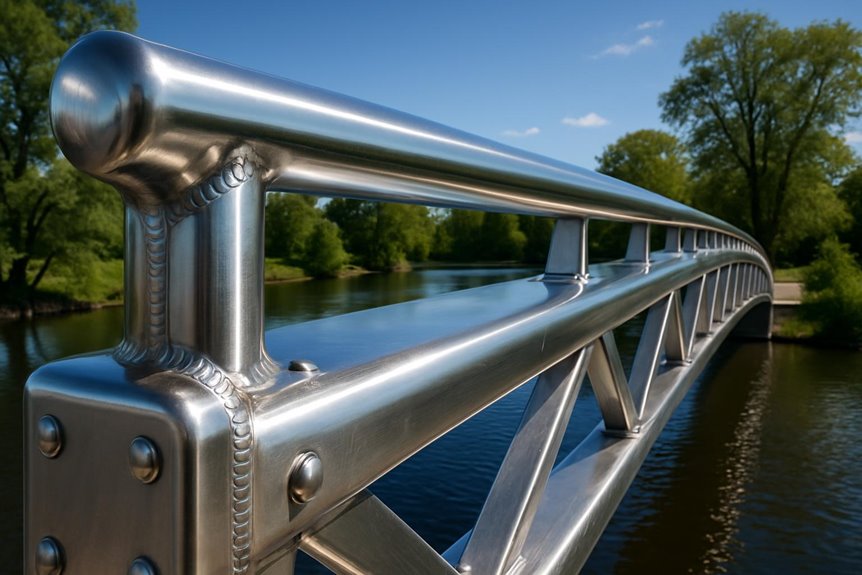
Manufacturing quality critically impacts the service life of stainless steel, with factors such as material certification and weld consistency playing crucial roles.
Material certification guarantees the correct composition and grade, directly affecting corrosion resistance and durability. Weld consistency is essential, as improper welding can lead to weak points prone to corrosion.
Surface roughness, another important aspect, influences how contaminants adhere, potentially accelerating wear. Pickling and passivation processes further enhance the protective oxide layer, essential for corrosion prevention.
These steps guarantee the material’s surface is free from impurities that might compromise longevity. Each manufacturing phase, from initial material selection to final finishing, determines the overall performance and lifespan of stainless steel in demanding environments.
When comparing stainless steel to carbon steel, galvanized steel, and aluminum, key distinctions arise in corrosion resistance, strength, and maintenance requirements.
Stainless steel offers superior corrosion resistance due to its chromium oxide layer, which is absent in carbon steel and less effective in galvanized steel.
While aluminum is lightweight and resistant to rust, it lacks the tensile strength and durability of stainless steel, making it less suitable for high-stress applications.
Although both stainless steel and carbon steel are integral to industrial applications, they exhibit distinct differences in composition and performance.
Stainless steel contains at least 10.5% chromium, forming a self-repairing oxide layer that offers superior corrosion resistance. This makes it ideal for environments exposed to moisture and corrosive substances.
Carbon steel, with higher carbon content, provides greater strength and hardness but is more susceptible to rust without protective coatings.
The selection between these materials depends on specific application needs. Stainless steel’s longevity and minimal maintenance contrast with carbon steel’s cost-effectiveness and strength.
Proper grade selection, avoiding contamination, and routine inspection are essential for maximizing the lifespan and performance of both materials in their respective domains.
Stainless steel and galvanized steel, both essential in industrial applications, display distinct characteristics regarding corrosion resistance and longevity.
Stainless steel, composed of iron with at least 10.5% chromium, naturally forms a protective, self-healing oxide layer that provides superior corrosion resistance and durability. This property makes it ideal for environments requiring minimal maintenance and longevity.
In contrast, galvanized steel relies on a zinc coating to protect against corrosion, which can wear over time, especially in harsh conditions, necessitating periodic reapplication.
Stainless steel's inherent resistance to rust and wear extends its service life beyond that of galvanized steel, where the integrity of the coating is critical.
Despite their similar applications, stainless steel and aluminum present distinct differences regarding material properties and performance.
Stainless steel offers superior corrosion resistance due to its self-healing chromium oxide layer, making it ideal for environments exposed to moisture and chemicals.
Aluminum, while lightweight and corrosion-resistant, does not inherently possess the same durability under harsh conditions without additional coatings.
With respect to strength, stainless steel exhibits higher tensile strength, supporting greater mechanical loads.
Maintenance requirements for stainless steel are minimal, with routine cleaning preserving its protective layer, while aluminum may require more frequent inspections for surface integrity.
Extending the lifespan of stainless steel hinges on strategic practices that enhance its inherent durability. Proper grade selection is essential; choosing grades like 316 for harsh environments guarantees peak resistance to corrosion.
Regular cleaning with mild soap and warm water preserves the protective oxide layer, vital for preventing degradation. Avoiding contamination, particularly from carbon steel, minimizes corrosion risks that could compromise the material's integrity.
Routine inspection identifies early signs of wear or damage, allowing for timely interventions. Implementing protective coatings, such as passivation, further augments corrosion resistance.
These deliberate actions, grounded in technical understanding, enable prolonged service life, making certain stainless steel's performance aligns with its potential for enduring applications.
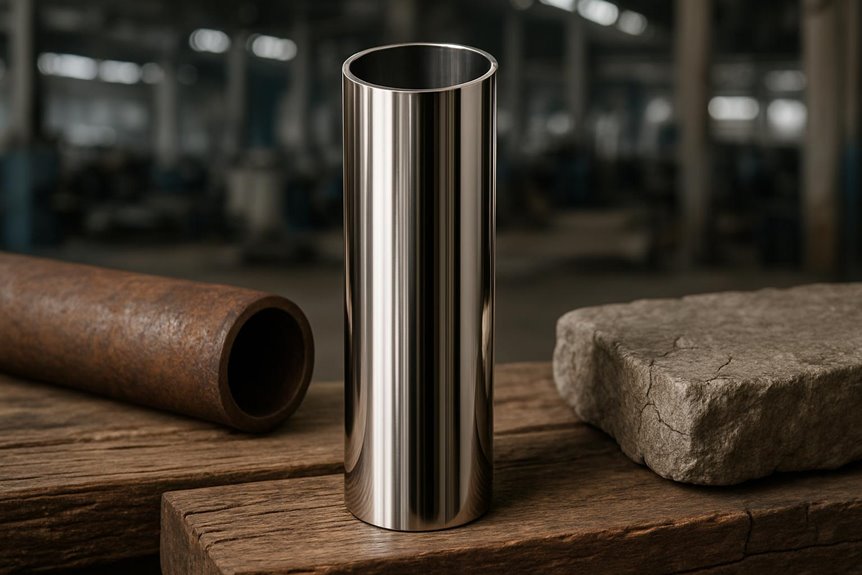
A myriad of factors contribute to the selection of stainless steel tubes for long-term performance, particularly in applications where durability and hygiene are paramount.
Stainless steel’s intrinsic properties make it an ideal choice in various demanding environments:
These attributes underscore stainless steel's role in sustaining long-term performance across multiple sectors, guaranteeing both functionality and efficiency.
The long-term performance of stainless steel tubes depends not only on material grade but also on manufacturing quality, welding consistency, and surface treatment. Vinmay specializes in the production of stainless steel welded tubes, with more than 15 years of manufacturing experience and products supplied to customers worldwide.
Vinmay offers stainless steel tubes in 201, 304, 304L, 316, and 316L grades, manufactured to internationally recognized standards including ASTM, EN, DIN, and AS specifications. Tube sizes range from 6 mm to 219 mm in diameter with wall thicknesses from 0.4 mm to 6.0 mm, supporting applications in architectural construction, water systems, food processing, and industrial environments.
Quality control is integrated throughout the manufacturing process, from raw material inspection to tube forming, welding, polishing, and final testing. Backed by ISO, PED, and AEO certifications, Vinmay maintains strict standards for dimensional accuracy, weld integrity, and surface finish consistency.
With five production workshops and 60 continuous forming lines, Vinmay combines manufacturing efficiency with reliable lead times, including dispatch within 15 days for many standard specifications. This capability helps ensure a stable supply of stainless steel tubes designed for long service life and dependable performance.
Contact Vinmay for technical specifications, material recommendations, or sample evaluation for your next stainless steel tube project.
Stainless steel is 100% recyclable, retaining its properties through multiple recycling processes. Its composition allows for complete recovery and reuse, ensuring sustainability and reducing environmental impact, essential for industries prioritizing lifecycle efficiency and resource management.
The gentle patina of time may manifest as minor discoloration, subtle pitting, or faint surface wear. These whispers of aging reflect environmental interactions, material grade, and maintenance practices, subtly guiding decisions for restoration or replacement.
Stainless steel exhibits remarkable performance in extreme temperatures, maintaining structural integrity and resisting thermal expansion. High-grade alloys, like 310 and 347, provide enhanced heat resistance, making them suitable for challenging environments such as furnaces and reactors.
"Not all that glitters is gold," yet stainless steel is often hypoallergenic, making it suitable for skin contact. Its composition minimizes allergic reactions, but individual sensitivities may vary. Choosing appropriate grades guarantees control over potential irritants.
Stainless steel production impacts the environment through energy consumption, CO2 emissions, and resource extraction. However, its recyclability, durability, and corrosion resistance offset these effects, offering a sustainable material choice for long-term applications and reduced waste.
Stainless steel's longevity hinges on grade selection, environmental exposure, and meticulous maintenance. While it can endure for over a century in ideal conditions, harsh environments necessitate careful grade selection, like 316 for marine settings. The material’s resilience surpasses alternatives, offering unmatched durability and sustainability. To maximize lifespan, regular cleaning preserves its protective oxide layer. Vinmay’s stainless steel tubes exemplify this longevity, proving that informed material choices and maintenance practices are critical for ensuring stainless steel's exceptional service life.