Duplex 2205 stainless steel tube stands out for its dual-phase microstructure, offering remarkable strength and corrosion resistance. This makes it ideal for harsh industrial environments, including chemical processing and marine applications. Featuring a tensile strength of 620 MPa and excellent resistance to chloride stress corrosion cracking, it surpasses traditional alloys like 316L. Despite higher initial costs, its long-term durability guarantees cost-effectiveness. What factors make Duplex 2205 the superior choice for demanding applications?
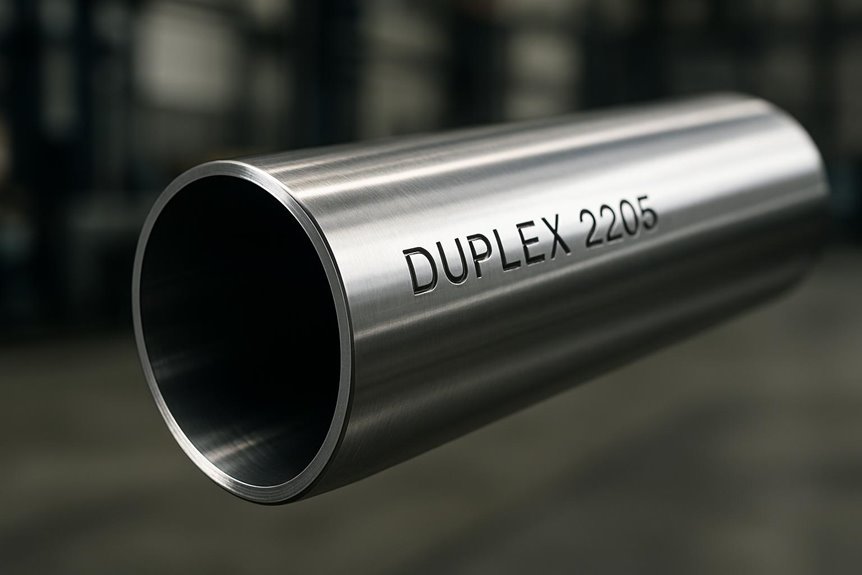
Duplex 2205 stainless steel tube represents a pinnacle in material engineering, characterized by its dual-phase microstructure of austenite and ferrite in equal measure.
Duplex 2205 stainless steel epitomizes material engineering with its balanced austenite-ferrite microstructure.
This configuration endows the duplex stainless tubing with superior properties, including enhanced strength and remarkable 2205 corrosion resistance.
The duplex stainless steel properties make it a preferred choice when compared to traditional grades like 316L, offering approximately double the yield strength and greater resistance to chloride-induced stress corrosion cracking.
The balanced microstructure is meticulously maintained through precise alloy chemistry control, combining elements like chromium and molybdenum.
This guarantees that duplex 2205 stainless steel tube delivers exceptional performance in challenging environments, outperforming lean duplex grades and providing a cost-effective alternative to super duplex variants.
Understanding the composition of duplex 2205 is inseparable from understanding its performance. Each alloying element plays a specific metallurgical role, and the balance between them determines both the microstructure and the corrosion resistance of the finished tube.
| Element | Nominal Content (%) | Function |
| Chromium (Cr) | 21.0 – 23.0 | Passive film formation, oxidation resistance |
| Nickel (Ni) | 4.5 – 6.5 | Austenite stabilization, toughness |
| Molybdenum (Mo) | 2.5 – 3.5 | Pitting and crevice corrosion resistance |
| Nitrogen (N) | 0.14 – 0.20 | Austenite stabilization, strength, corrosion resistance |
| Manganese (Mn) | ≤ 2.0 | Deoxidizer, minor austenite stabilizer |
| Silicon (Si) | ≤ 1.0 | Deoxidizer |
| Carbon (C) | ≤ 0.030 | Kept low to prevent sensitization |
| Iron (Fe) | Balance | — |
Composition per ASTM UNS S32205 / EN 1.4462
Chromium is the primary element responsible for stainless steel's corrosion resistance. At approximately 22%, duplex 2205 contains significantly more chromium than 316L (16–18%). Chromium reacts with oxygen in the environment to form a thin, self-repairing chromium oxide passive film on the steel's surface. This film is the first line of defense against corrosion in most service environments. The higher chromium content in 2205 produces a more robust and stable passive layer compared to standard austenitic grades.
Molybdenum is one of the most impactful alloying additions in duplex 2205, particularly for corrosion performance. At approximately 3%, molybdenum dramatically enhances resistance to pitting and crevice corrosion in chloride-containing environments. It achieves this by stabilizing the passive film and facilitating re-passivation after localized film breakdown. Molybdenum is the key differentiator between 2205 and 316L in chloride service — 316L contains only 2–3% Mo with lower chromium, while 2205's higher combined alloy content produces a PREN value nearly 50% higher.
Nitrogen is perhaps the most underappreciated element in duplex 2205. It performs three critical functions simultaneously. First, it stabilizes the austenite phase, reducing the amount of nickel required and thereby lowering raw material costs. Second, it substantially boosts yield strength — nitrogen is an interstitial strengthener with a significant effect on mechanical properties even at concentrations below 0.2%. Third, nitrogen contributes directly to pitting corrosion resistance and is included in the PREN formula (PREN = %Cr + 3.3×%Mo + 16×%N).
The distinction between UNS S31803 and the more tightly specified S32205 lies largely in nitrogen control. S32205 requires a minimum of 0.14% N (vs. 0.08% for S31803), ensuring more consistent corrosion performance and is now the preferred designation for most industrial procurement.
At approximately 5%, the nickel content of 2205 is substantially lower than that of 316L (10–14%). This is possible because nitrogen compensates for much of nickel's austenite-stabilizing role. The lower nickel content reduces raw material cost and also reduces exposure to nickel price volatility — a practical supply-chain advantage for large-volume procurement.
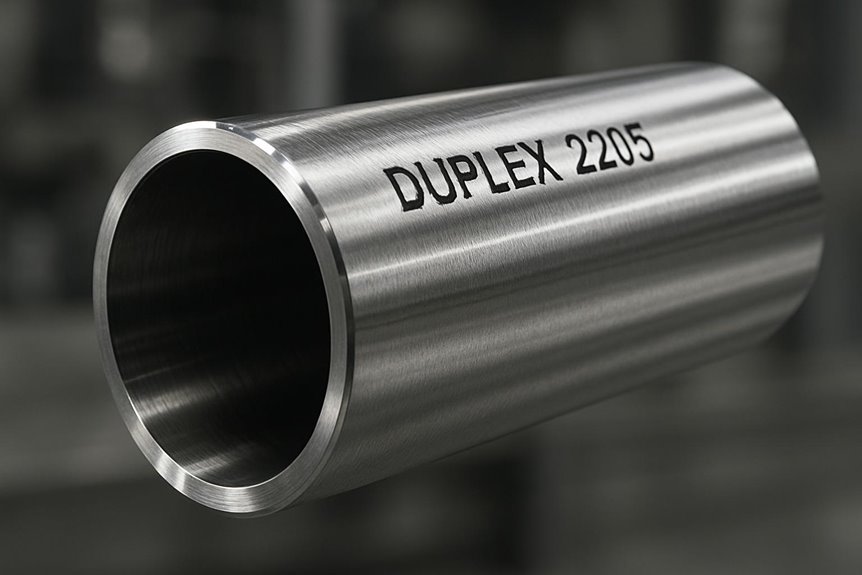
Duplex 2205 stainless steel tube exhibits impressive mechanical properties, characterized by high tensile and yield strength that notably surpass those of conventional austenitic stainless steels.
Its hardness contributes to excellent wear resistance, while its toughness guarantees durability in demanding conditions.
This combination of attributes makes it suitable for applications requiring robust performance under mechanical stress.
Renowned for its robust mechanical properties, Duplex 2205 stainless steel exhibits a minimum specified tensile strength of 620 MPa. This surpasses the 485 MPa of 316L stainless steel, underscoring its superior performance in high-pressure applications.
The higher tensile strength allows Duplex 2205 tubes to withstand greater burst pressures at equivalent wall thicknesses, or alternatively, to maintain pressure ratings with reduced wall thickness. This reduction translates to decreased weight, lowered material costs, and minimized system footprints. Compared with austenitic grades used in marine industry and chemical processing, this strength advantage can significantly improve structural efficiency. Surface finish options such as mill finish can also influence durability and long-term performance in demanding environments.
Particularly in large-scale piping systems and heat exchangers, these attributes offer substantial economic benefits. The strength-to-weight advantage facilitates efficient design, optimizing the balance between performance and cost, thereby fulfilling the technical and economic demands of advanced engineering projects. In addition, strong fatigue resistance remains an important consideration in systems exposed to cyclic loading over extended service periods. Compliance with standards such as ASTM A249 is often important for tubes used in heat exchangers and similar thermal service applications.
In applications governed by ASTM A270 and other sanitary standards, material selection must also account for corrosion resistance, weldability, and surface finish requirements.
Building on the robust tensile strength of Duplex 2205 stainless steel, its yield strength offers even greater advantages.
The material boasts a minimum yield strength of 450 MPa, markedly surpassing the 170 MPa of 316L stainless steel. This approximately 2.6 times increase is critical in applications like pressure vessel and piping design, where yield strength dictates allowable stress calculations per codes such as ASME Section VIII and B31.3.
The higher yield strength enables the design of thinner walls and lighter support structures while maintaining compliance with safety margins. This attribute not only enhances material efficiency but also reduces weight and costs, providing a substantial advantage in engineering applications requiring high strength and reliability.
The mechanical properties of Duplex 2205 stainless steel, particularly its hardness and toughness, are pivotal in defining its industrial applications.
Duplex 2205 exhibits a maximum hardness of 293 HB, surpassing the 217 HB of 316L, highlighting its superior strength. This increased hardness necessitates precise machining strategies, employing sharper tooling and slower cutting speeds.
Toughness remains adequate within a practical temperature range of −50°C to +300°C. Below −50°C, impact toughness diminishes due to the ferritic phase, making fully austenitic grades preferable. Above 300°C, susceptibility to embrittlement limits its use, detailed further in the Advantages and Limitations section.
These characteristics underscore Duplex 2205's suitability for demanding environments, balancing high strength with operational versatility.
Duplex 2205 stainless steel exhibits exceptional corrosion resistance, particularly in environments with high chloride concentrations, due to its balanced microstructure and alloy composition.
Its performance against pitting and crevice corrosion is superior, attributed to the presence of chromium and molybdenum, which form a protective oxide layer.
Additionally, the material's resistance to stress corrosion cracking is notable, making it a preferred choice in demanding industrial applications.
Chloride resistance is a crucial attribute of Duplex 2205 stainless steel, distinguishing it from other stainless steel grades.
The Pitting Resistance Equivalent Number (PREN) is a critical metric, with Duplex 2205 achieving a PREN of approximately 35, compared to 316L's 25. This higher PREN indicates superior resistance to localized corrosion in chloride environments. By comparison, grade 316 stainless steel contains 2-3% molybdenum, which is a key factor in its improved corrosion resistance over 304. In aggressive service, 316L is often chosen for its corrosion resistance in environments exposed to chlorides and acids.
Duplex 2205 can withstand higher chloride concentrations, elevated temperatures, and lower pH levels before pitting occurs. Its critical pitting temperature (CPT) exceeds 35°C in ASTM G48 Method C tests, highlighting its robustness compared to 316L, which typically falls below 20°C. In marine service, 316 stainless steel is valued for chloride environment resilience, but Duplex 2205 offers even greater resistance under more demanding conditions. Grade 316 is also widely used in marine applications because its molybdenum content improves resistance to chlorides and harsh chemicals.
This makes Duplex 2205 particularly suitable for demanding applications in chemical processing, oil and gas, and marine environments where chloride exposure is significant. Regular inspection and maintenance help detect early signs of pitting corrosion and support long-term performance in chloride-rich service.
Despite the challenges posed by aggressive environments, Duplex 2205 stainless steel exhibits remarkable resistance to pitting and crevice corrosion. This resistance stems from its high chromium content, which forms a dense, stable passive film.
Molybdenum and nitrogen enhance this protection by promoting rapid re-passivation if the film is damaged. Pitting corrosion begins when this film breaks down at defects or inclusions, becoming autocatalytic and worsening over time. Surface treatments such as passivation processes can further improve oxidation resistance and support long-term corrosion prevention. Compared with seamless options, welded tubing is often selected for its cost-effectiveness and smooth finish in many industrial systems.
Crevice corrosion follows a similar mechanism, driven by oxygen depletion in confined spaces. In demanding industries such as food processing, corrosion-resistant stainless materials are valued for maintaining hygiene and long-term reliability. Regular cleaning helps preserve the protective layer by reducing dust accumulation and other corrosive contaminants.
The ASTM G48 test series, specifically Methods A, B, C, and E, are pivotal for qualifying materials for such applications. Specifying these tests in procurement documents guarantees suitability for chloride-critical environments, reinforcing material reliability. Adhering to ASTM standards also strengthens quality assurance by verifying material performance through standardized testing and inspection.
Building upon its remarkable resistance to pitting and crevice corrosion, Duplex 2205 stainless steel also offers significant advantages in stress corrosion cracking (SCC) resistance. This is particularly critical when compared to 316L, which is prone to SCC in chloride environments above 60°C.
Duplex 2205's dual-phase microstructure, with ferritic grains, acts as a barrier to crack propagation initiated in austenitic regions. Additionally, high nitrogen content minimizes selective dissolution along grain boundaries. These properties enhance its reliability in harsh environments like seawater systems and chemical injection lines, where 316L often fails.
Compliance with NACE MR0175 / ISO 15156 standards further underscores its suitability for sour service, providing a robust solution to SCC challenges in demanding applications.
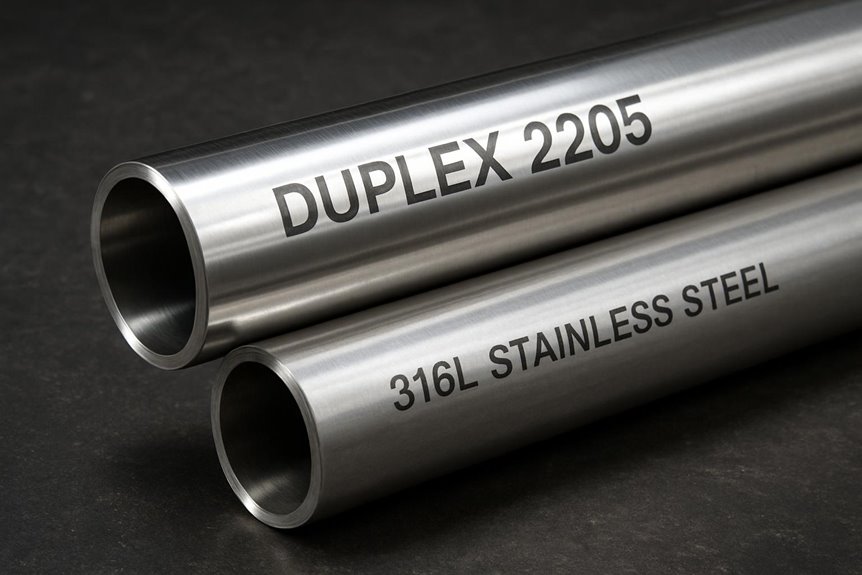
Why might engineers choose Duplex 2205 over 316L stainless steel for chloride-service applications?
Duplex 2205 offers superior mechanical and corrosion-resistant properties. With a tensile strength of 620 MPa and yield strength of 450 MPa, it markedly outperforms 316L, allowing for reduced wall thickness and weight savings in pressure-bearing applications. Unlike 316L, which belongs to the austenitic stainless steel family, Duplex 2205 provides a different balance of strength and corrosion performance. In sanitary or process systems, strict wall thickness tolerances can further support reliable performance and dimensional consistency.
The PREN of 2205 (~35) indicates enhanced resistance to pitting and stress corrosion cracking, essential in high-chloride environments. In contrast, 316L is valued for lower carbon content, which helps reduce carbide precipitation during welding and improves resistance to intergranular corrosion. 316L also contains molybdenum content, which enhances corrosion resistance in chloride-rich environments compared with 304 stainless steel. 316L is also widely used in marine and chemical processing due to its corrosion resistance. Though 2205 incurs higher initial material costs, its extended service life and reduced maintenance requirements often result in a lower total cost of ownership.
Conversely, 316L, with excellent weldability and formability, remains preferable in low-chloride conditions or where fabrication ease is paramount.
In the context of Duplex 2205 stainless steel, solution annealing is vital to achieve ideal mechanical properties by heating to 1020–1100°C followed by rapid cooling.
Effective welding heat control is critical to prevent the formation of detrimental intermetallic phases, which can compromise corrosion resistance and mechanical integrity.
Careful management of heat input and cooling rates during welding guarantees the preservation of the steel's desirable duplex microstructure.
Solution annealing plays a critical role in the heat treatment of Duplex 2205 stainless steel. This process involves heating the material to between 1020°C and 1100°C, followed by rapid quenching. The objective is to dissolve intermetallic phases such as sigma and chi, restoring the 50/50 austenite/ferrite balance and ensuring full corrosion resistance. Adherence to ASME Section IX also helps ensure welding procedures and welder qualifications support consistent post-treatment performance.
Without solution annealing, Duplex 2205 exposed to cold-working, welding, or temperatures between 700–900°C can develop intermetallic precipitates that impair toughness and corrosion resistance. Because precise heat control during welding is essential to limit distortion and preserve corrosion performance, proper welding parameters should be maintained before any required post-weld solution annealing. Techniques like preheating and back purging can further support weld integrity by helping manage heat input and surface protection. Proper joint design is also critical for successful duplex stainless steel welding and post-treatment reliability. These precipitates are not visually detectable, making solution annealing an essential step.
Cold-drawn, hot-formed, or welded tubing must undergo this treatment to maintain material integrity, underscoring its necessity in the manufacturing process rather than an optional procedure. In high-pressure service, selecting seamless tubes may further support reliability because the absence of a weld seam reduces potential structural weak points.
Controlling welding heat is essential for maintaining the integrity of Duplex 2205 stainless steel. The goal is to achieve a 50/50 austenite/ferrite balance in the weld and heat-affected zone.
Key parameters include heat input, filler metal selection, and interpass temperature. ER2209 filler metal, slightly overalloyed in nickel and nitrogen, guarantees balanced microstructure without post-weld heat treatment.
Heat input must be within 0.5 to 2.5 kJ/mm to avoid excessive ferrite or intermetallic phase formation. Interpass temperature should remain below 150°C to prevent sigma and chi phase formation, which can occur rapidly at 700–900°C.
Precise control of these factors is critical to prevent metallurgical damage and preserve the material's mechanical and corrosion-resistant properties.
Understanding the intricacies of intermetallic phase prevention is vital for maintaining the integrity of Duplex 2205 stainless steel.
Sigma phase, forming between 700°C and 950°C, depletes chromium and molybdenum, markedly reducing corrosion resistance and embrittling the microstructure.
Chi phase, though slower to form, also diminishes corrosion resistance within a similar temperature range.
The 475°C embrittlement occurs at 300°C to 525°C, compromising toughness without affecting corrosion resistance.
These phenomena are time-and-temperature dependent, requiring precise control during welding and forming.
To mitigate risks, adherence to welding procedure specifications (WPS) is essential, along with controlling interpass temperatures.
Solution annealing is recommended for materials exposed above 600°C, ensuring ideal performance and longevity.
Manufacturing considerations for Duplex 2205 tubing involve evaluating forming and fabrication challenges due to its high strength and work-hardening characteristics. Quality inspection during forming helps verify mechanical properties and maintain consistent production standards.
The choice between welded and seamless tubing affects performance under pressure and corrosion conditions, with seamless options typically offering superior integrity.
Surface finish and pickling processes must be carefully controlled to enhance corrosion resistance and guarantee a uniform appearance.
For demanding marine and chemical service, superior corrosion resistance and high strength make Duplex tubing especially suitable where reliability is critical.
The higher yield strength of duplex 2205 — roughly 2.6× that of 316L — has direct consequences for forming operations. Cold bending, tube expansion, and swaging all require higher forces than equivalent operations on austenitic grades. The greater springback associated with higher yield strength must be accounted for in tooling design and bend angle control. Tool wear is accelerated, and rigid, well-supported tooling setups are more important than with softer austenitic grades.
Any cold-working operation that produces significant plastic deformation should be followed by solution annealing and quenching. Cold work strains the microstructure, introduces residual stress, and can alter the ferrite/austenite ratio in the deformed zone — all of which reduce both corrosion resistance and toughness. Skipping the post-forming anneal to save time or cost is a false economy in demanding service applications.
When selecting Duplex 2205 tubing for industrial applications, the choice between welded and seamless options hinges on specific service requirements.
Seamless tubing is preferred for:
Conversely, welded tubing is often chosen due to:
Stainless steel tubing is also widely valued for its corrosion resistance, which supports long-term performance in demanding industrial service.
For many welded stainless tube applications, compliance with ASTM A554 or similar standards helps define manufacturing quality and acceptable tolerances.
Standard dimensions for stainless tubing are typically governed by ASTM standards, helping ensure consistency and compatibility across industrial applications.
Unlike pipes, tubing is typically specified by outside diameter and wall thickness, which is an important consideration when comparing welded and seamless Duplex 2205 options. Accurate sizing should also account for wall thickness and standard length to align with project specifications and service demands.
Ultimately, the decision is guided by application-specific needs, balancing performance with budgetary constraints.
| Criterion | Seamless | Welded (ERW / laser-welded) |
| Typical applications | High-pressure, safety-critical, sour service | Process piping, heat exchangers, moderate pressure |
| Standards | ASTM A789 seamless, EN 10216-5 | ASTM A789 welded, EN 10217-7 |
| Wall uniformity | Excellent | Good (weld seam variation possible) |
| Available sizes | Wider range of heavy walls | More economical for thin-wall, larger OD |
| Post-weld treatment | N/A | Solution annealing required |
| Relative cost | Higher | Lower |
Achieving ideal surface finish is vital for enhancing the corrosion resistance of Duplex 2205 tubing. The protective passive film on stainless steel functions best when the surface is devoid of iron contamination, heat tint, weld scale, and embedded particles.
Standard finishes include the 2B finish, which is smooth and suitable for most corrosive environments, and the BA finish, known for high reflectivity and controlled roughness. Bright annealing produces a clean, uniform surface in a controlled atmosphere, making bright annealing especially valuable for hygienic and high-precision tubing applications. For applications requiring enhanced aesthetics or reduced surface roughness, a mirror finish can be achieved through progressive polishing with finer abrasives.
Post-welding, pickling with HNO₃/HF acids is important for removing heat-induced defects, followed by nitric acid passivation to restore the passive film. This step is essential for maintaining corrosion resistance in thermally affected zones. Proper pickling helps remove oxides and surface impurities, improving corrosion resistance before passivation.
Regular inspections and cleaning also help prevent surface contamination and extend the lifespan of stainless steel tubes in service. In service environments, routine washing with mild detergent and a soft cloth supports regular cleaning practices that minimize contaminant buildup.
Regular Ra measurement and PMI testing verify quality and alloy integrity in duplex 2205 tubing manufacturing.
The standards governing Duplex 2205 stainless steel tubes, such as ASTM A240 UNS S32205/S31803 and EN 1.4462, guarantee that the material meets stringent requirements for chemical composition and mechanical properties.
These standards are critical for applications involving high pressure and demanding processes, providing guidelines for performance in corrosive environments.
Compliance with these specifications guarantees reliability and safety in industries like chemical processing and oil and gas exploration.
ASTM standards play an essential role in defining the quality and specifications of Duplex 2205 stainless steel tubes. These standards guarantee consistency and performance in various applications. Remarkably:
For application-specific selection, related ASTM specifications such as ASTM A270 may also be relevant when sanitary tubing requirements and surface finish standards are important.
In understanding the application and procurement of Duplex 2205 stainless steel tubes, professionals must consider both ASTM and EN standards to secure compatibility and performance.
EN 10216-5 specifically covers seamless stainless steel tubes for pressure purposes, including duplex grade 1.4462, equivalent to UNS S31803/S32205. For welded tubes, EN 10217-7 is applicable.
These standards delineate chemical composition, heat treatment, mechanical testing, and nondestructive testing requirements aligned with European norms.
In international projects, cross-referencing ASTM and EN designations, such as UNS S32205 with EN 1.4462 (X2CrNiMoN22-5-3), is essential to prevent ambiguity in global supply chains.
Specifying both designations in material requisitions secures clarity and facilitates accurate procurement across international borders.
Adhering to stringent standards is essential for the effective use of Duplex 2205 stainless steel tubing in pressure and process applications. Several codes dictate its use to guarantee safety and performance:
Its corrosion resistance and durability also support reliable performance in demanding industrial plumbing and process environments.
Duplex 2205 stainless steel tubes are integral in various industries due to their exceptional mechanical properties and corrosion resistance.
In chemical processing, they serve in pressure vessels and piping systems, while in marine and offshore applications, they withstand harsh chloride environments.
Additionally, these tubes are critical in heat exchangers, desalination plants, and oil and gas processing, providing durability and efficiency.
When selecting materials for chemical processing applications, the Duplex 2205 stainless steel tube stands out due to its exceptional resistance to stress corrosion cracking (SCC) and high pitting resistance equivalent number (PREN).
Its application in this domain is driven by its robust performance in handling aggressive media.
Key uses include:
In such scenarios, Duplex 2205 is often favored over 316L, making it a standard engineering choice for demanding conditions.
In marine and offshore systems, the application of Duplex 2205 stainless steel tubing is essential due to its superior resistance to chlorides.
With seawater containing approximately 19,000 ppm chloride, traditional austenitic grades suffer rapid degradation. Duplex 2205, however, exhibits a high Pitting Resistance Equivalent Number (PREN) of ~35, ensuring robust performance in harsh marine environments.
Its usage extends to seawater cooling systems, overboard discharge lines, and chemical injection umbilicals. The material's exemption from stress corrosion cracking (SCC) at ambient seawater temperatures solidifies its status as the baseline material for offshore tubing applications.
In conditions involving deep-water or elevated temperatures, alternatives like super duplex grades, such as 2507, may be considered to meet heightened performance requirements.
The utilization of Duplex 2205 stainless steel extends beyond marine systems into critical applications such as heat exchangers. Its application in shell-and-tube heat exchangers is particularly advantageous due to several key properties:
These characteristics make Duplex 2205 an ideal material choice where efficiency and durability are prioritized, optimizing performance in demanding environments. A polished surface finish also supports food hygiene by minimizing crevices where bacteria can accumulate. In counter-flow arrangement systems, heat transfer efficiency can be further improved because fluids enter from opposite sides, maximizing thermal performance.
Its specification facilitates a balance between material savings and enhanced thermal exchange.
Desalination and water treatment systems demand materials capable of withstanding harsh environments, and Duplex 2205 stainless steel emerges as a leading solution.
In desalination plants, both reverse osmosis (RO) and multi-stage flash (MSF) processes handle high-chloride brine streams at elevated temperatures and pressures. These conditions necessitate tubing with exceptional resistance to stress corrosion cracking (SCC) and pitting.
Duplex 2205, with a pitting resistance equivalent number (PREN) of approximately 35, fulfills these requirements. It is extensively used for high-pressure feed tubes in RO systems and evaporator tube bundles in MSF plants.
Additionally, its chemical resilience makes it ideal for chemical dosing lines, ensuring durability and efficiency in challenging desalination environments.
Duplex 2205 stainless steel tube plays a critical role in oil and gas processing due to its robust properties. Its approval under NACE MR0175 / ISO 15156 highlights suitability for sour environments.
Key applications include:
This material’s properties allow for superior performance in demanding oil and gas applications.
In evaluating material suitability, Duplex 2205 emerges as a formidable contender with distinct advantages and notable constraints.
Its high yield strength enables thinner-walled tubing, reducing weight and material volume. The superior resistance to stress corrosion cracking and pitting, due to its duplex microstructure and alloy content, makes it ideal for harsh environments. Additionally, its lower nickel content mitigates cost volatility.
However, limitations exist. Prolonged exposure above 300°C leads to embrittlement, while cryogenic temperatures reduce toughness. Fabrication demands are higher due to increased forming forces and stringent welding requirements, elevating costs compared to 316L.
Although pricier initially, Duplex 2205's performance justifies its use in suitable applications, demanding careful consideration of service conditions.
Common dimensions for Duplex 2205 tubing typically range from 0.5 inches to 8 inches in diameter, with wall thicknesses varying from 0.035 inches to 0.5 inches. These dimensions cater to diverse industrial applications requiring enhanced corrosion resistance.
Duplex 2205 exhibits excellent toughness and ductility in cryogenic environments, maintaining its structural integrity and resilience. Its balanced microstructure and high chromium content guarantee minimal embrittlement, making it suitable for applications requiring low-temperature performance reliability.
Duplex 2205 often requires certifications like ASTM/ASME A240 and DIN 1.4462, ensuring compliance with stringent industry standards. Remarkably, it boasts double the yield strength of standard austenitic grades, enhancing its reliability in critical applications.
Duplex 2205 tubes should be stored in a dry, clean environment with stable temperatures. Avoid contact with corrosive substances and guarantee proper ventilation. Use protective coverings to prevent contamination and handle with care to maintain integrity.
Duplex 2205, with its impressive resistance to thermal expansion, behaves like the disciplined perfectionist of metals. Its low expansion rate guarantees stability, minimizing dimensional fluctuations in fluctuating temperatures, ideal for environments demanding precision and control.
In the domain of industrial metallurgy, Duplex 2205 stainless steel tube stands as a resilient knight, battling corrosive foes with its dual-phase armor. Its strength and steadfast resistance to chloride-induced stress are the shields that protect essential applications in chemical and marine domains. Although the initial cost resembles a steep hill, the journey through harsh environments reveals a path of reduced ownership costs, making Duplex 2205 a strategic ally in the pursuit of durability and performance.