Importing stainless steel pipe from China can provide access to a wide manufacturing network, competitive production costs, and a broad range of grades, dimensions, and product specifications. However, a successful import involves more than finding a supplier offering an attractive price.
The pipe must meet the correct technical specification, the manufacturer must demonstrate reliable production and quality control, and the shipment must satisfy the customs and documentation requirements of the destination country.
Before placing an order, it is important to understand how to specify the product, evaluate the manufacturer, verify material quality, compare quotations, calculate the landed cost, and arrange international shipping.
This guide explains the key steps involved in importing stainless steel pipe from China, helping you avoid common sourcing mistakes and manage the process from the initial enquiry through to final delivery.
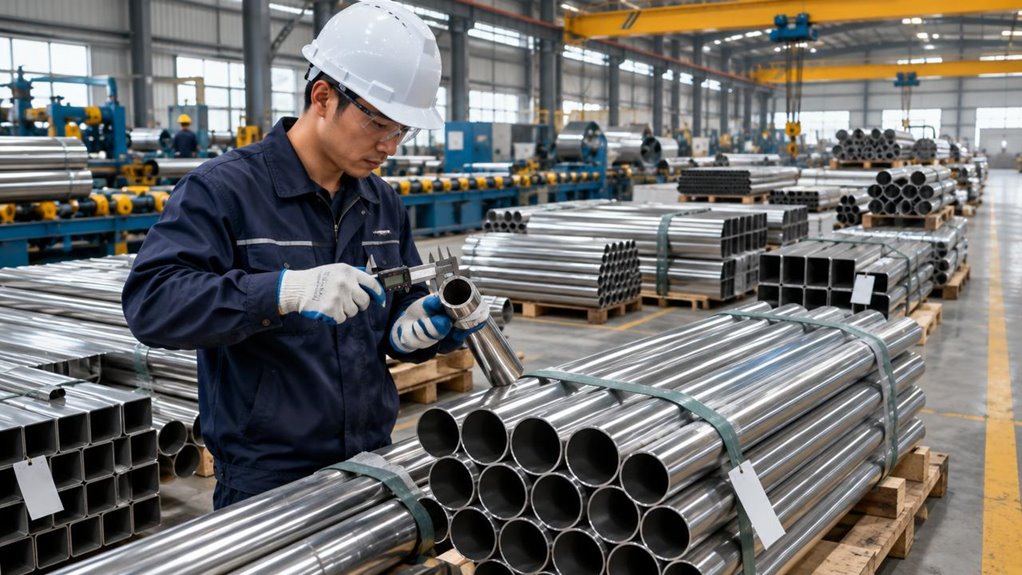
Chinese manufacturers supply several types of stainless steel pipe, but available products and manufacturing capabilities vary between factories. The first step is to identify the construction method, material grade, and product form required for your application.
Welded and seamless describe two different manufacturing methods.
| Product Type | Manufacturing Method | Typical Applications |
|---|---|---|
| Welded stainless steel pipe | Formed from stainless steel strip or plate and joined through a welding process | Industrial piping, water systems, process applications |
| Seamless stainless steel pipe | Manufactured without a longitudinal weld seam | Pressure applications, chemical processing, demanding industrial service |
Neither construction method is automatically superior for every application. The correct choice depends on the design requirements, applicable product standard, operating conditions, and inspection requirements.
Understanding the differences between welded and seamless stainless steel pipe helps establish which manufacturing route should be included in the purchase specification.
The stainless steel grade determines the material's chemical composition, mechanical properties, and corrosion resistance.
| Stainless Steel Family | Common Grades | Typical Applications |
|---|---|---|
| Austenitic | 304, 304L, 316, 316L | Industrial piping, food processing, chemical plants |
| Duplex | 2205, 2507 | Chloride-rich and more demanding corrosive environments |
| Ferritic | 409, 430 | Automotive, appliance and selected mechanical applications |
For many industrial applications, 304 and 316 are common starting points. However, the correct selection depends on the process medium, temperature, chloride exposure, and required corrosion resistance.
For example, 304 and 316 stainless steel grades differ in their alloy composition and resistance to localized corrosion, which can influence material selection in chemical and marine environments.
A complete technical specification is essential when importing stainless steel pipe. Without it, different manufacturers may quote products that appear similar but have different material grades, dimensions, manufacturing methods, or testing requirements.
Before sending an RFQ (Request for Quotation), establish the following information.
Specify the exact grade rather than simply requesting stainless steel.
Common options include:
The grade should be selected according to the operating environment and design requirements, not solely according to price.
The product standard defines the manufacturing, material, dimensional, and testing requirements.
Common ASTM specifications include:
| Standard | Product Scope |
|---|---|
| ASTM A312 | Seamless, welded and heavily cold-worked austenitic stainless steel pipe |
| ASTM A358 | Electric-fusion-welded austenitic stainless steel pipe |
| ASTM A790 | Seamless and welded ferritic/austenitic duplex stainless steel pipe |
| ASTM A269 | General-service seamless and welded austenitic stainless steel tubing |
| ASTM A270 | Sanitary stainless steel tubing |
For example, ASTM A312 is commonly specified for industrial stainless steel piping, while ASTM A790 covers duplex stainless steel pipe.
Other EN, DIN, and JIS standards may be required depending on the destination market and project specification.
When requesting quotations, state the exact standard and required edition. General references to ASTM or EN compliance are not sufficiently precise.
Vinmay's overview of stainless steel pipe and tube standards provides additional context on the different product specifications.
Specify the dimensions clearly. For standard industrial pipe, this normally includes:
Pipe is commonly ordered by NPS and schedule, while other products may be specified directly by outside diameter and wall thickness.
For example, an enquiry might specify: ASTM A312 TP316L, seamless, NPS 2, Schedule 40S, 6-metre lengths.
This is more useful than requesting simply 2-inch 316L stainless steel pipe.
Confirm the required stainless steel pipe dimensions and schedules against the project drawings before ordering.
Beyond grade and dimensions, specify the required surface condition, pipe-end preparation, and any additional manufacturing or inspection requirements.
Consider the following:
For hygienic and food-processing applications, also define the required internal surface roughness (Ra) and cleanliness level, as these directly affect cleanability and suitability for product-contact service.
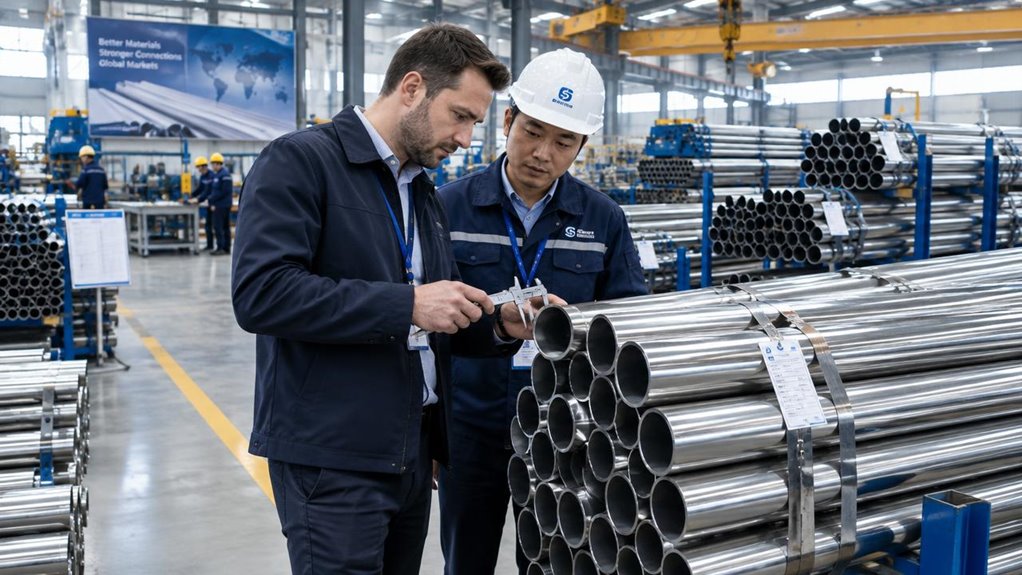
Once the product specification is established, the next step is identifying a supplier capable of manufacturing it consistently.
China has a large stainless steel manufacturing and trading industry. However, not every company advertising stainless steel pipe has its own production facilities or the capability to manufacture every grade and specification.
There are three common types of suppliers:
| Supplier Type | Characteristics | What to Check |
|---|---|---|
| Direct manufacturer | Operates its own production facilities | Equipment, production processes, quality control |
| Trading company | Purchases products from manufacturers and resells them | Actual factory, sourcing transparency, accountability |
| Export agent | Coordinates communication, sourcing and shipping | Contractual responsibilities and manufacturer identity |
A trading company is not automatically unsuitable. It may offer useful sourcing and consolidation services. The important point is knowing who manufactures the pipe, who performs the inspection, and which company is responsible for product quality.
Before placing an order, verify that the supplier can manufacture the specified stainless steel pipe consistently and meet the required quality and delivery conditions. A competitive quotation and an ISO certificate alone are not enough to establish manufacturing capability.
Pay particular attention to the following:
For a first order or a significant project, consider arranging a factory audit or independent pre-shipment inspection. This provides an opportunity to verify that the actual manufacturing facilities, inspection procedures, and finished products match what was agreed in the quotation.
You may also like: Top 60 Stainless Steel Tubing Manufacturers
Never rely exclusively on a supplier's product photographs, quotation, or general quality assurance statements.
The inspection scope should be agreed before production begins and written into the purchase order.
The following checks are particularly important.
| Quality Check | What It Verifies |
|---|---|
| Mill Test Certificate (MTC) | Certified material chemistry and required mechanical properties |
| Heat-number verification | Material traceability |
| Dimensional inspection | OD, wall thickness, length and tolerances |
| Visual inspection | Surface condition and visible defects |
| PMI | Alloy identity where specified |
| Hydrostatic testing | Pressure integrity where required |
| NDT | Relevant discontinuities using the specified method |
| Third-party inspection | Independent verification against the agreed inspection scope |
The MTC should correspond to the actual material supplied, not simply a similar product from a previous production batch.
Check:
For orders requiring EN 10204 documentation, specify whether a Type 3.1 or 3.2 inspection certificate is required.
The certificate should be traceable to the delivered material through its heat number and identification markings. A more detailed explanation of stainless steel Mill Test Certificates can help when reviewing supplier documentation.
The appropriate testing depends on the product standard and purchase specification.
For example:
These methods are not interchangeable, and they are not all mandatory for every stainless steel pipe order.
For products requiring pressure integrity verification, hydrostatic testing should follow the applicable product standard and agreed inspection requirements. For suitable welded tubing, eddy current testing provides another method of identifying material discontinuities.
One common mistake is waiting until the shipment is ready before discussing inspection.
Instead, establish:
For a first order, critical project, or large shipment, a pre-shipment inspection hold point can provide additional control before the goods are packed and released.
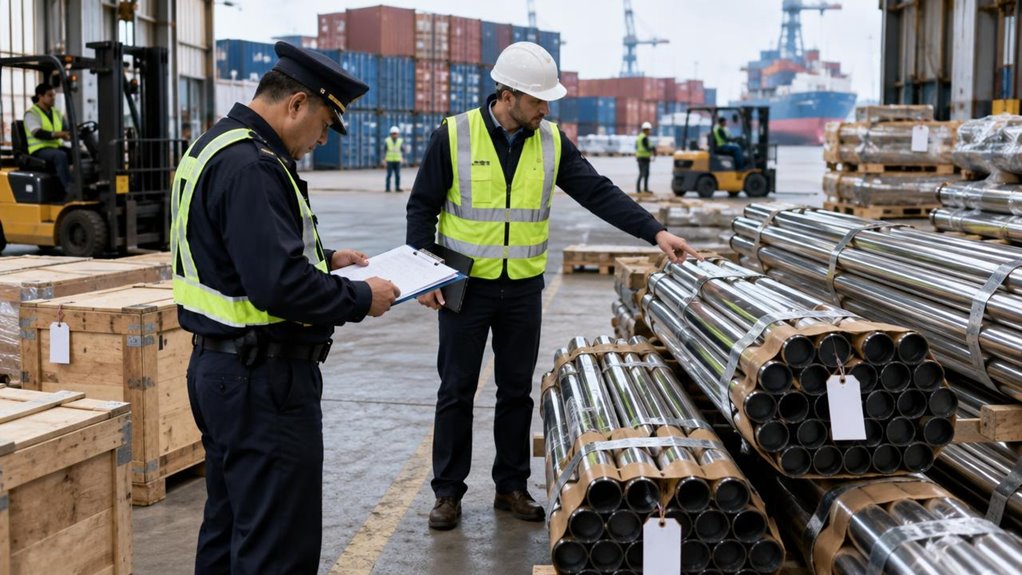
The required paperwork depends on the destination country, customs classification, shipping arrangement, and intended application.
It is useful to separate commercial and customs documents from technical quality documents.
| Document | Purpose |
|---|---|
| Commercial Invoice | Identifies the seller, buyer, goods description, quantity and transaction value |
| Packing List | Records package details, quantities, dimensions and weights |
| Bill of Lading | Documents the sea-carriage contract and cargo receipt |
| Certificate of Origin | Provides origin information where required or relevant |
| Insurance Certificate | Documents cargo insurance where applicable |
| Import Declaration | Submitted through the destination country's customs process |
| Permits or Conformity Documents | Required for certain products or destinations |
A commercial invoice should describe the product accurately, including the grade, product type, quantity, value, and relevant identifying information. The requirements differ by country; for US imports, US Customs invoice guidance explains the information expected for imported merchandise.
These should be agreed in the purchase specification:
A Mill Test Certificate is a technical quality document. It does not replace the commercial invoice, packing list, or other customs documentation.
Before shipment, ensure that the supplier, freight forwarder, and customs broker are working with consistent descriptions, quantities, weights, and package markings.
Import duties should be calculated using the correct product classification and destination-country regulations.
There is no single universal import duty for stainless steel pipe from China.
Classification can depend on:
At the international level, stainless steel pipe products are commonly classified within relevant Chapter 73 headings, including provisions for seamless and welded iron or steel tubes and pipes. However, the exact subheading must be established for the actual product.
The six-digit international HS classification is extended through additional national tariff digits in individual importing markets.
For US imports, use the current Harmonized Tariff Schedule maintained by the US International Trade Commission.
Check the relevant classification and any additional measures that may apply to Chinese-origin products, including applicable Chapter 99 provisions, anti-dumping duties, countervailing duties, and other trade measures.
The official USITC Harmonized Tariff Schedule provides the current tariff classification and duty information.
For EU imports, check the Combined Nomenclature, TARIC measures, applicable customs duties, and any trade-defence measures covering the particular product.
For example, the EU has imposed anti-dumping duties on certain seamless stainless steel pipes and tubes originating in China. This does not mean every stainless steel pipe product is covered; the exact product scope and producer must be checked against the relevant regulation.
The EU Access2Markets portal and the applicable EU anti-dumping regulation provide useful starting points.
Other countries may apply their own customs duties, safeguard measures, anti-dumping duties, import permits, or conformity requirements.
Do not rely solely on the HS code or duty estimate provided by the supplier. The importer should confirm classification and applicable charges with a qualified customs broker or customs authority before shipment.
Important: Customs classification, origin, and trade-defence measures can materially change the landed cost. Check the rules in force for the actual shipment date rather than relying on an old quotation or tariff table.
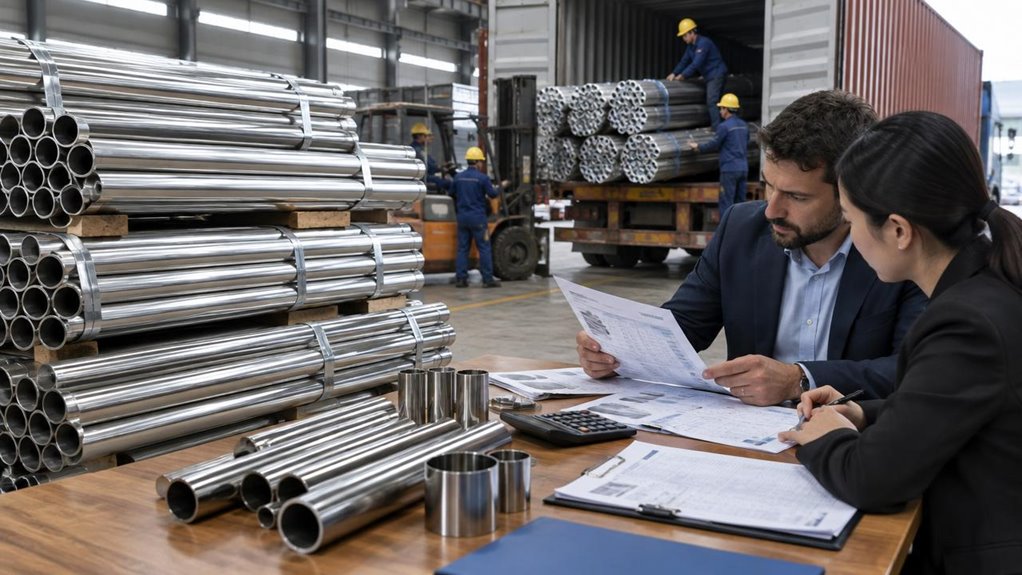
A low factory quotation does not necessarily represent the lowest final import cost.
Compare suppliers using the complete landed cost: the total amount required to purchase, transport, clear, and receive the goods at the destination.
| Cost Component | What to Include |
|---|---|
| Product price | Grade, dimensions, standard and quantity |
| Packaging | Bundling, end protection and export packing |
| Inland transportation | Factory to Chinese port |
| Export handling | Port charges and export documentation |
| Ocean freight | Container or other shipping method |
| Insurance | Cargo coverage |
| Import duties | Normal customs duty and applicable trade measures |
| Import taxes | VAT, GST or other destination taxes |
| Customs clearance | Broker and clearance fees |
| Destination charges | Port handling, storage and local delivery |
| Inspection | Independent inspection where required |
| Banking costs | Transfer, financing or letter-of-credit charges |
Some import taxes may be recoverable depending on the destination country's tax rules, so distinguish actual economic cost from the cash required at customs clearance.
Before choosing a supplier, make sure each quotation covers the same:
A supplier quoting a lower price may be excluding important items such as third-party inspection, protective packaging, or additional testing.
Common international payment arrangements include:
For a first order, avoid agreeing to payment conditions without considering how product approval and shipment release will be controlled.
Where commercially possible, link payment milestones to clearly defined events, such as order confirmation, production completion, inspection approval, and document release.
For larger or higher-risk transactions, a letter of credit may provide additional documentary controls, although bank charges and the exact wording need to be considered.
Incoterms define the allocation of responsibilities, transportation costs, and risk between the seller and buyer.
Common options include:
| Incoterm | General Meaning | Typical Consideration |
|---|---|---|
| EXW | Ex Works | Buyer takes on extensive collection and export arrangements |
| FCA | Free Carrier | Seller delivers to the agreed carrier or location |
| FOB | Free on Board | Seller delivers the goods on board the nominated vessel |
| CFR | Cost and Freight | Seller pays sea freight, while risk transfers at shipment |
| CIF | Cost, Insurance and Freight | Seller pays sea freight and specified insurance |
| DAP | Delivered at Place | Seller arranges delivery to the named destination; buyer handles import clearance and duties |
| DDP | Delivered Duty Paid | Seller takes responsibility for delivery and import clearance, subject to the agreed arrangement |
The correct term depends on the shipment structure and who can manage the transportation and customs arrangements most effectively.
For containerized cargo, FCA can be more appropriate than FOB because the seller may hand the container to the carrier at a terminal before it is loaded onto the vessel.
Under CIF, the seller arranges carriage and insurance, but risk transfers when the goods are loaded on board at the port of shipment, not when they arrive at the destination.
Always specify the named place or port and the applicable Incoterms edition in the contract.
The ICC Incoterms 2020 rules explain the allocation of cost, risk, and obligations for international trade.
Stainless steel pipe must be protected during storage, handling, loading, and international transportation.
The objective is to prevent moisture damage, surface scratching, contamination, and deformation before the material reaches its destination.
Depending on pipe size, finish, and shipping method, packaging may include:
One particularly important precaution is preventing carbon steel contamination.
Stainless steel pipes should not be allowed to pick up iron particles from contaminated handling equipment, carbon steel debris, or unsuitable contact surfaces. Embedded iron particles can later cause rust staining.
Where wooden packaging is used, confirm the applicable destination-country requirements for treated and marked wood packaging, including ISPM 15 where applicable.
For larger orders, FCL (Full Container Load) is often suitable when the shipment can use most of the available container capacity.
LCL (Less than Container Load) may be more practical for smaller orders, but it can involve additional handling and a greater risk of surface damage.
Before loading, check:
The packing list, bundle markings, and inspection records should remain consistent throughout the shipment.
International delivery time is not just the vessel transit period.
Allow for:
The actual lead time depends on the product specification, production schedule, shipping route, vessel availability, and destination clearance.
Yes. Different grades, sizes, and pipe specifications can often be consolidated into one shipment.
However, each product should be clearly segregated and marked, with its corresponding MTC, heat number, packing-list entry, and purchase specification.
There is no universal MOQ. It depends on the grade, dimensions, manufacturing method, available stock, production requirements, and whether custom manufacturing is needed.
Confirm the MOQ for each specification before comparing quotations.
Check the company's legal identity, actual factory, production equipment, experience with the required standard, quality management system, MTC records, inspection capabilities, and export history.
For a first or large order, consider a factory audit and independent pre-shipment inspection.
Common documents include the commercial invoice, packing list, bill of lading, certificate of origin where required, insurance documentation where applicable, and technical records such as the MTC and inspection report.
The exact list depends on the destination country's customs and regulatory requirements.
Yes. Third-party inspection can be arranged where the manufacturer agrees to the inspection scope and timing.
For greater control, establish the inspection criteria, sampling frequency, testing requirements, acceptance limits, and inspection hold point before production begins.
Under FOB, the seller delivers the goods on board the nominated vessel at the shipment port, and the buyer arranges the main sea freight and insurance.
Under CIF, the seller pays the main sea freight and arranges the required insurance, but risk still transfers when the goods are loaded on board at the shipment port.
Total delivery time depends on manufacturing, inspection, export handling, ocean transit, customs clearance, and local delivery.
The supplier should provide a production schedule and estimated shipment date, while the freight forwarder confirms the expected transit and arrival arrangements.
Successful importing depends on more than finding a competitive factory price. The product specification, manufacturing capability, quality verification, contract terms, customs classification, and shipping arrangements all influence the final result.
Before placing an order, confirm the stainless steel grade, applicable standard, construction method, dimensions, testing requirements, MTC, inspection scope, packaging, Incoterm, and destination-country import requirements.
A clear purchase specification and properly verified manufacturer help reduce material mismatches, unexpected costs, and shipment problems.
If you are preparing an international stainless steel pipe order, send Vinmay your required grade, standard, dimensions, quantity, and destination to discuss manufacturing availability and export arrangements.