When stainless steel tubing is used in food, dairy, beverage, pharmaceutical, and other hygienic processing systems, choosing the right standard is essential. The tube needs to do more than transport a fluid. It must provide reliable dimensional performance, pressure integrity, cleanable internal surfaces, and suitable weld quality for the intended application.
For projects in Australia and nearby markets, AS 1528.1 is an important standard to understand.
AS 1528.1:2019 is Part 1 of the Australian AS 1528 series, covering stainless steel tubes for food processing and hygienic applications. The complete AS 1528:2019 series also includes standards for screwed tube couplings, butt weld tube fittings, and clamp tube fittings. The series was developed to standardise hygienic stainless steel tube and fittings used particularly in dairy, food, and beverage manufacturing.
In this guide, we will explain what AS 1528.1 stainlesss steel tube is, where it is used, what buyers should consider when specifying AS 1528.1 stainless steel tubes, and how it compares with other commonly referenced sanitary tube standards.
AS 1528.1:2019 is an Australian Standard titled:
Stainless steel tubes and tube fittings for food processing and hygienic applications – Part 1: Tubes.
The standard forms the tube section of the AS 1528 family. Its purpose is to provide a consistent technical framework for stainless steel tubing used in hygienic process systems.
The AS 1528 series was originally developed in response to the needs of the Australian food manufacturing industry. The 2019 revision updated the technical coverage to reflect current industry practice and expanded the recognition of hygienic applications beyond food processing alone.
For international buyers, it is important to understand that AS 1528.1 is an Australian standard. It should therefore be specified according to the requirements of the project, equipment manufacturer, engineer, or end user. A tube manufactured to another standard should not automatically be described as AS 1528.1 compliant without confirming the applicable requirements.
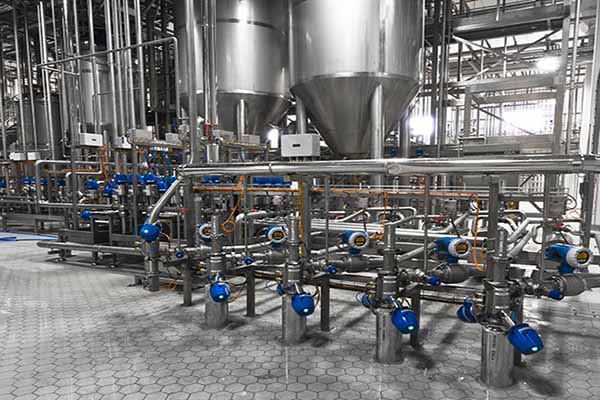
AS 1528.1 stainless steel tubes are designed for hygienic process applications where cleanliness, cleanability, corrosion resistance, and reliable fluid transfer are important.
Typical industries include:
Food processing plants use stainless steel tubing for the transfer of ingredients, liquids, cleaning fluids, and other process media.
Typical applications include: Food production lines , Processing equipment , Ingredient transfer systems
Storage and mixing systems, Process skids
Dairy applications place particular emphasis on hygienic design and cleanable product-contact surfaces.
AS 1528 has historically been closely associated with the Australian and New Zealand dairy, food, and beverage industries.
Typical applications include, Milk processing ,Cream processing ,Yogurt production ,Cheese production
Dairy filling and transfer equipment
Read More: The Complete Guide to Stainless Steel Dairy Tubes
Stainless steel hygienic tubing is widely used in beverage manufacturing because the process system must support repeated cleaning and reliable fluid transfer.
Applications can include: Soft drinks , Juice ,Bottled water, Brewing, Wine production ,Beverage processing equipment
The 2019 revision of AS 1528 explicitly broadened the title to include hygienic applications, recognising that the products are used beyond traditional food processing.
Depending on the project specification, hygienic stainless steel tubing may also be considered for pharmaceutical, cosmetic, and other controlled process environments.
However, buyers should always check the complete project specification because hygienic requirements can vary significantly between industries and applications.
A common mistake is to assume that all stainless steel welded tubes can be used for fluid or sanitary applications.
They cannot.
A decorative or mechanical stainless steel tube may have good external appearance and adequate mechanical properties, but that does not automatically make it suitable for hygienic fluid transfer.
For example, ASTM A554 is commonly associated with welded stainless steel mechanical tubing. It is frequently used for architectural, structural, furniture, and handrail applications.
Hygienic process tubing has different priorities.
The inside of the tube can come into direct contact with the process fluid. Therefore, factors such as:
Leak tightness ,internal surface condition , weld profile ,surface roughness ,cleanability ,material selection , dimensional accuracy ,inspection and traceability become particularly important.
ASSDA notes that tubing standards for fluid transport, including AS 1528.1, incorporate testing for leak tightness, while food and sanitary applications additionally require surfaces that are readily cleanable.
Austenitic stainless steels are commonly used for hygienic tube applications because of their corrosion resistance, formability, weldability, and suitability for a wide range of process environments.
Depending on the project specification, commonly requested grades include:
304 is one of the most widely used stainless steel grades for general food and hygienic applications.
304L has a lower carbon content and is widely selected for welded applications where reduced carbon content can be beneficial.
316 and 316L contain molybdenum and generally provide improved resistance to certain corrosive environments compared with 304 grades.
316L is frequently specified for applications where enhanced corrosion resistance is required.
The correct grade should always be selected according to the process fluid, temperature, cleaning chemicals, operating conditions, and project specification.
Learn More :304 vs 316L Sanitary Tubes for Food Tanks Introduction
Dimensions are one of the important reasons why buyers specify a recognised tube standard rather than purchasing a generic stainless steel tube.
The 2019 revision expanded the range of tube sizes and wall thicknesses covered by the AS 1528 series. It also introduced a wall thickness tolerance of ±10%, replacing the previous +0/-0.10 mm approach used in the earlier edition.
Depending on the application and specification, buyers may need to confirm:
Outside diameter (OD)
Wall thickness (WT)
Tube length
Dimensional tolerances
Pressure requirements
Applicable tube finish
Grade and material condition
The exact size should always be checked against the applicable edition of the standard and the project's purchasing specification.
For engineering projects, it is especially important to confirm the required OD and wall thickness before ordering because hygienic tube dimensions may differ from other international tube systems.
One of the most important differences between hygienic tubing and ordinary mechanical tubing is the attention given to the internal surface.
A hygienic process tube should be designed and manufactured to facilitate cleaning and minimise areas where product residues or contaminants can accumulate.
The 2019 AS 1528 revision established a common maximum internal surface roughness of 0.8 μm Ra for the tube and fittings covered by the series. The revision also introduced a specified requirement for the remaining internal weld bead surface and addressed internal weld heat tint.
This is important because the internal weld area can become a potential crevice or contamination point if it is poorly formed or improperly finished.
For this reason, buyers should look beyond the external appearance of a stainless steel tube.
When evaluating an AS 1528.1 tube supplier, ask about:
Internal weld bead condition
Internal surface roughness
Internal polishing, when specified
Weld heat tint control
Surface defects
Cleaning and finishing procedures
For hygienic applications, the inside of the tube can be just as important as the outside.
Most hygienic stainless steel tubes are manufactured by forming stainless steel strip and creating a longitudinal weld.
The welding process needs to provide a reliable, continuous tube while maintaining the required internal surface condition.
A typical manufacturing process may include:
Stainless Steel Coil → Slitting → Forming → TIG Welding → Weld Bead Treatment → Annealing → Sizing → Straightening → Inspection → Cutting → Packaging
Depending on the product specification, additional finishing processes may be applied.
For hygienic tube, the internal weld area deserves particular attention. The weld should not create an unnecessary obstruction or defect that makes cleaning more difficult.
This is one reason why internal weld bead removal is an important process for sanitary tube production.
At VINMAY, production and inspection processes can be organised around the requirements of the target application, including welding control, internal weld treatment, heat treatment, dimensional inspection, and testing.
A quality-control system is an important part of producing stainless steel tubes for fluid and hygienic applications.
Depending on the applicable specification and customer requirements, inspection may include:
Eddy current testing is a non-destructive testing method commonly used for welded stainless steel tubing.
It can help identify discontinuities that may affect tube integrity.
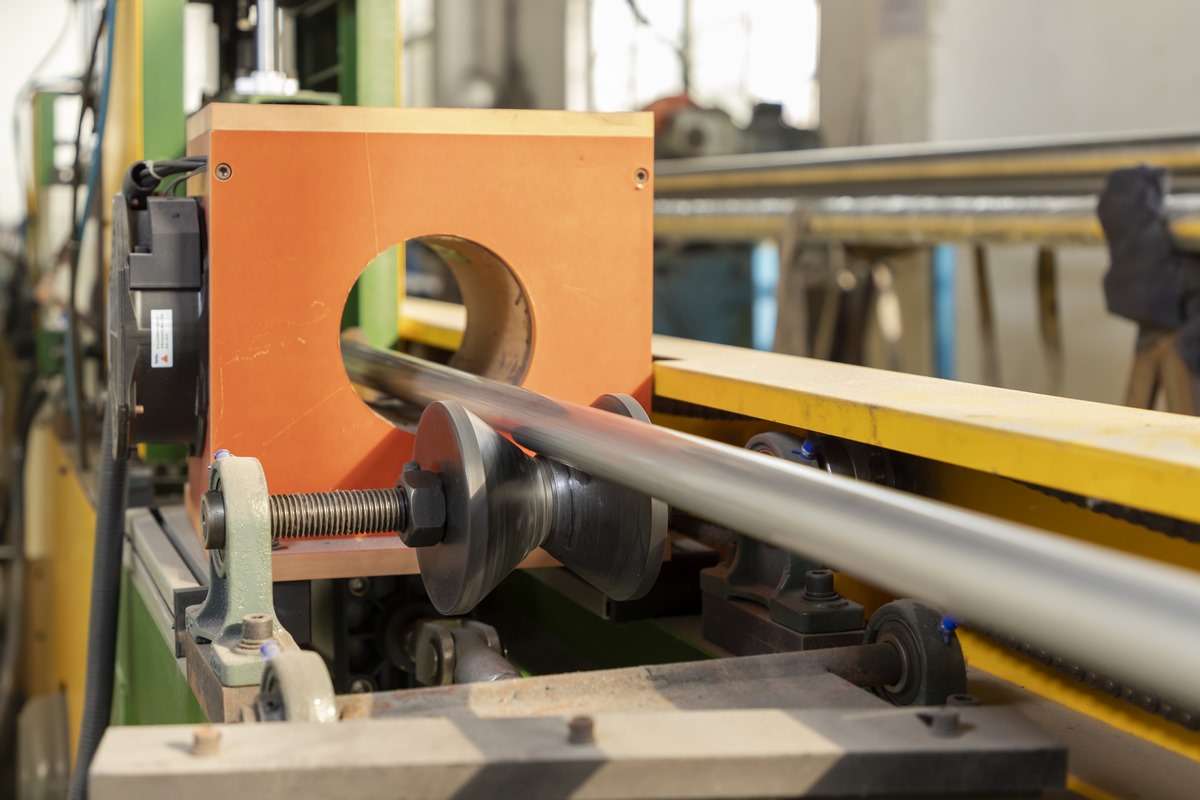
Hydrostatic testing can be used to verify pressure integrity under specified conditions.
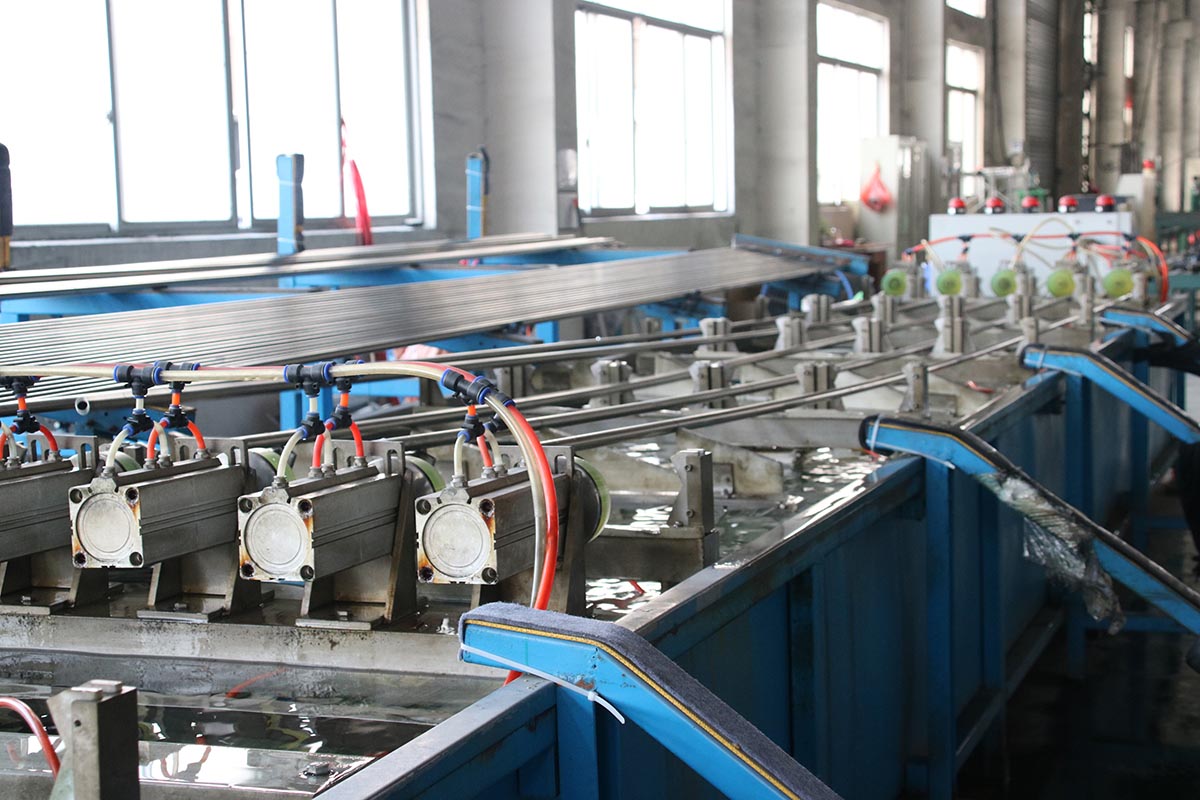
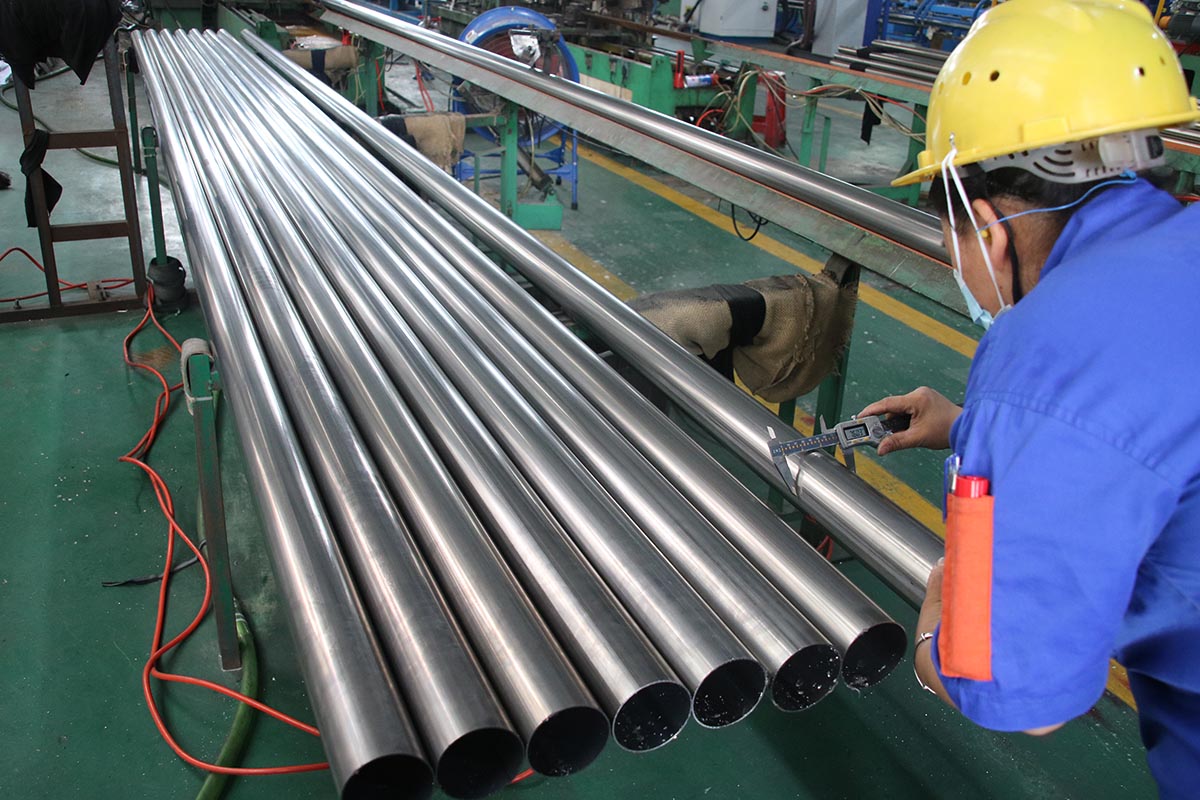
Important measurements may include: Outside diameter, Wall thickness ,Length, Straightness
Ovality and other applicable dimensional characteristics
Surface inspection is particularly important for hygienic tubing.
The inspection may consider: Internal surface , External surface ,Weld area, Surface defects Polishing quality ,Heat tint
Depending on the project, material identification and traceability may also be required.
For buyers, the most useful approach is to define the required inspection and documentation before placing the order.
One of the most common questions from international buyers is:
The short answer is no.
Both standards are associated with stainless steel tubing for hygienic or sanitary applications, but they are different standards with different technical frameworks and dimensional systems.
| Feature | AS 1528.1 | ASTM A270 |
| Standard origin | Australia | United States |
| Main application | Food processing and hygienic applications | Sanitary applications |
| Tube products | Stainless steel hygienic tubes | Sanitary stainless steel tubing |
| Typical grades | Austenitic stainless steels | Austenitic and other grades as specified |
| Dimensions | AS 1528 dimensional system | ASTM/industry dimensional system |
| Surface requirements | Defined hygienic surface requirements | Requirements depend on product/finish specification |
| Market relevance | Australia and related projects | North America and international projects |
This does not mean one standard is universally interchangeable with the other.
If an Australian project specifies AS 1528.1, the supplier should review the actual required dimensions, material, finish, testing, documentation, and other project requirements rather than simply offering an ASTM A270 tube as an “equivalent.”
ASSDA has also noted that international hygienic tube standards, including European and American systems, use different dimensional arrangements from AS 1528.
This does not mean one standard is universally interchangeable with the other.
If an Australian project specifies AS 1528.1, the supplier should review the actual required dimensions, material, finish, testing, documentation, and other project requirements rather than simply offering an ASTM A270 tube as an “equivalent.”
ASSDA has also noted that international hygienic tube standards, including European and American systems, use different dimensional arrangements from AS 1528.
European buyers may be more familiar with EN 10357, another important standard for stainless steel tubes used in food and hygienic applications.
Both standards are relevant to hygienic process tubing, but their dimensions and technical requirements are not identical.
For example, Australian projects may specifically require AS 1528.1 dimensions, while European equipment manufacturers may specify EN 10357.
Therefore, when purchasing stainless steel hygienic tube, always confirm:
Which standard is specified?
Which dimensions are required?
Which material grade is required?
What surface finish is required?
What testing is required?
What documentation is required?
This avoids the common problem of receiving a tube that has a similar application but does not match the project's dimensional or technical requirements.
Choosing the correct supplier involves more than checking whether the company can manufacture stainless steel welded tube.
For an AS 1528.1 project, buyers should consider several areas.
Check whether the supplier has suitable equipment for: stainless steel forming , TIG welding , Weld bead treatment , Annealing, Sizing and straightening , Surface finishing
Ask about the supplier's inspection procedures and equipment.
Useful capabilities may include: Eddy current testing, Hydrostatic testing, PMI .Dimensional inspection ,
Surface roughness testing ,Visual inspection
For food processing and hygienic projects, material documentation can be important.
Ask whether the supplier can provide the required material certificates and traceability documentation.
If the project requires a controlled internal surface, make sure the supplier understands the requirement.
Do not simply specify “polished stainless steel tube.”
Instead, clarify: Internal surface requirements , External surface requirements, Roughness requirements , Weld area requirements ,Whether internal polishing is required
International projects often involve more than manufacturing.
A reliable supplier should also be able to support: Technical documentation , Packing requirements
Inspection documents, Export documentation .Communication with engineers and purchasing teams
Foshan Vinmay Stainless Steel Co., Ltd. is a stainless steel welded tube manufacturer based in Foshan, China, with extensive experience serving international markets.
VINMAY manufactures stainless steel welded tubes for a variety of applications, including decorative, fluid, sanitary, food processing, and industrial applications.
For hygienic and fluid tube projects, our capabilities can include:
Stainless steel grades such as 304, 304L, 316 and 316L
TIG welded tube production
Internal weld bead removal
Annealing
Internal polishing
Eddy current testing
Hydrostatic testing
PMI and dimensional inspection
Surface roughness inspection
Custom packaging for export shipment
Our quality-control approach is designed to help customers manage the key requirements of stainless steel tube — from raw material identification and welding to finished-tube inspection.
For customers purchasing for the Australian market, VINMAY can also discuss AS 1528.1 requirements, dimensions, surface finish, testing, documentation, and packaging before production.
AS 1528.1 is an Australian Standard for stainless steel tubes used in food processing and hygienic applications. The current 2019 edition forms Part 1 of the AS 1528 series.
Yes. AS 1528.1 is part of the Australian Standards system and was developed for stainless steel tubes and fittings used in food processing and hygienic applications.
It is used for stainless steel tube applications associated with food processing and hygienic process systems, including dairy and beverage manufacturing. The 2019 revision also recognises the broader use of hygienic tube beyond food processing.
Commonly specified grades include 304/304L and 316/316L, although the correct material should be selected according to the project requirements and applicable specification.
No. Both relate to sanitary or hygienic stainless steel tubing, but they are separate standards with different technical and dimensional requirements.
The AS 1528 series covers both tubes and fittings, but different parts address different products. Part 1 covers tubes, while Parts 2, 3, and 4 address screwed tube couplings, butt weld fittings, and clamp tube fittings respectively.
The 2019 revision introduced a common maximum internal surface roughness of 0.8 μm Ra for the tube and fittings covered by the series. Specific project requirements should always be confirmed before production.
Yes. Dairy processing is one of the key industries associated with the AS 1528 series, together with food and beverage manufacturing.
AS 1528.1:2019 provides an important reference for stainless steel tubes used in food processing and hygienic applications, particularly in the Australian market.
For buyers, selecting the right tube is not simply a matter of choosing stainless steel grade. The complete specification may involve:
Material + Dimensions + Welding + Internal Surface + Weld Finish + Testing + Documentation
A suitable supplier should therefore be able to understand the complete application and provide tubing that matches the project's specified standard and technical requirements.
If you are sourcing AS 1528.1 stainless steel tubes for food processing, dairy, beverage, or other hygienic applications, contact VINMAY to discuss your required grade, tube dimensions, surface finish, testing, and documentation.
VINMAY — Stainless Steel Welded Tube Manufacturer
Note: AS 1528.1 is a copyrighted standard. This article provides general technical information and should not be used as a substitute for purchasing or reviewing the official standard or the project specification.