Sanitary fittings are integral to hygienic stainless steel systems, ensuring cleanliness and safety across various industries, including food, pharmaceuticals, and biotechnology. This guide explores the essential types, such as ball, sleeve, barbed, cam, and groove fittings, each offering unique benefits for secure and efficient connections. Understanding these components is vital for maintaining high hygiene standards and operational safety, prompting further exploration into their applications and selection criteria.
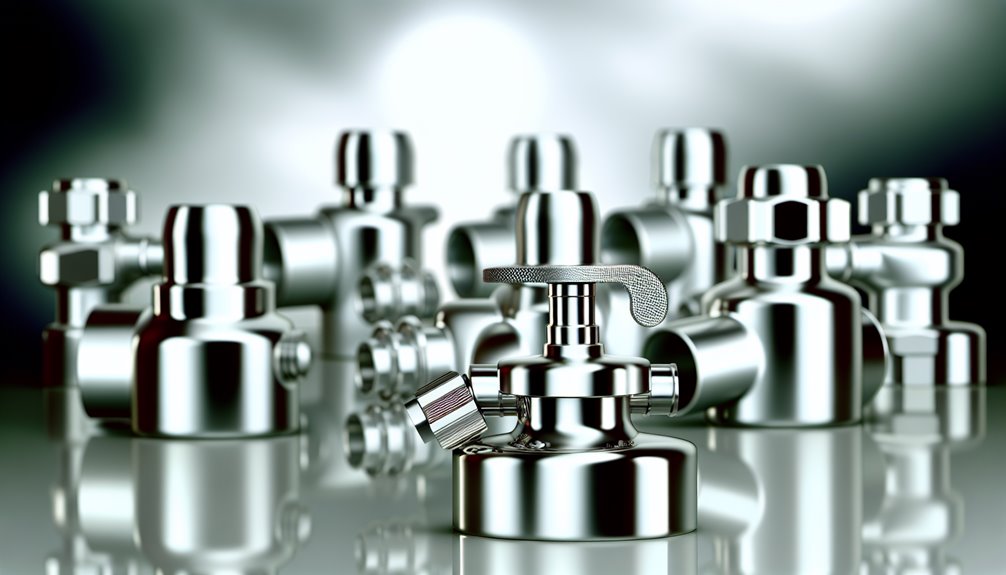
Sanitary fittings are integral components in process piping systems, specifically engineered to guarantee clean and hygienic connections.
These fittings, commonly used in the biological, pharmaceutical, medical, food, and beverage industries, are designed to prevent bacteria from entrapment and spread, ensuring the safety and purity of the processes. They are typically manufactured from stainless steel grades such as 316L stainless, with smooth internal finishes that support clean-in-place procedures and minimize contamination risk. To further enhance hygiene and regulatory alignment, many systems utilize mirror polish finishes that reduce bacterial adhesion and improve cleanability. Many applications also follow ASME BPE requirements for bioprocessing equipment to ensure consistent surface finish, geometry, and cleanability. A key consideration is selecting materials with proven biocompatibility to ensure safe contact in medical and sterile environments.
Hygienic stainless steel fittings, including various sanitary fitting types, are utilized to comply with stringent cleanliness standards.
Food-grade stainless steel fittings are particularly essential in environments where contamination could compromise product safety and quality.
These fittings offer versatility through multiple connection types, such as ball and sleeve, barbed, cam and groove, and compression fittings, enabling secure and efficient assembly and disassembly.
Their design facilitates both manual cleaning and clean-in-place (CIP) processes.
To ensure safety and regulatory compliance across these industries, many components adhere to ASTM standards, which govern manufacturing, testing, and quality control for stainless steel sanitary systems.
When evaluating materials for hygienic processing, stainless steel emerges as the superior choice due to its unique properties that align with the stringent requirements of sanitation-critical industries. Importantly, 304 and 316L sanitary fittings offer exceptional corrosion resistance, ensuring longevity in environments exposed to moisture and chemicals. The smooth, non-porous surface reduces bacterial growth and facilitates swift cleaning. Additionally, its chemical inertness is pivotal in maintaining product purity, particularly in sensitive applications like food and pharmaceuticals.
Stainless steel used for potable applications can meet NSF/ANSI 61 certification, reinforcing its safety and suitability for hygienic water systems. They also play a vital role in regulated industries, helping facilities meet hygienic design and compliance expectations across food, biotech, and water treatment. The self-healing chromium oxide layer supports hygiene by minimizing sites where microbes could persist, a key advantage of passive film behavior. As a bonus, selecting grades like 316 or duplex for sanitary tube supports durability in harsh settings due to their corrosion resistance.
| Property | Benefit |
|---|---|
| Corrosion Resistance | Maintains integrity in harsh conditions |
| Chemical Inertness | Preserves product purity |
| Smooth Surface | Easier cleaning and reduced bacterial load |
Stainless steel’s robustness and high-temperature resilience further underscore its indispensability in maintaining hygienic standards.
Food-grade 304 stainless steel, known for its 18/8 composition, provides excellent corrosion resistance and safety for direct food contact, making it ideal for sanitary fittings in hygienic processing.

The core types of sanitary fittings, including Tri-Clamp (Tri-Clover) fittings, butt-weld sanitary fittings, and clamp fittings consisting of a ferrule, gasket, and clamp assembly, are essential for creating secure and hygienic connections in processing systems. These systems are designed to meet sanitary standards, helping minimize contamination and maintain product integrity across pharmaceuticals, food, and biotech applications. For temperature-critical or corrosive applications, selecting materials like stainless steel 304/316 or CPVC can improve longevity and compliance. These systems often leverage 316L stainless steel with pharmaceutical-grade polishing to achieve smooth surfaces that reduce microbial adhesion and support sterility. For systems that also handle utility gases, selecting grades like 316L that meet ASTM A312 ensures corrosion resistance and compatibility with pressure-rated service.
Sanitary elbows and tees further enhance the system by directing flow and maintaining smooth internal surfaces to prevent contamination.
Each fitting type is chosen based on application-specific requirements, ensuring compliance with industry standards and ideal operational performance.
Additionally, selecting tees that comply with 3-A standards and offer hygienic surface finishes (typically Ra 0.8 μm) supports reliable, CIP/SIP-ready dairy processing.
Tri-Clamp fittings, also known as Tri-Clover fittings, are a vital component in sanitary processing systems, renowned for their secure and leak-proof connections. As demand grows across sectors, the global stainless steel market continues to expand, underscoring the importance of dependable hygienic tubing and fittings.
These fittings utilize a tri-clamp mechanism, comprising a sanitary ferrule, clamp, and gasket, to guarantee a robust seal essential for maintaining hygiene in critical applications. Compliant with standards like sanitary unions DIN RJT SMS, they facilitate quick assembly and disassembly, ideal for processes requiring frequent cleaning or maintenance. For environments with aggressive media or cleaning agents, many facilities specify 316L with molybdenum for enhanced corrosion resistance, reflecting its suitability for marine and chemical-processing conditions. Drawing from industry standards, they also align with ASTM A270 sanitary tubing requirements for surface finish and testing in hygienic applications. 316L’s lower carbon content improves resistance to sensitization and intergranular attack in welded areas, further extending service life in highly corrosive environments.
Made from 304 or 316L stainless steel, Tri-Clamp fittings provide corrosion resistance, aligning with 3-A Sanitary Standards and FDA regulations. Their smooth internal surfaces minimize dead space, enhancing cleanability and preventing contamination, which is fundamental in industries like food and beverage, pharmaceutical, and biotechnology.
For complementary railing needs in hygienic environments, stainless steel handrail tubes offer corrosion resistance and low maintenance, enhancing safety and durability in facilities.
Butt-weld sanitary fittings, essential components in sanitary processing systems, provide a seamless and permanent connection that is crucial for maintaining high hygiene standards. Drawing from industry best practices, selecting fittings in 316 stainless steel can enhance corrosion resistance and durability in harsh cleaning environments. These fittings also benefit from NFPA compliance, which underscores their reliability in critical systems and alignment with established safety standards.
These fittings are crafted from 304 or 316L stainless steel, meeting rigorous ASME BPE and 3-A sanitary standards, ensuring compatibility with critical processing applications. For demanding chloride-rich or marine-adjacent cleaning conditions, opting for 316/316L material—known for its molybdenum alloy content—provides enhanced pitting and crevice corrosion resistance. Leading Chinese producers adhere to international standards, combining advanced manufacturing and certifications to ensure consistent tube and fitting quality across sanitary applications.
Butt-weld fittings offer a smooth, crevice-free internal surface, minimizing contamination risks and facilitating efficient cleaning. They are integral in systems where sanitary tubing and fittings are paramount, such as food and beverage, pharmaceutical, and biotechnology industries.
The welding process, requiring precision and expertise, results in robust, leak-proof joints that withstand high pressures and temperatures, reinforcing system integrity and reliability. This makes butt-weld fittings a preferred choice for permanent installations.
To consistently achieve these sanitary outcomes, processes like orbital welding help produce precise, repeatable, contamination-free joints that align with FDA, GMP, and ASME BPE requirements.
While ensuring seamless and secure connections in sanitary processing systems, clamp fittings, consisting of a ferrule, gasket, and clamp assembly, are essential components in maintaining product purity and integrity. They are widely compatible with CIP/SIP protocols and meet global sanitary standards such as 3A, ISO, DIN, SMS, and BS, supporting low-turbulence flow and minimal bacterial adhesion. In many hygienic systems, selecting between 304 and 316/316L aligns with ASTM standards for composition and corrosion performance. Leading suppliers like Metric Metal are recognized for rigorous quality assurance and broad inventories that support reliable sourcing for sanitary-grade components.
These tri-clamp assemblies are manufactured from 304 or 316L stainless steel, aligning with stringent 3-A Sanitary Standards, ASME BPE, and FDA regulations. Their design facilitates quick assembly and disassembly, optimizing clean-in-place (CIP) procedures and minimizing downtime. Leading manufacturers with robust quality systems and global distribution, such as ArcelorMittal, help ensure consistent availability and compliance for large-scale sanitary projects.
The gasket material choice is vital, typically selected for compatibility with the processed substance, ensuring a robust and leak-proof seal. The clamp, responsible for applying uniform pressure, enhances the reliability of the joint, making clamp fittings indispensable in industries like food and beverage, pharmaceuticals, and biotechnology, where hygiene and efficiency are paramount.
For applications demanding enhanced corrosion resistance and cleanability, selecting ferrules and tubing made from 316L stainless supports compliance with sanitary standards while improving performance in chloride-rich or high-temperature environments.
Following the detailed exploration of clamp fittings, it is pertinent to examine sanitary elbows, another core component in sanitary processing systems.
Sanitary elbows are designed to redirect flow within piping systems, typically at 45° or 90° angles, ensuring fluid shifts without compromising hygiene. Constructed from 304 or 316L stainless steel, these fittings adhere to 3-A Sanitary Standards, providing a smooth internal surface that prevents residue buildup and bacterial harborage. In applications requiring mechanical tubing, specifications like ASTM A554 define dimensions and tolerances that support consistent quality. In addition, many sanitary tubing applications reference ASTM A269, which outlines dimensional tolerances and testing for austenitic stainless steel tubes used in corrosive and high-purity service. For systems exposed to aggressive media or marine cleaning environments, selecting duplex stainless steel noted for superior strength and corrosion resistance can extend service life. For accurate specification and interoperability, engineers should verify Nominal Pipe Size alignment with OD, WT, and standard lengths as defined by ASTM/ASME to match system requirements.
The seamless construction of sanitary elbows minimizes contamination risks, essential for industries such as food and beverage, pharmaceuticals, and biotechnology. Available in butt-welded and tri-clamp configurations, sanitary elbows facilitate clean-in-place (CIP) operations, enhancing system efficiency and hygiene.
Their design supports stringent sanitary requirements, ensuring operational integrity in diverse processing environments. Additionally, these fittings often align with ASTM A270 sanitary tube standards to ensure material quality and hygienic compliance across food, dairy, and pharmaceutical applications.
Sanitary tees are integral components in sanitary piping systems, designed to facilitate the branching of flow within a pipeline. They are available in welded and seamless forms to suit different pressure and cleanliness needs, with selection often guided by schedule ratings and application-specific standards. For optimal results, ensure proper heat management during fabrication and installation to maintain weld integrity and surface cleanliness.
These fittings are essential in applications requiring high hygiene standards, such as food, beverage, and pharmaceutical industries. Fabricated from 304 or 316L stainless steel, sanitary tees maintain product purity with their smooth internal surfaces, compliant with 3-A Sanitary Standards and ASME BPE. Their construction benefits from 304 stainless steel’s exceptional corrosion resistance, helping preserve surface finish and cleanliness in demanding processing environments. Partnering with an experienced supplier can provide guidance on selecting appropriate grades, gauges, and finishes, ensuring optimal performance and cost-effectiveness through custom solutions.
The design incorporates a 90-degree branch, allowing for efficient fluid distribution or collection while maintaining ideal flow conditions. Their construction minimizes crevices where contaminants might accumulate, enhancing cleanability and guaranteeing compliance with rigorous industry regulations.
Steel & O’Brien offers a range of configurations to meet diverse operational requirements, emphasizing both performance and sanitation in processing environments.
For systems requiring robust support and stability, integrating flanges and brackets can enhance secure attachment and structural integrity in hygienic stainless steel assemblies.
When considering pipeline systems requiring seamless changes between different pipe sizes, reducers stand out as indispensable components. Sanitary reducers facilitate the shift from larger to smaller diameters, guaranteeing a smooth flow in hygienic applications. These components are pivotal in industries where maintaining a sterile environment is critical. Leveraging 316L stainless steel’s superior corrosion resistance, particularly due to its molybdenum content, enhances durability in aggressive processing environments. To ensure durability and performance, many sanitary reducers are manufactured to comply with ASTM standards, aligning materials and dimensions with widely recognized specifications. In harsher environments with chlorides or chemicals, opting for 316L over 304 improves pitting resistance and service life. Additionally, 304 stainless steel rectangular tubes provide structural durability and versatile workability, supporting robust frameworks in hygienic processing lines.
Sanitary reducers guarantee that operations remain efficient, hygienic, and compliant with industry standards. Additionally, 304 stainless steel offers excellent corrosion resistance, high tensile strength, and low maintenance, making it a cost-effective choice for sanitary reducer applications.
Cross fittings play a pivotal role in complex sanitary pipeline systems, acting as essential junctions that allow for the convergence or divergence of flow paths. These fittings are primarily constructed from 304 or 316L stainless steel, ensuring compliance with stringent 3-A Sanitary Standards and FDA regulations. Sanitary crosses are designed with smooth internal surfaces to prevent product contamination and maintain flow efficiency. Their application is vital in industries such as food and beverage, pharmaceuticals, and biotechnology, where maintaining high hygiene standards is imperative.
Many leading suppliers offer crosses that align with ASME BPE high-purity expectations and provide robust customer support for specification and compliance. In addition, when sanitary crosses are integrated with tubing manufactured to ASTM A249 requirements—covering heat treatment, dimensional tolerances, and testing—they benefit from consistent mechanical performance and traceable quality suitable for hygienic service. For installations exposed to aggressive cleaning agents or chlorides, choosing 316L stainless enhances corrosion resistance and weld integrity, supporting long-term reliability in demanding hygienic environments.
For chloride-rich or acidic cleaning regimes, selecting 316 stainless can provide superior corrosion resistance compared to 304, improving uptime and lifecycle value.
| Feature | Specification | Benefit |
|---|---|---|
| Material | 304 / 316L Stainless Steel | Strong corrosion resistance |
| Standard | 3-A, FDA, ASME BPE | Verified hygienic compliance |
| Design | Smooth internal surfaces | Improved cleanability |
| Application | Food, Pharma, Biotech | Adaptable to multiple uses |
| Configuration | Four-way junction | Flexible flow distribution |
Adapters serve as pivotal components within sanitary fitting systems, enabling seamless connections between dissimilar pipeline segments. These components are essential in maintaining the integrity and hygiene of systems processing sensitive products such as milk, beer, and biologics.
Engineered from 304 or 316L stainless steel, adapters guarantee compliance with 3-A Sanitary Standards, ASME BPE, and FDA regulations, offering durability and corrosion resistance.
Key attributes of sanitary adapters include:
These attributes make adapters indispensable in hygienic stainless steel systems.
Sanitary caps and end closures are essential components in piping systems where maintaining hygiene and preventing contamination are paramount. These fittings provide a secure method to terminate open ends of sanitary tubing and piping, ensuring no ingress of contaminants.
Constructed from 304 or 316L stainless steel, they adhere to stringent industry standards such as 3-A and ASME BPE, ensuring compliance with sanitary regulations. Sanitary caps are often used in the food, beverage, and pharmaceutical industries, where process integrity is critical.
Their design features smooth internal surfaces, minimizing areas where bacteria can accumulate, and facilitating easy cleaning. These closures guarantee system integrity, prevent product loss, and maintain pressure, making them indispensable in maintaining hygienic conditions.
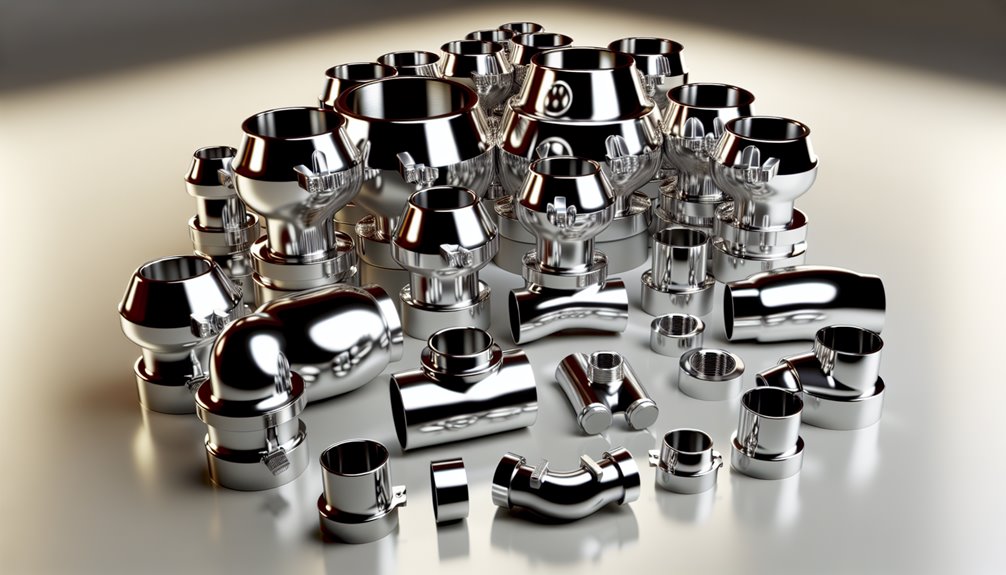
In the domain of sanitary fittings, various union standards such as the Tri-Clamp, DIN, RJT, and SMS play a critical role in ensuring compatibility and hygiene in diverse applications.
These standards dictate the dimensional tolerances, pressure capabilities, and material requirements necessary for effective and secure connections in high-sanitation environments.
The ASME BPE standard further enhances this by providing guidelines specifically for the bioprocessing industry, ensuring fittings meet stringent criteria for cleanliness and performance.
Tri-Clamp Standard, a widely recognized sanitary union standard, plays a vital role in ensuring secure and hygienic connections within various industry applications. This standard is essential for environments requiring stringent sanitation, offering a reliable and efficient method for assembling and disassembling systems.
The design of Tri-Clamp fittings features a gasket compressed between two flanges, secured by a clamp, ensuring a leak-proof seal.
The Tri-Clamp Standard therefore provides an ideal solution for sanitary applications demanding reliability and precision.
The DIN Union standard represents a critical component in sanitary union systems, guaranteeing robust and reliable connections in hygiene-sensitive environments. Precision engineering defines these unions, providing seamless integration into piping without compromising sanitary integrity. These unions are fundamental for applications demanding high standards of cleanliness, such as food processing and pharmaceuticals. They facilitate easy assembly and disassembly, promoting efficient maintenance and cleaning processes.
| Feature | Description | Benefit |
|---|---|---|
| Material | 304 / 316L Stainless Steel | Durable and corrosion-resistant |
| Interior Finish | Smooth, crevice-free surfaces | Supports hygienic cleanability |
| Connection Type | Male/Female liner with locking nut | Secure, repeatable sealing |
| Standard | DIN 11851 (common sanitary union spec) | Dimensional consistency |
| Maintenance | Tool-assisted easy disassembly | Simplifies cleaning and servicing |
Adhering to DIN standards guarantees compatibility and efficiency, aligning with global hygiene regulations. These unions are crucial for maintaining operational control and hygiene compliance.
RJT unions, a staple of sanitary union standards, ensure robust, efficient connections in systems where hygiene is paramount.
These unions are designed specifically for applications in the food, beverage, and dairy industries. They consist of three main components:
The design facilitates frequent disassembly for cleaning and inspection without compromising system integrity.
RJT stands for Ring Joint Type, which is a demonstration of its precision engineering. This type of union is widely favored for its ability to withstand rigorous cleaning processes, ensuring seamless operation in demanding environments.
Building on the robust connection capabilities of RJT unions, SMS unions offer another reliable solution in sanitary union standards, particularly valued in the dairy, food, and beverage industries.
These unions adhere to Swedish Manufacturing Standards (SMS), ensuring compatibility and hygienic performance. They are composed of a male part, a liner, a nut, and a gasket, creating a leak-proof seal essential for maintaining sanitary conditions.
The SMS union's design allows for easy assembly and disassembly, facilitating efficient cleaning and maintenance. Precision-engineered from high-grade stainless steel, these unions resist corrosion and withstand high-pressure conditions.
Their precise manufacturing tolerances guarantee a secure, tight fit, reducing the risk of bacterial contamination and ensuring compliance with stringent hygiene regulations.
Although often overlooked, the ASME BPE Standard plays a critical role in defining sanitary union standards for industries requiring high levels of sanitation, such as biotechnology, pharmaceuticals, and food processing.
This standard guarantees that all components meet stringent criteria for cleanability and sterility.
Key aspects of the standard include:
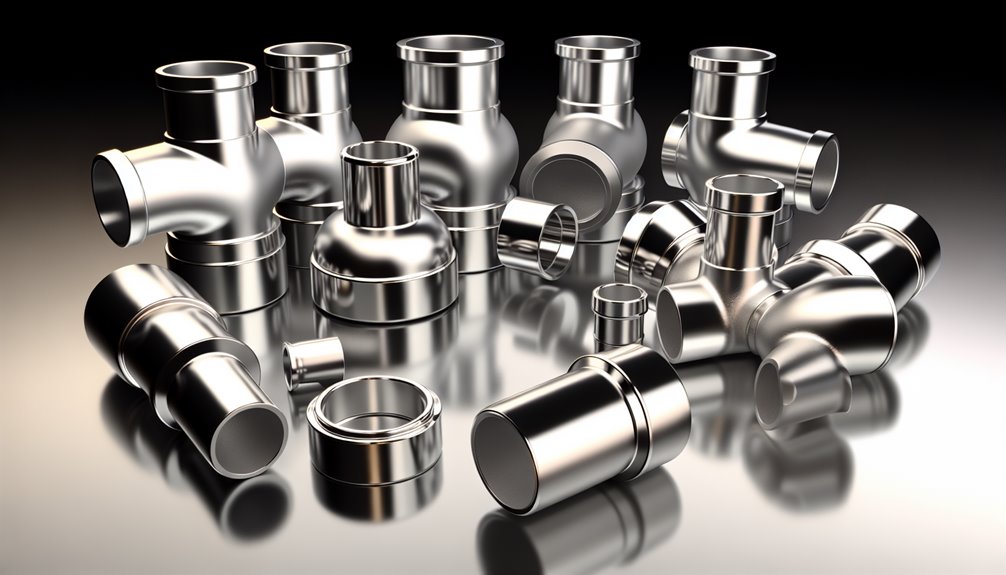
The selection of material grade is essential for the performance and longevity of sanitary fittings, with 304 and 316 stainless steel being the most prevalent choices.
Grade 304 stainless steel is widely used due to its excellent corrosion resistance and cost-effectiveness, making it suitable for a variety of sanitary applications.
In contrast, 316 and its variant 316L stainless steel provide superior corrosion resistance, particularly in harsh environments or with aggressive substances, due to their higher molybdenum content, thereby extending the service life of the fittings.
When selecting materials for sanitary fittings, stainless steel stands out for its superior hygienic properties and durability. Its prevalence in food, beverage, and pharmaceutical industries is attributed to several key features that guarantee product safety and compliance with stringent health standards.
Stainless steel’s combination of robustness and hygiene makes it indispensable in sanitary systems.
316L stainless steel emerges as a preferred choice in the domain of sanitary fittings, particularly for its exceptional corrosion resistance and mechanical properties.
This alloy contains lower carbon content compared to standard 316, enhancing its resistance to sensitization and minimizing the risk of corrosion in weld-affected zones.
Its superior durability is critical for applications in food, beverage, and pharmaceutical industries, where hygiene and compliance with stringent standards such as FDA, ASME BPE, and 3-A are paramount.
The material's smooth, crevice-free surfaces facilitate easy cleaning and minimize bacterial growth.
Additionally, 316L’s ability to withstand high pressures and temperatures without compromising structural integrity guarantees reliability in demanding environments, maintaining product purity and safety throughout processing operations.
Surface finish requirements in hygienic systems are critical for maintaining cleanliness and operational efficiency, with Roughness Average (Ra) levels serving as a key metric for surface smoothness.
Mechanical polishing is often employed to achieve desired Ra values, ensuring surfaces are free from imperfections that could harbor bacteria.
Additionally, pickling and passivation processes are implemented to enhance corrosion resistance and further improve the hygienic integrity of the system.
In sanitary applications, the roughness average (Ra) levels play a pivotal role in maintaining hygienic standards and preventing contamination.
These levels are critical in industries such as pharmaceuticals, food and beverage, and biotechnology. The Ra value, which measures the average height of surface peaks and valleys, determines the ease of cleaning and resistance to bacterial growth.
Different Ra levels cater to specific industry needs:
Selecting the appropriate Ra level is essential for system integrity, balancing performance with cost considerations in sanitary systems.
Roughness average (Ra) levels underscore the importance of achieving ideal surface quality in sanitary systems, and mechanical polishing plays a significant role in this domain.
This process involves removing surface irregularities to achieve specified Ra values, essential for industries such as pharmaceuticals and food processing.
Mechanical polishing achieves smoother surfaces by systematically reducing Ra values, targeting common benchmarks like 32 Ra, 20 Ra, or even 15 Ra, depending on hygiene requirements.
A polished surface minimizes bacterial adhesion and facilitates cleaning, thereby maintaining system integrity.
Stainless steel components subjected to mechanical polishing exhibit enhanced resistance to contamination, aligning with stringent industry standards.
This meticulous approach guarantees the fittings meet both functional and hygienic demands, critical for maintaining product purity and safety.
Pickling and passivation are essential processes in achieving ideal surface finish for hygienic systems. These procedures are fundamental for maintaining cleanliness, preventing contamination, and guaranteeing system integrity.
This guarantees optimal hygiene, ease of cleaning, and bacterial resistance.
Selecting the appropriate sanitary fittings involves careful consideration of several critical factors including pressure requirements, temperature limits, and compatibility with cleaning and sterilization processes such as CIP (clean-in-place) or SIP (sterilize-in-place).
Guaranteeing fitting-to-tube dimensional compatibility is essential to maintain system integrity and prevent leaks.
Additionally, the choice of gasket material must be appropriate for the substances being transported to guarantee a reliable seal and avoid potential chemical interactions.
Understanding the pressure requirements is crucial in selecting the appropriate sanitary fittings for any application. Proper consideration of pressure guarantees system integrity and operational safety.
Selecting fittings involves examining various factors:
Careful analysis of these parameters assures the reliability and longevity of sanitary systems.
Engineers must meticulously match fittings to the specific pressure demands of their system to maintain peak performance and safety.
In the domain of sanitary fittings, attention to temperature limits is paramount for guaranteeing system efficiency and safety.
Stainless steel, renowned for its thermal resilience, is commonly used in these fittings to handle fluctuating temperatures without compromising structural integrity. Each fitting type can have distinct temperature ratings based on the material and design specifications.
It is crucial to consult manufacturer guidelines to match fittings with their operational environments. Exposure to temperatures beyond recommended limits can lead to material fatigue, leaks, or system failure.
Incorporating temperature considerations into the selection process aids in maintaining the aseptic condition of the system. Precision in temperature compatibility ensures not only longevity and reliability but also adherence to stringent industry standards for hygienic processes.
When considering the selection of sanitary fittings for systems requiring stringent hygiene, compatibility with Cleaning-In-Place (CIP) and Sterilization-In-Place (SIP) processes is a critical factor. This guarantees seamless integration into existing protocols, maintaining sanitation and operational efficiency.
Key considerations include:
These elements collectively contribute to a robust and reliable sanitary system.
Selecting the appropriate sanitary fittings requires meticulous attention to fitting-to-tube dimensional compatibility, confirming that each component integrates seamlessly into the overall system. Proper alignment between fittings and tubes is essential for maintaining system integrity, preventing leaks, and guaranteeing optimal flow conditions.
Key parameters such as outer tube diameter, wall thickness, and tolerances must be evaluated against industry standards like 3-A and ASME BPE. Utilizing calipers or micrometers for precise measurements assures adherence to dimensional specifications.
Additionally, compatibility extends to thread types, taper angles, and fitting configurations, which must be matched accurately to avoid mechanical stress and potential contamination risks. This precision not only guarantees efficient performance but also enhances system longevity, reducing maintenance requirements and operational disruptions.
While choosing sanitary fittings, the selection of the correct gasket material is paramount to guaranteeing both the integrity and hygiene of the entire system. The correct choice depends on various factors critical to maintaining a contamination-free environment.
The meticulous selection of gasket material guarantees a seamless and efficient operation, circumventing potential failures that could lead to contamination or leaks.
Sanitary fittings are integral components in industries where hygiene and contamination prevention are paramount, such as food and beverage processing, breweries, and wineries.
In pharmaceutical and biotech systems, these fittings guarantee the sterility and purity of medical products by providing leak-proof and easily cleanable connections.
Additionally, in water filtration and reverse osmosis systems, sanitary fittings maintain the safety and quality of drinking water by preventing contamination throughout the treatment process.
In the food and beverage processing industry, the utilization of sanitary fittings is paramount to maintaining stringent hygiene standards and ensuring product safety.
These specialized components are designed to withstand the high temperatures and pressures typical in food processing environments.
Key features include:
The food and beverage processing industry demands rigorous hygiene standards, and this expectation extends seamlessly to breweries and wineries, where maintaining product integrity is paramount.
Sanitary fittings in these environments are essential for guaranteeing cleanliness and preventing contamination of beverages. The use of stainless steel components, such as tri-clover fittings and butterfly valves, is widespread due to their durability and resistance to corrosive elements such as acids and alcohols.
These fittings are designed to withstand high pressures and temperatures, aligning with stringent regulatory standards. Their smooth surfaces and tight seals prevent bacterial harboring and guarantee easy cleaning.
This meticulous design guarantees that breweries and wineries can produce beverages that meet quality and safety requirements, preserving the delicate flavors and characteristics of the final product.
Pharmaceutical and biotech systems demand unparalleled precision and cleanliness, mandating the use of specialized sanitary fittings to prevent contamination and guarantee sterility. These fittings are essential for maintaining the integrity of drug processing and packaging environments. They confirm that products meet stringent purity and efficacy standards through their unique design features.
Water filtration and reverse osmosis (RO) systems demand high standards of hygiene and efficiency, similar to pharmaceutical and biotech systems. These applications rely heavily on sanitary fittings designed to guarantee the safety and quality of treated water.
Hygienic stainless steel fittings provide essential leak-proof connections, minimizing contamination risks in fluid handling. Their corrosion-resistant properties cater to the stringent demands of water treatment processes, which often involve harsh chemicals like chlorine and ozone.
Sanitary fittings facilitate compliance with regulatory standards for water purity, critical in maintaining system integrity. The precision engineering of these fittings allows for seamless integration within water filtration setups, supporting efficient maintenance and operation.
They are pivotal in achieving ideal water treatment performance and guaranteeing system reliability.

When purchasing sanitary fittings, it is essential to verify compliance with relevant certifications, such as 3-A, ANSI, and ASME, to guarantee adherence to industry standards.
Detailed examination of Material Test Reports (MTR) or Positive Material Identification (PMI) should confirm the material composition, while surface roughness and weld quality assessments assure the fittings' cleanability and integrity.
Additionally, evaluating packaging, quantities, and export requirements ensures that all logistical and regulatory aspects align with operational needs.
Compliance certifications play a significant role in guaranteeing that sanitary fittings meet stringent industry standards before purchase.
These certifications confirm that the fittings are suitable for hygienic applications, maintaining safety and quality.
Key certifications to take into account include:
Verifying these certifications is critical for compliance and operational assurance.
Material Test Reports (MTR) and Positive Material Identification (PMI) are critical documents that provide confirmation of the material composition and quality of sanitary fittings.
These reports verify the chemical and mechanical properties of the material, guaranteeing compliance with specified standards and regulations. MTRs contain essential information such as heat number, material grade, and traceability, confirming the authenticity and integrity of the stainless steel used.
PMI tests, often conducted using handheld analyzers, further validate the alloy composition, preventing material mix-ups.
Before purchasing, it is imperative to scrutinize these documents for accuracy and completeness, assuring that the fittings meet the stringent requirements of hygienic applications.
This vigilance safeguards against potential contamination risks and guarantees operational reliability.
Following the thorough examination of Material Test Reports (MTR) and Positive Material Identification (PMI) for sanitary fittings, attention must also be directed towards surface roughness verification, a critical aspect of evaluating their suitability for hygienic applications.
Surface roughness directly influences the cleanability and bacterial resistance of sanitary systems. Key points to verify include:
Proper verification confirms the fittings facilitate ideal hygiene in their applications.
Weld integrity is essential in guaranteeing the sanitary quality and functional reliability of fittings used in hygiene-critical environments. The welds must exhibit smooth, continuous seams without pits or inclusions, minimizing microbial contamination risks.
Verification of weld quality involves inspecting for consistent width and uniform penetration, confirming no cracks or voids are present. Non-destructive testing techniques, such as dye penetrant inspection and radiographic examination, can verify the absence of defects.
Cleanability is equally vital, requiring polished surfaces with minimal surface roughness to facilitate effective cleaning. Electropolishing or passivation treatments may enhance corrosion resistance and hygiene.
Prior to purchasing, verify the fittings comply with relevant standards, such as ASME BPE, which dictate stringent requirements for weld quality and surface finish.
Evaluating weld quality and cleanability establishes a foundation for guaranteeing sanitary fittings meet rigorous industry standards.
Beyond these considerations, understanding packaging, quantities, and export requirements is essential for procurement. Proper packaging prevents contamination and damage during transit, safeguarding the integrity of fittings. Export requirements differ globally, necessitating compliance with international standards and certifications.
Key points to verify before purchasing include:
Attention to these details guarantees efficient global trade and operational continuity.
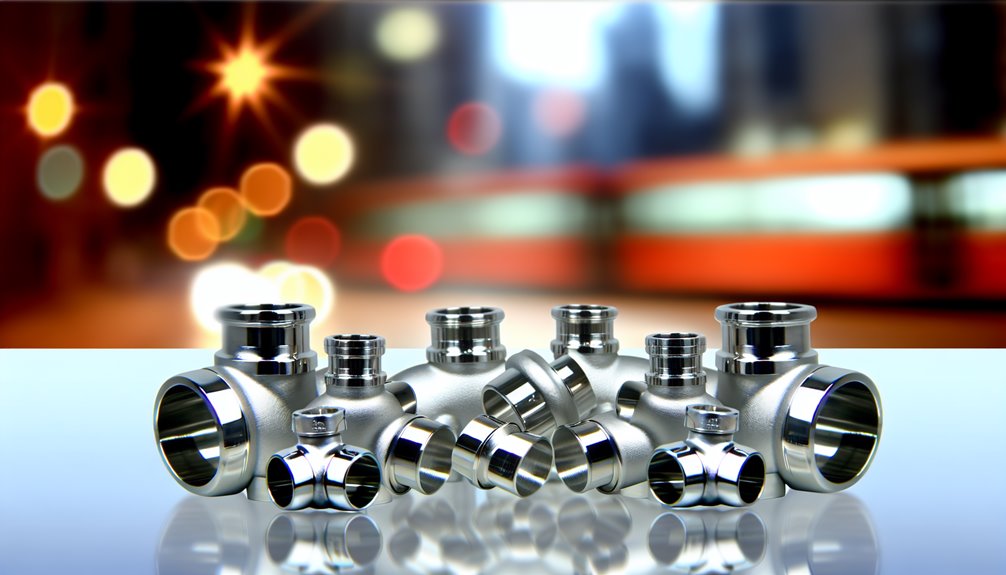
Vinmay stands out as a premier choice for sanitary fittings, offering a broad range of stainless steel welded pipes and handrail fittings tailored to meet the demands of diverse industries.
Their product collections include stainless steel ornamental and construction tubes, sanitary tubes, and light gauge water tubes, all adhering to stringent standards such as ASTM A270 and EN10357.
Vinmay's commitment to quality is evident in their global reach, serving over 100 countries with flexible payment terms and guaranteed 15-day delivery.
They provide potential clients with free samples, online video factory inspections, and thorough sales guidance.
Customization options in color, surface, and length guarantee adaptability to specific project needs, while competitive pricing positions Vinmay favorably against Taiwanese and European suppliers.
Sanitary fittings guarantee effective cleaning in brewing systems by featuring smooth surfaces, minimizing crevices, and allowing disassembly or clean-in-place processes. Stainless steel construction resists bacterial adhesion, and design facilitates thorough sanitation, maintaining hygiene and preventing contamination.
Unions, like the symphony of precision engineering, offer seamless connections and effortless disassembly in sanitary systems. Their robust design guarantees leak prevention and easy maintenance, enhancing operational control and reducing downtime in high-demand environments.
Sanitary fittings can indeed be customized for specific industry needs. Options like material selection, dimensions, threading, and connection types enable tailored solutions, ensuring ideal performance, compliance with industry standards, and enhanced efficiency in critical applications.
Regular inspection, cleaning, and lubrication are essential maintenance practices for sanitary fittings. Verify fittings are free from debris, routinely check for wear or damage, and replace seals or gaskets when necessary to maintain peak performance and longevity.
Sanitary fittings enhance fluid flow efficiency by reducing turbulence and pressure loss, ensuring smooth, uninterrupted flow. Their precision design and compliance with strict hygiene standards minimize contamination risks, optimizing system performance in critical applications requiring high cleanliness levels.
In the domain of hygienic stainless steel systems, sanitary fittings serve as the essential arteries ensuring seamless and safe operations. The choice of stainless steel, alongside a spectrum of fittings like ball, sleeve, and cam and groove, underlines their adaptability and hygiene. Selecting the appropriate fittings, verified against stringent standards, is imperative for operational excellence. With Vinmay's expertise, industries can confidently navigate the intricate landscape of sanitary requirements, ensuring both compliance and efficiency in their processes.