Sanitary weld fittings sit at the core of hygienic piping systems, where surface finish, joint integrity, and material traceability directly influence product safety and process uptime. With options such as butt weld, socket weld, and tri-clamp connections, engineers must align fitting type with ASME BPE, 3-A, and application-specific cleanability demands. Understanding how design, material grade, and manufacturing quality interact with CIP/SIP and high-pressure service becomes essential before specifying the next system component.

Sanitary weld fittings are stainless steel components engineered to create permanent, crevice-free pipe joints in hygienic process systems for food, beverage, dairy, and pharmaceutical production. They link, redirect, or terminate pipe runs via orbital or manual welding, creating fully drainable, clean-in-place (CIP) compatible pathways. Typically manufactured from 304 or 316L stainless steel, 316L sanitary weld fittings are preferred in chloride-rich, high-purity, or aggressive CIP environments due to lower carbon content and improved pitting resistance.
Precision Machining of these fittings ensures that they meet high standards for tight tolerances and smooth surfaces, which are crucial for hygienic applications. Precise installation techniques are vital for ensuring leak-free connections and optimal performance in these systems. Precision-machined weld ends control alignment, heat-affected zone size, and weld penetration, minimizing dead legs and turbulence.
Sanitary weld fittings include elbows, tees, reducers, ferrules, and tank outlets designed to meet 3-A, ASME BPE, and FDA-aligned material, surface finish, and documentation requirements. The ASTM standards ensure that stainless steel sanitary tubes and fittings meet stringent safety and quality regulations, crucial for industries requiring sterility and cleanliness. These fittings are often made from biocompatible materials, ensuring they are safe for contact with consumable products. It is important to consult with experts in the field to ensure proper material selection, minimizing risks like material incompatibility and corrosion susceptibility.

Because welded joints eliminate gasket interfaces and threaded crevices, they are the preferred connection method in hygienic piping where microbial control and regulatory compliance are critical.
Welded sanitary fittings create a continuous, crevice-free bore that aligns with 3-A, EHEDG, and ASME BPE criteria for cleanability and surface finish (typically .8 μm Ra). This geometry minimizes biofilm formation and reduces CIP/SIP cycle time and chemical load. Sanitary stainless steel pipes are essential in ensuring the purity and safety of products, especially in industries like food, pharmaceuticals, and dairy, where contamination can have significant repercussions. The durability and corrosion resistance of stainless steel contribute to the long-term reliability of hygienic piping systems, ensuring sustained performance in demanding environments. The versatility of stainless steel square tubing makes it suitable for various industries due to its strength, durability, and ease of fabrication, enhancing the performance of hygienic systems. The self-healing nature of the chromium film in stainless steel further enhances its suitability for hygienic applications by preventing bacterial harboring in corrosion spots.
Sanitary butt weld fittings also improve system integrity under thermal cycling and high-pressure washdowns, lowering leak incidence versus clamp or threaded assemblies.
For FDA- and EU-compliant processes, fully penetrated orbital welds provide documented, inspectable joints that support validation and traceability.
Hygienic stainless steel tubes, designed to maintain sterile environments, are integral to these systems, ensuring product purity and compliance with standards.
As a result, welded connections offer tighter process control, lower contamination risk, and predictable lifecycle cost.

Sanitary weld fittings are available in several standardized geometries, including butt weld, socket weld, tri-clamp weld, bevel seat, and I-Line/Q-Line/H-Line configurations, each optimized for specific pressure, cleanability, and alignment requirements. Selection is typically based on applicable standards such as 3-A, ASME BPE, and FDA guidance, as well as process parameters like CIP/SIP conditions and allowable pressure drop. Understanding the functional differences between these fitting types helps engineers specify the most hygienic, maintainable, and cost-effective layout for food, beverage, and pharmaceutical systems. The use of GTAW (TIG Welding) ensures precise and high-quality joints, a critical requirement for maintaining the integrity and hygiene of sanitary piping systems.
Engineered for high-purity process lines, butt-weld sanitary fittings provide a full-bore, crevice-free connection by welding pipe ends directly together, making them the preferred choice for critical food, beverage, and pharmaceutical systems. As a subset of stainless steel sanitary weld fittings, these hygienic weld fittings are specified where clean-in-place (CIP) and steam-in-place (SIP) cycles, high pressures, and thermal shock are routine. Sanitary butt weld elbows, tees, reducers, crosses, and ferrules are typically produced in 304 or 316L stainless steel with controlled sulfur content, orbital-weld-compatible bevels, and documented surface finishes (e.g., .8 µm Ra or better for ASME BPE service).
Their geometry maintains a constant or predictably changing bore, minimizing turbulence and hold-up volume. ASTM standards ensure that the fittings meet precise mechanical properties and dimensional tolerances necessary for performance and reliability. When paired with 3-A, FDA, and ASME BPE-compliant procedures, they deliver repeatable, audit-ready hygienic performance. The importance and overview of stainless steel tube standards ensure that these fittings meet the necessary safety, reliability, and quality benchmarks. ASTM A249 compliance guarantees that stainless steel tubes possess the required material properties and dimensional accuracy for these applications. Pharmaceutical grade stainless steel tubing, crafted from 316L austenitic stainless steel, ensures exceptional resistance to corrosive agents and is engineered for environments requiring superior corrosion resistance and purity. The chemical composition of 304 stainless steel, including its chromium and nickel content, enhances its corrosion resistance and suitability for sanitary applications.
While butt weld fittings dominate larger high-purity process lines, socket weld sanitary fittings address the smaller-diameter segment of hygienic piping, typically from ½ inch to 4 inches.
These sanitary welded pipe fittings use a precision-machined socket to control alignment, insert depth, and heat input, enabling repeatable orbital or manual weld procedures. Stainless steel is a preferred material due to its corrosion resistance and strength, making it ideal for these applications. Additionally, 316 stainless steel tubes are favored for their enhanced durability and corrosion resistance in sanitary systems. The accurate measurements of these fittings are crucial for ensuring proper alignment and function in hygienic systems. The 316 stainless steel grade is well-suited for sanitary applications due to its superior corrosion resistance and long-term durability, making it a reliable choice in various industries.
In ASME BPE weld fittings, sanitary socket welds are specified where designers want fully welded systems but also demand high positional accuracy at valves, instruments, and short-run manifolds.
They are commonly used in CIP/SIP-capable skids, utility drops, and clean chemical dosing lines.
When sourced to ASME BPE or 3-A criteria, they provide documented surface finish, material traceability, and weld-insertion control, reducing dead-leg risk and supporting validated hygienic performance.
The use of high-quality materials in sanitary piping, such as stainless steel, ensures durability and compliance with stringent hygiene standards, minimizing contamination risks and enhancing product purity.
Although they are often associated with quick-disconnect systems, tri-clamp weld fittings primarily rely on welded ferrules and weld ends to create a permanent, crevice-free shift to clamp-style connections in hygienic process lines. These food grade weld fittings are typically fabricated from 304 or 316L stainless steel and finished to .8 μm Ra to satisfy FDA, 3-A, and, where applicable, ASME BPE criteria. By welding ferrules directly to the tube, they eliminate threaded dead legs while enabling clamp-gasket assemblies at critical access points. This configuration allows operators to standardize on tri-clamp connections for CIP/SIP access, flow panel flexibility, and rapid device changeout, while still maintaining fully welded, drainable bores in product zones across dairy, brewery, beverage, and pharmaceutical utilities.
The corrosion resistance and durability of 316L stainless steel make it particularly suited for sanitary applications where hygiene and long-term reliability are paramount. Furthermore, the superior weldability of 316L stainless steel ensures it remains a preferred choice for creating high-integrity welded structures in demanding environments. Additionally, the high temperature resistance of 316 stainless steel ensures that it maintains structural integrity even in demanding conditions. Notably, 316 stainless steel square tubes are often used in chloride-rich environments due to their enhanced corrosion resistance. The cost considerations of stainless steel grades can influence the choice between 304 and 316L, depending on the specific application requirements and budget constraints.
Bevel seat sanitary weld fittings provide a metal-to-metal, gasket-optional sealing interface that is favored in high-pressure, high-cycle CIP systems across dairy, beverage, and brewery installations. Their 45° or similar bevel geometry creates a positive mechanical stop that maintains alignment under vibration and thermal cycling, reducing the risk of micro-gaps and product entrapment.
From a standards perspective, bevel seat designs are commonly aligned with DIN, SMS, and RJT sanitary norms, allowing users to standardize on weld ferrules, unions, and adapters across existing European and UK-centric installations.
When welded to 304 or 316L tube spools with controlled surface roughness, bevel seat fittings deliver verifiable cleanability, repeatable clamp load, and predictable pressure ratings—key variables for operators who want auditable control of CIP efficiency, downtime, and contamination risk. Dairy stainless steel tees, which are essential for hygienic dairy processing systems, also play a critical role in maintaining clean and efficient fluid transportation.
I-Line, Q-Line, and H-Line weld fittings define a family of high-pressure, heavy-duty sanitary connection standards engineered for demanding CIP/SIP service in dairies, breweries, and process plants.
They are specified where elevated line pressures, frequent thermal cycling, and aggressive cleaning regimes exceed the safety margins of lighter-duty sanitary unions.
These fittings typically combine thick-gauge ferrules, deep weld sockets or buttweld ends, and precision metal-to-metal gasket containment to minimize joint flex and seal extrusion.
Designers select among I-, Q-, and H-Line based on pressure class, mechanical load, and existing plant standardization.
Their geometry supports fully penetrated orbital or manual GTAW welds, maintaining clean-in-place flow profiles while resisting mechanical abuse from pump vibration, valve actuation, and frequent hose connections in production and utility headers.
When sanitary process systems must interface with plant pipework, pipe-size sanitary weld fittings provide a code-compliant connection that preserves cleanability while matching common pipe dimensions and schedules. These components are typically manufactured from 304 or 316L stainless steel, with surface finishes aligned to 3-A, FDA, or ASME BPE criteria where required. By matching ASME B36.10/B36.19 pipe outside diameters, they allow validated shifts from hygienic lines to utility or process piping without introducing dead legs. Marine-grade alloys such as 316L are selected for their enhanced corrosion resistance, particularly in environments with exposure to chlorides.
Designs include butt-weld elbows, tees, reducers, and caps sized by nominal pipe size (NPS), enabling predictable pressure ratings consistent with piping codes. Stainless steel pipes are lightweight yet strong, which facilitates easier installation and reduces labor costs. Controlled alignment and full-penetration orbital welds support SIP/CIP regimes, minimize hold-up volume, and maintain documentary traceability for audits and change control.
The addition of molybdenum in 316 stainless steel enhances its resistance to corrosion, making it ideal for environments that require stringent hygiene standards. The use of seamless tube production further ensures the integrity and strength of the fittings, especially in applications that demand high performance under substantial stress. Sanitary Pipes are specifically designed with smooth internal surfaces to minimize bacterial growth, which is crucial in maintaining hygiene in food, beverage, and pharmaceutical industries.
In sanitary process systems, the choice between weld fittings and clamp (Tri-Clamp/Tri-Clover) fittings is driven by quantifiable hygiene requirements, cleaning strategy, and regulatory standards such as ASME BPE, 3-A, FDA, and ISO.
Welded fittings provide a crevice-free, permanent joint with minimal dead-leg, preferred where continuous production, sterile barriers, and validated SIP/CIP cycles are mandatory—typical in biopharmaceutical and vaccine lines.
Clamp fittings, by contrast, enable tool-free disassembly through ferrule–gasket–clamp assemblies, supporting rapid changeover, routine visual inspection, and gasket replacement. They are frequently specified in dairy and beverage transfer lines where batch variation and equipment reconfiguration are routine.
Decision-makers typically balance contamination risk, inspection frequency, documentation burden, and total lifecycle cost when selecting between welded and clamp architectures.
Material selection for sanitary weld fittings typically centers on 304 and 316L stainless steel, each offering distinct corrosion resistance and lifecycle costs.
In hygienic service, 304 fittings are often specified for general food and beverage lines, while 316L is preferred for chloride-rich, acidic, or high-purity pharmaceutical applications. The mechanical properties of stainless steel 304, such as its balanced corrosion resistance and formability, make it a cost-effective choice for many applications.
Standards such as 3-A, FDA, and ASME BPE provide guidance on when 304 is acceptable and when low-carbon 316L with documented traceability and controlled surface finish is required. Surgical grade stainless steel, such as 316L, offers resistance to body fluids and high-temperature sterilization, making it suitable for critical applications in both food and medical industries.
Food grade 304 stainless steel, known for its excellent corrosion resistance, is a reliable choice for applications requiring easy sanitation and durability.
Selecting the correct stainless steel grade for sanitary weld fittings directly impacts corrosion resistance, cleanability, and regulatory compliance in hygienic process systems. Most installations rely on austenitic grades, with 304/304L dominating non-aggressive duties and higher-alloyed variants used where chloride, acidic media, or aggressive CIP cycles are present. Material selection should be tied to documented standards such as ASTM A270, ASME BPE, and 3-A, with full heat/lot traceability.
| Grade / EN | Typical Use Case | Key Control Parameter |
|---|---|---|
| 304/1.4301 | Low-chloride food & beverage lines | Cost-efficiency vs. corrosion risk |
| 304L/1.4307 | Weld-intensive, thin-wall tubing | Low carbon for weld integrity |
| 316/1.4401 | Moderate chloride, CIP with acids | Pitting resistance equivalent (PREN) |
| 317L/1.4438 | Higher chlorides, reduced downtime | Extended service life |
| Duplex | High-pressure, high-chloride zones | Yield strength, SCC resistance |
L‑grade stainless steel weld fittings—such as 304L, 316L, and 317L—are specified where weld integrity, corrosion resistance, and regulatory compliance must be maintained over long service lives in hygienic systems.
The reduced carbon content (.03%) minimizes sensitization in the heat‑affected zone, preventing chromium carbide precipitation and intergranular corrosion—critical under repeated SIP/CIP cycles and elevated chlorides.
They are preferred where 3-A, FDA, and ASME BPE place emphasis on weld quality, surface finish, and full material traceability.
In pharmaceutical and high‑risk food processes, 316L is typically the baseline, with 317L reserved for aggressive media or higher chlorides.
Surface finish and weld integrity in sanitary weld fittings are governed by quantifiable criteria such as internal surface roughness (Ra), weld bead geometry, and post-weld treatment.
Hygienic design standards like 3-A and ASME BPE specify maximum Ra values, continuous, flush weld beads with no undercut or pinholes, and strict control of crevices to prevent microbial harborage.
To restore corrosion resistance and remove heat tint in the weld zone, pickling and passivation processes are typically required and must be validated for food, beverage, and pharmaceutical service.
Internal surface roughness (Ra) is a primary performance metric for sanitary weld fittings, directly tied to cleanability, bacterial adhesion, and regulatory compliance.
In hygienic processing, Ra is typically specified in microinches (µin) or micrometers (µm), with common targets derived from ASME BPE and 3-A standards. Biopharmaceutical lines often require .38 µm (15 µin) Ra for product-contact surfaces, while less critical food applications may accept .8 µm (32 µin) Ra.
Lower Ra values reduce soil retention and CIP/SIP time, but also increase fabrication cost, so selection is driven by risk assessment and validation data.
Weld bead smoothness and crevice control define whether a sanitary weld fitting will actually meet its specified Ra and hygienic performance in service.
Regulatory frameworks such as ASME BPE and 3-A SSI restrict internal weld irregularities, undercut, and mismatch, typically limiting step discontinuities to .5 mm and requiring full penetration with no concavity that can trap product.
Orbital or carefully controlled manual TIG welding with argon backing is favored to achieve consistent weld crowns that can be blended to match base-metal Ra without over-thinning.
Inspectors rely on borescope examination and, in critical lines, profilometry at the weld zone.
Engineers should specify maximum allowable bead height, internal mismatch, and defect acceptance criteria directly on weld maps and fabrication drawings.
Although weld bead geometry sets the baseline for hygiene, post‑weld pickling and passivation determine whether stainless sanitary fittings restore a fully protective, cleanable surface in accordance with 3‑A, ASME BPE, and ASTM A380/A967 requirements.
Heat tint and embedded iron created by welding must be removed chemically to re‑establish a chromium‑rich passive layer and achieve specified Ra and corrosion resistance in CIP/SIP cycles.
Key control points include:
Standards and compliance for sanitary weld fittings are defined primarily by ASME BPE, 3-A Sanitary Standards, and European EN/DIN hygienic norms.
Each framework specifies measurable criteria for material composition, surface finish (Ra values), weld geometry, and documentation to guarantee cleanability and process safety.
Understanding how ASME BPE requirements, 3-A sanitary acceptance, and EN/DIN hygienic standards align or differ is essential for selecting fittings that meet global food, beverage, and pharmaceutical application needs.
ASME BPE requirements define the benchmark for designing and qualifying sanitary weld fittings used in biopharmaceutical and high-purity processes. The standard specifies material chemistry (typically 316L with controlled sulfur), weld joint geometry, surface finish, and drainability to minimize contamination and facilitate clean-in-place (CIP) and steam-in-place (SIP) operations.
It also mandates documentation and lot traceability to support validation and change control.
For engineering and quality teams seeking tighter process control, ASME BPE provides measurable criteria, including:
A robust sanitary acceptance strategy for weld fittings aligns design, fabrication, and inspection practices with formal benchmarks such as 3-A Sanitary Standards, ASME BPE, and relevant FDA and EHEDG guidance. Acceptance criteria typically center on surface roughness, weld geometry, material certification, and cleanability, all verified through documented inspection and periodic audits. 3-A requirements for smooth internal bores, controlled Ra, and full‑penetration crevice‑free welds serve as quantifiable go/no‑go controls.
| Aspect | Acceptance Focus |
|---|---|
| Design | No dead legs; CIP/SIP compatibility |
| Materials | Certified 304/316L; traceable heat numbers |
| Fabrication | Qualified welders; validated weld procedures |
| Surface & Verification | Ra limits; boroscope/visual NDT; audit trail |
Non‑compliance—damaged finishes, poor welds, or undocumented changes—triggers rejection, remediation, and potential supplier disqualification.
While 3-A Sanitary Acceptance provides a strong benchmark for North American hygienic systems, many global processors specify EN and DIN hygienic standards to control the geometry, surface finish, and material quality of sanitary weld fittings used in European-designed equipment.
EN 10357 (formerly DIN 11850) and DIN 11866 define tube dimensions and tolerances, while DIN 11851/11864 govern fittings and aseptic connections, ensuring predictable weld prep and cleanability.
These standards are often linked to material norms such as EN 1.4404 (316L) and surface roughness targets .8 µm Ra for CIP/SIP reliability.
Selecting sanitary weld fittings for process systems requires matching pressure and temperature ratings to operating envelopes defined by ASME and relevant process safety margins.
Engineers must verify that materials, surface finishes, and gasket interfaces are fully compatible with CIP/SIP regimes, including chemical concentration, exposure time, and sterilization temperatures.
The choice between permanent welded joints and hybrid arrangements with removable clamp connections is driven by cleanability, validation access, and maintenance strategies specific to food, beverage, and pharmaceutical applications.
Correct assessment of pressure and temperature conditions is fundamental when specifying sanitary weld fittings for process systems, as these parameters directly influence material grade selection (304 vs. 316L), wall thickness, weld geometry, and long-term reliability.
Engineers reference ASME BPE, ASME Section VIII, and EN 10253 to match design pressure and temperature with fitting ratings, incorporating corrosion allowance and weld efficiency. Derating curves for austenitic stainless steels above 100 °C guide maximum allowable working pressure.
Key engineering checks include:
CIP/SIP compatibility centers on guaranteeing sanitary weld fittings tolerate repeated exposure to alkaline and acid detergents, high-purity steam, and rapid thermal cycling without loss of surface integrity or dimensional stability.
Selection typically favors 316L stainless steel with sulfur content controlled per ASME BPE to balance weldability and corrosion resistance. Surface roughness .5.8 µm Ra, often electropolished, minimizes chemical entrapment and biofilm formation under aggressive cleaning regimes.
Engineers evaluate corrosion test data (e.g., ASTM G31), pitting resistance equivalent number (PREN), and steam-resistance performance at 12135 °C.
CIP chemicals (NaOH up to ~2%, nitric or peracetic acid) drive verification of weld heat-affected zones and dead-leg geometry. Compliance with 3-A, EHEDG, and ASME BPE guarantees fittings remain cleanable and dimensionally stable across validated CIP/SIP cycles.
While sanitary process lines share common hygiene and regulatory requirements, engineers must clearly distinguish between permanent welded joints and removable clamp or threaded connections when configuring a system.
Welded sanitary fittings minimize dead legs, support clean-in-place (CIP/SIP), and align with 3-A and ASME BPE expectations for crevice-free product contact zones, making them the default in high-risk food, dairy, and biopharma applications.
Removable connections remain essential where validated disassembly, frequent reconfiguration, or instrument access is required.
Selection should be based on quantified risk, cleaning strategy, and life-cycle cost rather than preference:
Sanitary weld fittings are primarily specified in food and beverage processing lines, brewery and dairy systems, and pharmaceutical and biotech facilities where CIP/SIP, 3-A, and ASME BPE compliance are required.
Their use extends to water treatment and high-purity utility loops, including WFI, clean steam, and purified water systems, where low Ra values and full material traceability are critical.
Understanding these application environments clarifies the required alloy selection, surface finish, and joint design criteria for long-term hygienic performance.
In food and beverage processing lines, weld fittings are specified wherever hygienic pipework must remain fixed and be cleaned in place (CIP) rather than dismantled. Their permanent, crevice-free joints support validated cleaning cycles and minimize contamination risk in continuous production environments.
Operators select 304 or 316L stainless steel weld fittings with controlled surface finish to comply with FDA, 3-A, and EHEDG hygienic design guidance, while maintaining pressure and temperature ratings for thermal treatment, carbonation, and viscous product transfer.
Key control objectives typically include:
Across modern brewery and dairy systems, sanitary weld fittings are specified wherever product contact lines are permanently installed and cleaned in place (CIP) under tightly controlled conditions. Welded elbows, tees, reducers, and tank nozzles create crevice-free connections in wort, beer, milk, and CIP loops, minimizing microbial harborage and mechanical failure risk.
Engineering teams typically align these installations with 3-A Sanitary Standards and applicable FDA and EHEDG guidelines, selecting 304 or 316L stainless steel with documented surface roughness and full material traceability.
Weld fittings dominate in pasteurizers, fermentation vessels, bright beer tanks, HTST lines, and raw/finished milk headers, where frequent disassembly is neither practical nor desired. This approach yields predictable cleaning performance, stable pressure ratings, and repeatable validation outcomes.
Pharmaceutical and biotech facilities rely on sanitary weld fittings wherever process contact surfaces must meet ASME BPE, FDA, and EU GMP requirements for sterility, cleanability, and documentation.
Welded systems dominate upstream and downstream process trains because they support validated CIP regimes and eliminate dead legs that jeopardize batch integrity. Typical lines include media and buffer transfer, process intermediates, and final bulk drug product.
Key control points include:
Many water treatment and high‑purity utility systems rely on sanitary weld fittings to maintain validated cleanliness, corrosion resistance, and low extractables from source water through point‑of‑use distribution.
Because welded connections are permanent and non-removable, they are selected where high-purity loops, clean steam, and purified water (PW, WFI) are cleaned in place and must sustain documented performance over long validation cycles.
Welded elbows, tees, reducers, and tank nozzles minimize dead legs in RO, deionization, and electrodeionization skids, as well as storage and distribution systems.
When specified to ASME BPE, 3-A, and FDA material and surface criteria, these fittings support low bioburden, controlled rouging, and predictable TOC levels, enabling reproducible sanitization, stable operating parameters, and defensible compliance records.
Manufacturing quality for sanitary weld fittings is driven by controlled welding methods and heat input that protect corrosion resistance and dimensional stability.
Post-weld surface treatments such as pickling and electropolishing are selected to achieve specified Ra values and meet 3-A, FDA, and ASME BPE surface finish criteria.
Equally critical are systematic inspection, pressure testing, and full material heat-number traceability to guarantee consistent performance in regulated food, beverage, and pharmaceutical systems.
Precise control of welding method and heat input is a primary determinant of sanitary weld fitting performance, directly affecting corrosion resistance, cleanability, and regulatory compliance.
Process choice typically centers on orbital GTAW/TIG with automated parameter control to achieve full penetration, minimal distortion, and consistent bead geometry. Heat input must be limited to preserve chromium content in the heat-affected zone and prevent sensitization, which undermines ASTM A270, ASME BPE, and 3-A compliance.
Key control levers include:
While weld procedure and heat control define the internal metallurgy of a sanitary fitting, post‑weld surface treatment determines whether that weld can consistently meet A270, 3-A, and ASME BPE cleanability and corrosion performance targets.
Controlled grinding and blending remove undercut and high spots to restore uniform bore geometry, then mechanical polishing and electropolishing drive surface roughness toward typical Ra 0.38-0.51 μm requirements.
Pickling or electropolishing is used to dissolve heat tint and chromium-depleted layers, reestablishing a chromium-rich passive film essential for chloride resistance in CIP/SIP service.
Process parameters—acid chemistry, current density, exposure time, and post-rinse quality—directly affect delta-ferrite stability and pitting resistance.
Manufacturers that document specified Ra, chemistry, and method give end users predictable cleanability and lifecycle performance.
Even when weld geometry and surface finish meet print, sanitary fittings only achieve reliable service performance when supported by disciplined inspection, testing, and traceability.
Leading manufacturers combine 100% visual inspection with targeted nondestructive examination—dye penetrant on critical welds, borescope checks of internal beads, and, where specified, radiography—to verify crevice-free, fully fused joints.
Dimensional and surface-roughness measurements are tied to batch records to demonstrate compliance with ASME BPE, 3-A, and customer URS.
Traceability links every fitting back to the melt, heat treatment, and finish condition, enabling rapid containment during deviations and audits.
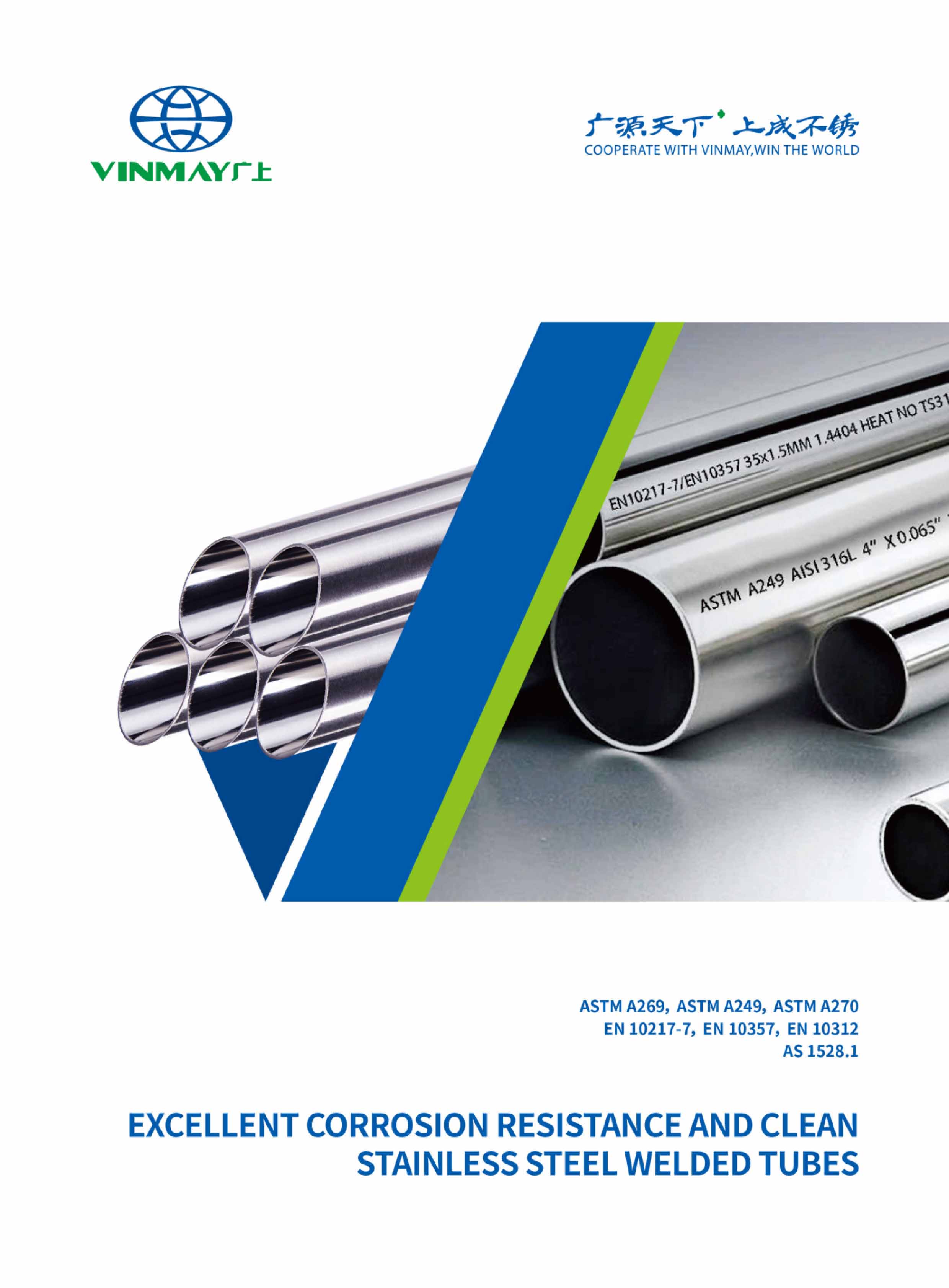
Vinmay supplies sanitary weld fittings supported by certified stainless steel welded tubes in 304, 304L, and 316L, produced in accordance with ASTM A270, EN 10357, DIN 11850, ASTM A249, ASTM A269, and EN 10217-7. This standards alignment allows specifications to be traced directly from system design requirements to mill test documentation, simplifying technical verification and compliance review.
As a specialist manufacturer focused on welded tubing and compatible sanitary fittings, Vinmay supports distribution and project supply across more than 100 international markets. Production planning and inventory control enable short lead times, including 15-day dispatch for time-sensitive maintenance and shutdown schedules.
Quality assurance is reinforced through online factory audits, material sampling, and full dimensional and surface verification prior to shipment. Integrated logistics and customs support help reduce administrative complexity, while competitive cost structures—compared with Taiwanese and European mills—support predictable project budgeting.
For project specifications, material data, or sample evaluation, contact Vinmay to discuss sanitary weld fitting requirements and available configurations.
They are typically inspected every CIP/SIP cycle and formally at least annually; replacement follows findings, not calendar limits. Yet who accepts guesswork when 3-A, ASME BPE, and FDA validation protocols can dictate condition‑based weld renewal intervals?
Retrofitting clamp systems to sanitary weld fittings is feasible but not “easy.It requires requalification of weld procedures, ASME BPE/3-A compliance checks, CIP/SIP validation, downtime planning, and detailed isometric review to maintain drainability and surface-finish requirements.
Auditors typically request material test reports, heat and batch numbers, ASME BPE/FDA/3-A conformity certificates, surface finish and electropolish records, weld maps, WPS/PQR/WPQ, orbital weld logs, boroscope or radiography reports, cleaning validation, and change-control documentation.
They estimate labor by time-and-motion: TIG weld-hours per joint, fit-up/verification multipliers, ASME BPE inspection/testing factors, access constraints, shift premiums, and rework contingency. Historical productivity data and standardized weld maps provide controllable, auditable installation cost baselines.
Yes. Excessive chlorides, halogenated disinfectants, high‑pH caustics, and oxidizing cleaners can pit or crack 304/316L surfaces. Controlled operators verify compatibility via ASTM A967/ASTM G48 data, vendor CIP tables, and tightly managed concentration, temperature, and exposure times.
To sum up, sanitary weld fittings remain the quiet backbone of hygienic piping, but a persistent theory deserves scrutiny: that clamp fittings can fully replace welded joints in modern plants. Data from ASME BPE and 3-A studies show welds still deliver superior cleanability, lower dead legs, and better long-term integrity under SIP/CIP cycles. For critical food, beverage, and pharma lines, selecting standards-compliant welded fittings is less about tradition and more about provable control of contamination risk.