Many engineers request “metric sanitary fittings” as if the term defines hygienic compatibility. It does not. “Metric” describes units, not a sanitary standard. DIN, EN, ISO, and regional hygienic systems—such as DIN 11851, DIN 11864, EN 10357/10253, and ISO-based profiles—differ materially in ferrule geometry, gasket design, surface finish, tolerances, and material grades.
Assuming interchangeability based on matching diameters alone often leads to dead legs, gasket misseating, leakage, and validation failures. In regulated hygienic processes, these mismatches compromise cleanability and undermine compliance. Sanitary performance depends on explicit standard alignment, not procurement convenience. The distinction is critical to product purity—and it starts at the ferrule.
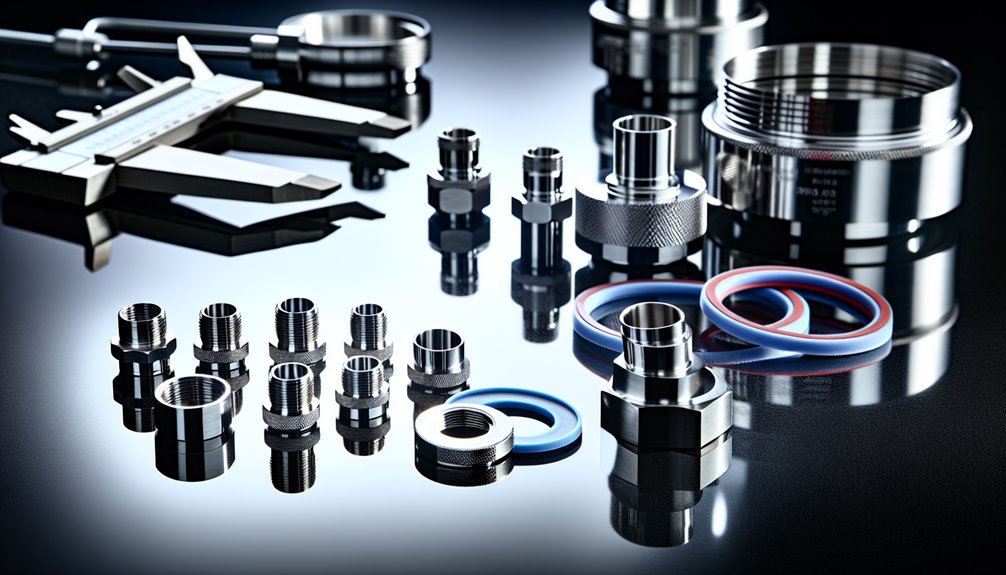
Many misunderstandings arise because “metric" refers only to the unit system, not a specific sanitary standard. Practitioners often assume that metric sanitary fittings with identical diameters will seal and align, yet the same diameter does not necessarily guarantee the same sealing or fit. In reality, system reliability also depends on matching hygienic stainless steel tubes that comply with defined surface finish and corrosion resistance criteria across the entire assembly. Because these systems are typically built from stainless steel sanitary pipe with smooth, crevice-free surfaces, maintaining consistent material and finish selection is critical for both hygiene and durability.
Differences in gasket geometry, ferrule profiles, and clamp interfaces defeat hygienic piping interchangeability. Confusion intensifies in metric vs inch sanitary fittings conversions, where ID- vs OD-based sizing obscures true compatibility. In addition to dimensional issues, variations in surface finishing and internal smoothness between fittings can impact cleanability and hygienic performance. Because internal hygiene is closely tied to surface condition, many industries specify electropolished tubing to minimize roughness and improve cleanability.
Without verifying din en sanitary compatibility at the drawing level—tolerances, surface finish, elastomer profile—installers discover issues only during assembly: gaps, misclamps, or dead legs.
Metric clamp sanitary fittings from different catalogs may share millimeters, not mating geometry. Controlled practice mandates bill-of-material specificity, cross-standard fit checks, and mock-up tests before procurement to mitigate leak, contamination, and rework risk. In practice, selecting fittings that explicitly comply with recognized sanitary standards such as 3A, DIN, ISO, SMS, or BS 4825 is essential to maintain hygienic performance and cross-system compatibility.
Although often grouped together, European metric sanitary fittings span distinct standards, each with different design intent.
The most common systems include:
These standards differ in wall-thickness assumptions, tolerance stacks, gasket compression profiles, and sealing geometries.
As a result, fittings that appear similar on paper may behave very differently in service.
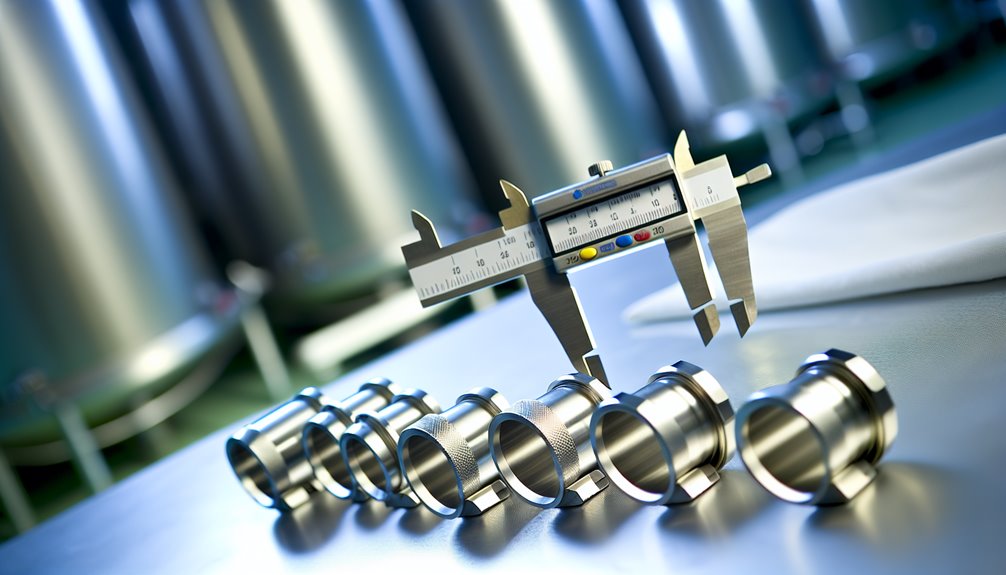
Despite all being described as metric, sanitary fitting systems based on DIN 11851, DIN 32676 (metric clamp), and EN ISO 2852 / EN ISO 1127 follow different design philosophies. As a result, interchangeability fails at the interface, not at the unit of measure.
Even within metric hygienic fittings, assumptions differ around tube outside diameter (OD) versus fitting bore and seal reference, leading to misalignment at the sealing face. Clamp-related issues occur when ferrule flange profiles, horn angles, or flange thicknesses vary—the clamp may center on the wrong datum, not the gasket line.
Further complications arise from seal compression differences. Variations in gasket cross-section, groove depth, and compression-stop geometry change load distribution and surface contact, undermining cleanability and validation targets. In hygienic systems, “almost fits” is unacceptable: even small offsets introduce crevices, shear points, uneven clamping stress, and localized turbulence, all of which increase contamination and compliance risk.
Robust metric sanitary design depends on exact standard alignment, not dimensional coincidence. Reliable performance requires matching the full interface system—ferrule profile, gasket geometry, clamp type, and tube norm—so cleanability, drainability, and validation assumptions remain intact.
Misaligned ferrules are the first symptom when DIN 11851, DIN 32676, and EN ISO 2852/ASME BPE interfaces are mixed, and the consequences cascade: gasket seating errors elevate leak risk during CIP, non-uniform compression accelerates gasket wear, and installers lose time adapting clamps, gaskets, and adapters to reconcile ID/OD and flange profile mismatches. Surface discontinuities at the bore create turbulence, entrainment, and soils that resist CIP, increasing verification failures.
Clamp torque windows narrow; overtightening deforms elastomers, undertightening compromises seal integrity. Documentation suffers because material certs, surface finish grades, and pressure ratings do not align across standards, complicating validation. Material selection and system design must also account for chemical compatibility and temperature limits across different pipe materials to avoid hidden failures in hygienic service.
1) Leakage during CIP from poor gasket containment and misaligned faces.
2) Premature gasket wear driven by eccentric compression and torque variability.
3) Installation delays plus audit complications from mixed documentation baselines.

Specification begins by identifying the exact sanitary standard and tube norm, not merely stating “metric." The requisition should define the fitting system (e.g., DIN 11851 vs. tri-clamp), tube standard (ID- or OD-based), nominal size, surface finish, material grade, pressure/temperature class, gasket material, and finish certification. In regulated industries such as food, dairy, and pharmaceuticals, correctly matched metric fittings and tube norms are critical to maintain product purity and avoid contamination issues. DIN 11851 uses metric, ID-referenced tube and a male/female union with gasket; tri-clamp uses imperial, OD-referenced ferrules with a compressed gasket. Mixing these by calling both “metricinvites leakage, dead legs, and noncompliant joints.
Procurement must match fittings to the installed tube standard and verify dimensional compatibility for each size. Shortcuts—such as substituting near sizes or unspecified “DIN-style”—create misalignment, overstressed clamps, and hygiene risk.
Controlled specifications, documented per standard and tube norm, prevent rework and safeguard validation.
After defining the fitting standard and tube norm, attention shifts to tube consistency, which carries heightened consequences in metric hygienic systems. In medical and high-purity environments, this consistency also underpins biocompatible performance by ensuring that stainless steel tubing maintains both mechanical integrity and hygienic surface quality.
With the tighter tolerances typical of DIN-based tubing, even small deviations in roundness, wall thickness, or weld quality translate directly into higher seal stress, clamp overtravel, and elevated bioburden risk.
These issues appear faster than in inch-based systems because nominal dimensions and gasket lands are less forgiving. Minor geometric errors quickly consume the available tolerance stack, degrading both cleanability and pressure integrity.
In high-purity food, pharmaceutical, and biotech lines, pairing consistent metric tube geometry with 316 stainless steel further reduces corrosion and maintenance risk under aggressive cleaning and sterilisation regimes.
The molybdenum content in 316 stainless steel enhances corrosion resistance, helping preserve surface integrity and hygienic performance over long service lives.
Its high impact resistance also allows sanitary tubing to withstand thermal shock and pressure transients without cracking or loss of mechanical integrity.
DIN’s tight tolerances magnify minor tube flaws into leakage, clamp overtravel, and bioburden risks.
1) Roundness: Out-of-round metric tube distorts gasket compression profiles, creating leak paths and sites for soil entrapment under SIP/CIP cycling.
2) Weld consistency: Inconsistent weld beads and HAZ alignment disrupt ferrule seating, producing localized overcompression and premature elastomer failure.
3) Thickness control: Wall variation skews ferrule-to-tube concentricity, increasing clamp load dispersion and compromising hygienic surface continuity.
When tube geometry is inconsistent, even well-executed orbital welding and TIG procedures struggle to maintain the crevice-free, nonporous joints required for sanitary service, amplifying the impact of small metric tolerance errors on both cleanability and regulatory compliance.

Although fittings are often treated as isolated components, metric sanitary assemblies perform reliably only when specified, installed, and maintained as an integrated system.
Systems thinking aligns tubing IDs, surface finishes, gasket compounds, clamp loads, and cleanability targets with documented standards. Standard alignment is more important than unit choice; DIN versus tri-clamp interfaces, seal geometries, and tolerances must not be mixed without validated adaptors.
Metric systems demand discipline, not assumptions: confirm dimensional chains, pressure classes, thermal cycles, and SIP/CIP regimes across every node.
Correct specification prevents rework and downtime by eliminating hidden mismatches in elastomer compatibility, weld ferrule offsets, and drainability slopes.
Control-minded teams codify torque values, inspection intervals, and change control, ensuring reproducible hygienic performance throughout the lifecycle.
Tri-clamp typically cleans faster via tool-less disassembly and broad CIP/SIP validation. DIN 18851 may require alignment attention and gasket inspection at male/female interfaces. Both achieve hygienic outcomes when gaskets, surface finishes, and validation protocols meet process risk tolerances.
Use calibrated digital calipers for OD, internal jaws for ID; verify with certified plug gauges (ID) and ring gauges (OD). For larger pipes, employ Pi tape and telescoping gauges. Objection resolved: handheld tools deliver traceable precision when regularly calibrated.
Yes, but only with certified DIN-to-tri-clamp hygienic adaptors validated for CIP/SIP, pressure/temperature, surface finish, and elastomer compatibility. Engineers must verify gaskets, ferrule geometry, crevice risk, drainability, and documentation (material/pressure certificates) to maintain compliance and cleanability.
EPDM and FKM generally suit high-temperature CIP with metric fittings; PTFE or PTFE-encapsulated elastomers for aggressive chemistries. Example: a dairy avoided blistering by switching from NBR to peroxide-cured EPDM. Verify DIN 11851/ISO 2852 compliance, temperature/chemical compatibility, and steam-resistance.
Regional supply chains dictate lead times via local standards prevalence, stocked sizes (DIN vs. tri-clamp), approved materials, and vendor qualification. Import dependencies, customs, and certification reviews add delays. Risk is mitigated by dual-qualified suppliers, safety stock, and preapproved alternates.
Sanitary fittings are not generic components—they are critical to cleanability, compliance, and process reliability. Differences in standards, geometry, surface finish, and materials directly affect whether a system can be validated and operated safely.
Vinmay supplies sanitary fittings built around recognized hygienic standards, controlled specifications, and verified performance, helping engineers avoid compatibility risks and maintain confidence in regulated systems.
If you’re reviewing or specifying hygienic fittings, Vinmay can support your process with technically aligned options and clear standard guidance.