Heat treatment of stainless steel pipes transforms their performance, enhancing mechanical properties and corrosion resistance. Through methods like solution annealing, stress relief, and quenching, each tailored to specific steel types, the process mitigates residual stress and distortion. Adherence to standards such as ASTM guarantees structural integrity and longevity in various applications. Understanding these techniques is vital for anyone looking to optimize the use of stainless steel pipes in demanding environments. What secrets lie within these transformative processes?
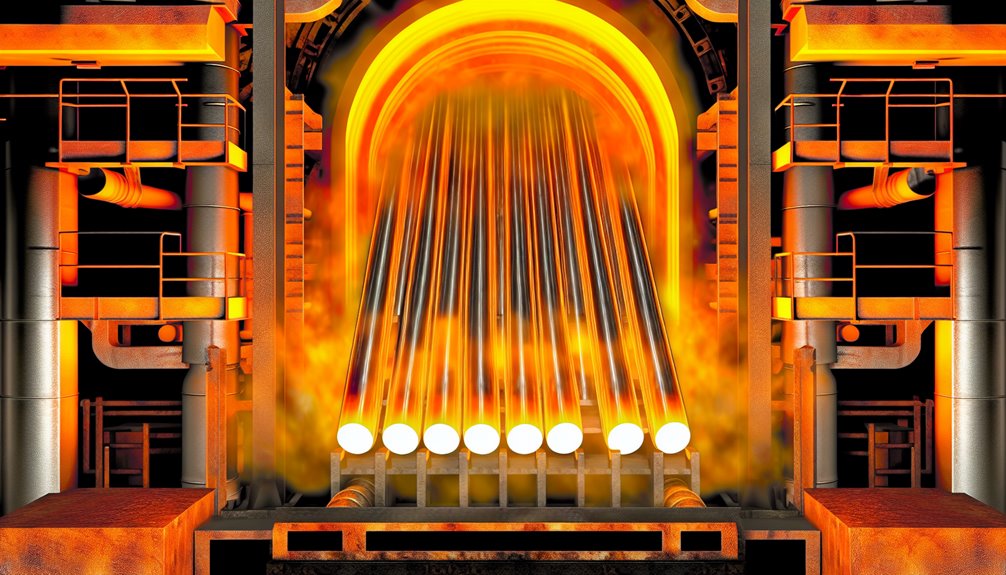
Heat treatment in stainless steel pipes refers to a series of controlled heating and cooling processes used to modify the material’s internal microstructure.
These processes are applied to achieve specific metallurgical properties, such as improved corrosion resistance, enhanced mechanical strength, and better dimensional stability. Depending on the grade and application, different heat treatment methods are selected to meet performance requirements.
Common heat treatment methods for stainless steel pipes include solution annealing, stress relieving, and precipitation hardening. Each method serves a distinct purpose and is applied at different stages of manufacturing or post-processing.
Heat treatment is essential for stainless steel pipes because manufacturing processes such as welding, cold working, and forming inevitably introduce residual stresses and microstructural changes.
If these effects are not properly controlled, they can lead to reduced corrosion resistance, dimensional instability, and even premature failure in service—especially in demanding industrial environments.
For example, during fabrication, chromium carbides may form at grain boundaries, increasing the risk of intergranular corrosion. Solution annealing eliminates these carbides and restores the material’s corrosion resistance.
Similarly, stress relieving reduces internal stresses caused by machining or forming, minimizing distortion and improving long-term structural stability.
In industries such as oil and gas, chemical processing, and infrastructure construction, properly heat-treated stainless steel pipes ensure consistent performance, longer service life, and compliance with strict engineering standards.
| Treatment Type | Purpose | Result |
|---|---|---|
| Solution Annealing | Dissolve carbides and restore structure | Improved corrosion resistance and uniform microstructure |
| Stress Relieving | Reduce residual stresses | Enhanced dimensional stability and reduced distortion |
| Microstructure Control | Stabilise internal grain structure | Improved durability and consistent performance |
Precise control of heat treatment parameters ensures that stainless steel pipes deliver stable performance, extended service life, and reliable behaviour across a wide range of operating conditions.
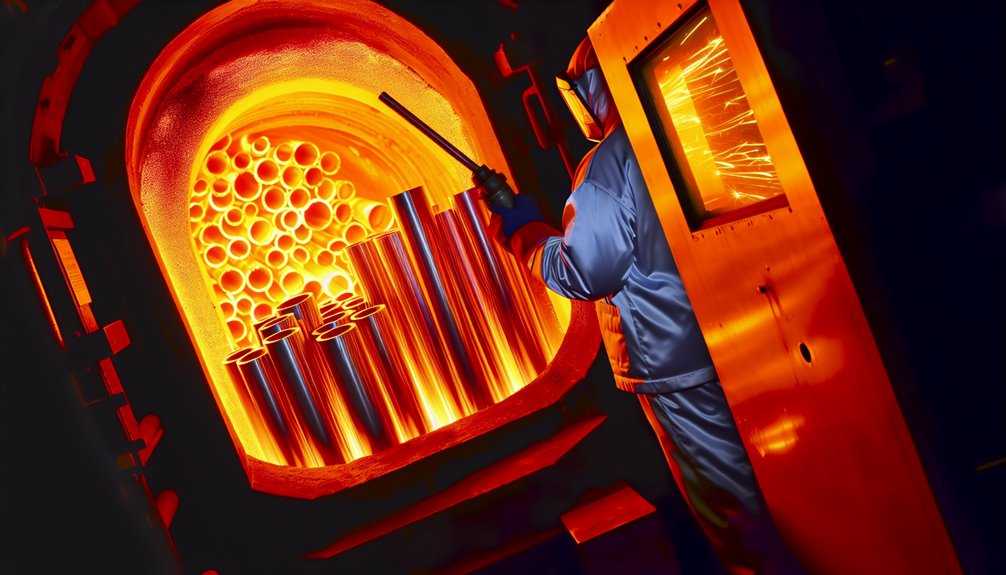
The heat treatment of stainless steel pipes involves several key methods to enhance their performance and durability.
Solution annealing, stress relieving, quenching, tempering, and precipitation hardening are essential processes that improve mechanical properties and resistance to corrosion.
Each method is tailored to specific requirements, ensuring the best results for various applications.
Solution annealing transforms stainless steel pipes by dissolving carbides and sigma phases to enhance corrosion resistance and mechanical properties.
This stainless steel pipe heat treatment involves heating the material to approximately 1035°C (1900°F). At this temperature, carbides that form during heating between 425°C (800°F) and 900°C (1650°F) and sigma phases below 925°C (1700°F) are dissolved.
Rapid quenching follows to lock the microstructure in place, preventing the reformation of these detrimental phases.
This process is critical for maintaining the integrity and performance of stainless steel pipes, ensuring they meet demanding operational requirements.
Compliance with ASTM A312 helps verify that stainless steel tubes used in high-temperature and corrosive service maintain the quality and reliability expected in demanding applications.
Stress relieving in stainless steel pipes reduces residual stresses that accumulate during manufacturing and processing. This method involves carefully heating the material below its critical temperature range, typically between 400-600°C (752-1112°F), to redistribute and relieve internal stresses.
Such treatments are vital to prevent warping and cracking in subsequent operations, thereby enhancing dimensional stability and performance. Unlike quenching and tempering stainless steel, which focuses on altering hardness and strength, stress relieving is specifically aimed at residual stress reduction.
This process is particularly beneficial after welding or machining, ensuring structural integrity and reliability. Selecting the correct temperature and duration is essential to achieving the best results, providing control and predictability in the material's behavior during its application. It is often applied after TIG welding and other fabrication steps to help maintain quality and dimensional accuracy.
Quenching rapidly cools stainless steel pipes after solution treatment to lock in desired microstructures and enhance mechanical properties. This critical step in the types of heat treatment for stainless steel guarantees peak performance by transforming the structure swiftly.
In the heat treatment of austenitic stainless steel, quenching typically follows solution annealing, which dissolves carbides and unwanted phases at high temperatures. The rapid cooling prevents the re-formation of these phases, maintaining the material's integrity and enhancing its strength and corrosion resistance. ASTM A249 specifies a minimum solution treatment temperature of 1900°F (1040°C) before rapid cooling to preserve austenitic properties.
Quenching mediums, such as water or oil, are selected based on the stainless steel grade and the desired properties. This controlled process is essential for achieving precise mechanical characteristics and long-term reliability in various applications.
Although tempering primarily applies to martensitic stainless steel, it plays an indispensable role in refining mechanical properties by reducing brittleness and relieving internal stresses.
This process involves heating the steel to a temperature below its critical point, typically up to 232°C (450°F), to enhance tensile strength. However, temperatures beyond 232°C may decrease this strength.
The material must reach room temperature before tempering to avoid cracking. If tempered above 510°C (950°F), rapid cooling is necessary to prevent brittleness.
By carefully controlling the tempering parameters, engineers can optimize the balance between hardness and ductility, ensuring the steel maintains structural integrity while minimizing the risk of fractures.
Consequently, tempering is vital for achieving desired performance characteristics in stainless steel pipes.
Tempering refines the mechanical properties of stainless steel by reducing brittleness, while precipitation hardening provides another method to enhance performance.
Precipitation hardening involves a series of specific heat treatments designed to improve strength and hardness. This method is especially effective for certain stainless steel grades that benefit from increased resistance to stress corrosion cracking. For components used in harsh service, stress corrosion cracking resistance is especially valuable in chloride-rich marine and chemical processing environments.
This method guarantees the stainless steel pipes achieve ideal mechanical properties for demanding applications.
In examining the heat treatment processes for stainless steel pipes, it is crucial to take into account the specific requirements of austenitic, ferritic, and martensitic types.
Each category demands distinct approaches to optimize their mechanical properties and corrosion resistance.
These tailored treatments guarantee that the pipes meet performance standards in various applications.
These treatments are essential for maintaining the structural integrity and desired qualities of austenitic stainless steel, ensuring it meets stringent specifications and performs reliably in various applications. For austenitic grades such as 304 and 316, the presence of molybdenum content in 316 helps improve corrosion resistance in harsher chloride environments.
Stress relief treatments are performed at lower temperatures, typically between 200-400°C (392-752°F), to relieve internal stresses without inducing sensitization.
These processes are essential for maintaining dimensional stability and preventing warping or cracking during subsequent operations.
Regular inspection and maintenance also help limit corrosion risk, supporting the long-term reliability of ferritic stainless steel pipes.
Adhering to precise temperature controls and protocols guarantees the desired mechanical properties and long-term performance of ferritic stainless steel pipes.
Although often demanding meticulous attention to detail, the heat treatment of martensitic stainless steel is critical for optimizing its mechanical properties.
Employing specific processes enhances strength, hardness, and wear resistance. The heat treatment typically involves three main processes:
Each process requires precise control over temperature and timing to achieve the desired material characteristics, ensuring that the steel meets performance requirements in demanding applications. In corrosion-sensitive industries, stainless steel components are often selected for their corrosion resistance, especially in marine, chemical, and food processing environments.
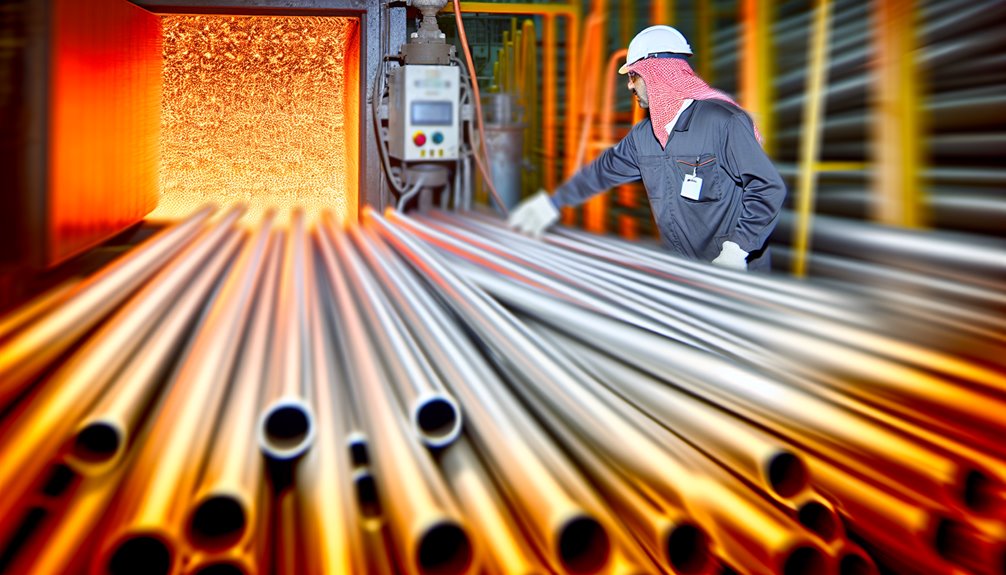
The heat treatment process flow for stainless steel pipes involves a systematic approach to enhance their mechanical properties and performance.
Initially, pipes undergo heating stages where precise temperatures are achieved to guarantee correct phase transformations. This is followed by a holding period at a specific temperature to stabilize the desired microstructure.
Cooling methods, such as rapid quenching or controlled cooling, are then employed to lock in the structural changes. Throughout the process, meticulous control over heating rates, holding times, and cooling speeds is essential.
Adherence to these parameters guarantees that the pipes meet stringent specifications and exhibit peak performance. Process control considerations are critical to prevent defects, maintain dimensional accuracy, and achieve the desired mechanical characteristics.
Heat treatment considerably affects the mechanical strength and hardness of stainless steel pipes by altering their microstructure.
It enhances corrosion resistance while minimizing sensitization, thereby ensuring the pipes maintain their integrity in harsh environments.
Additionally, the stability of the microstructure is improved, providing consistent performance and durability under various operational conditions.
Enhancing the mechanical strength and hardness of stainless steel pipes through heat treatment greatly impacts their performance characteristics. This process involves manipulating the microstructure to achieve desired properties. The methods used guarantee that the pipes can withstand various stresses and operational demands.
Key techniques include:
These methods allow for precise control over the final characteristics of stainless steel pipes, ensuring they meet the required specifications for their intended applications. For 304 stainless steel pipes, maintaining the protective passive oxide layer after heat treatment is essential for preserving corrosion resistance and long-term durability.
Proper implementation is vital for peak performance.
While undergoing heat treatment, stainless steel pipes experience changes that greatly affect their corrosion resistance and susceptibility to sensitization.
Corrosion resistance is enhanced by solution annealing, which dissolves chromium carbides and guarantees uniform distribution of alloying elements. This process is vital for maintaining the passive layer that protects against oxidation.
Sensitization, however, poses a risk during improper heat treatment, particularly when pipes are exposed to temperatures between 425 to 900°C. In this range, the formation of chromium carbides at grain boundaries leads to intergranular corrosion.
To mitigate this, low carbon or stabilized grades, such as 321 and 347, are preferred. Careful control of temperature and cooling rates is essential to preserve the integrity and longevity of the pipes.
In welded piping applications, low-carbon grades such as 316L help reduce carbide precipitation and improve resistance to intergranular corrosion after thermal exposure.
The stability of microstructure in stainless steel pipes is vital for maintaining their mechanical properties and performance. Heat treatment plays a significant role in achieving this stability by influencing the distribution and formation of phases within the metal. Properly controlled processes help prevent detrimental effects such as carbide precipitation, which can lead to intergranular corrosion and reduced durability.
Adhering to precise temperature and timing protocols during heat treatment is essential. This meticulous control guarantees the desired microstructure, optimizing the pipe's performance and extending its operational lifespan.
Integrity plays an essential role in the heat treatment of welded stainless steel pipes, particularly in addressing the challenges of the heat-affected zone (HAZ). The HAZ, created during welding, is susceptible to altered microstructures, leading to potential weaknesses.
Post-weld heat treatment is vital to restoring mechanical properties and guaranteeing durability. Techniques such as solution annealing and stress relief treatments are employed to mitigate adverse effects.
Pickling and passivation further enhance surface integrity by removing contaminants and promoting corrosion resistance. These processes guarantee the welded joints maintain peak performance.
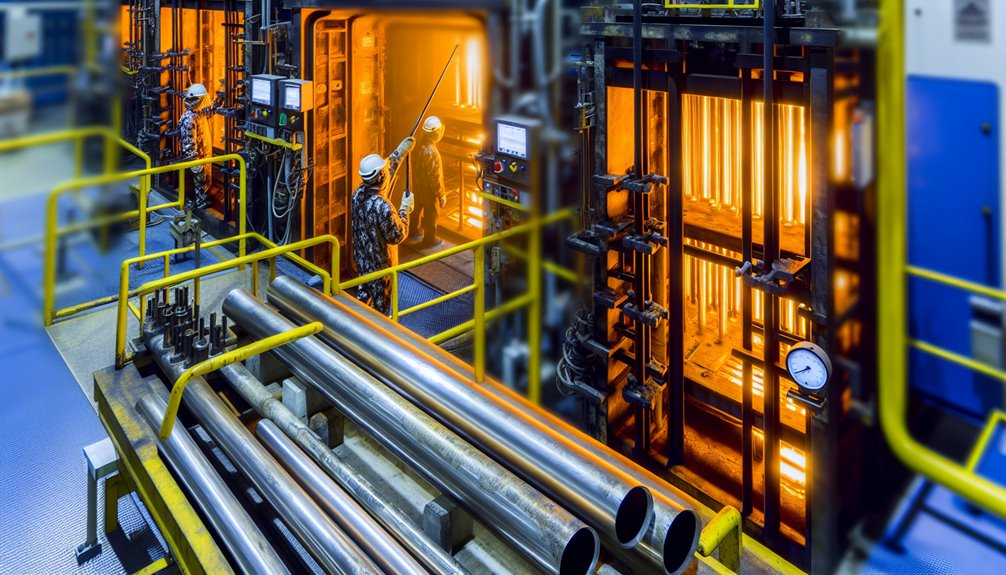
Maneuvering the complexities of stainless steel heat treatment requires precision and awareness of common pitfalls. One critical error is overheating, which can lead to undesirable microstructural changes and compromise material integrity.
Precision in stainless steel heat treatment is crucial to prevent microstructural changes and maintain material integrity.
Improper cooling processes may cause uneven microstructures, resulting in weaknesses and potential failures. Additionally, neglecting sensitization risks can lead to intergranular corrosion, particularly in high-carbon grades.
Applying carbon steel methods to stainless steel is another frequent mistake that fails to account for the specific properties and behaviors of stainless steel.
Achieving desired outcomes in stainless steel treatment requires adherence to precise methodologies and an understanding of material-specific requirements.
Heat-treated stainless steel pipes serve essential roles across various industries due to their enhanced mechanical properties and corrosion resistance. In industrial piping, these pipes withstand extreme pressures and corrosive environments, ensuring reliability and safety.
Heat exchangers benefit from the improved thermal conductivity and resistance to thermal fatigue, optimizing performance in high-temperature systems. Sanitary tubing applications in the food and pharmaceutical industries demand the superior hygiene standards and durability provided by heat-treated stainless steel, ensuring compliance with stringent regulations.
These pipes also excel in high-temperature systems, maintaining structural integrity and performance under intense heat. The versatility and robust properties of heat-treated stainless steel make it indispensable in applications requiring precise control and longevity.
Heat treatment can cause dimensional changes in stainless steel pipes due to thermal expansion and contraction. Proper control during processes like annealing and quenching minimizes distortion, ensuring dimensional stability and precision in the finished product.
Heat treating stainless steel impacts the environment through energy consumption and emissions. It requires significant electricity and fossil fuels, releasing CO2 and other pollutants. Mitigating these effects involves optimizing processes and using cleaner energy sources.
Heat treatment can indeed alter the magnetic properties of stainless steel pipes. By adjusting their molecular jukebox through methods like annealing or quenching, engineers can control ferromagnetic behavior, ensuring materials align with specific application requirements.
Heat treatment markedly enhances stainless steel pipe longevity by optimizing microstructure, improving corrosion resistance, and reducing internal stresses. This controlled process guarantees better performance and durability, meeting the demands of high-stress environments and operational efficiency.
Yes, there are specific certifications for heat-treated stainless steel pipes. Compliance with standards like ASTM A262 and ISO 9001 guarantees quality and performance. These certifications verify adherence to precise processing and testing protocols, enhancing reliability.
In summary, heat treatment of stainless steel pipes is essential for enhancing durability and corrosion resistance, with methods like solution annealing and stress relief tailored to specific steel types. Remarkably, properly heat-treated stainless steel can increase lifespan by up to 50%, ensuring reliability in demanding applications. By adhering to standards such as ASTM, industries can prevent costly errors and optimize performance, making heat treatment an indispensable process for maintaining the integrity of stainless steel piping systems.