
In modern food and beverage manufacturing, hygiene is a top priority. As food safety regulations become stricter and production efficiency requirements increase, CIP system design for food processing tanks has become an essential part of plant engineering. CIP (Clean-In-Place) systems allow food processing tanks and piping systems to be cleaned automatically without dismantling equipment, ensuring consistent hygiene while reducing downtime.
A well-designed CIP system not only protects product quality but also extends equipment life and lowers operational costs. This article explains the fundamentals of CIP system design for food processing tanks, including key components, design principles, and the role of sanitary tubes and fittings.
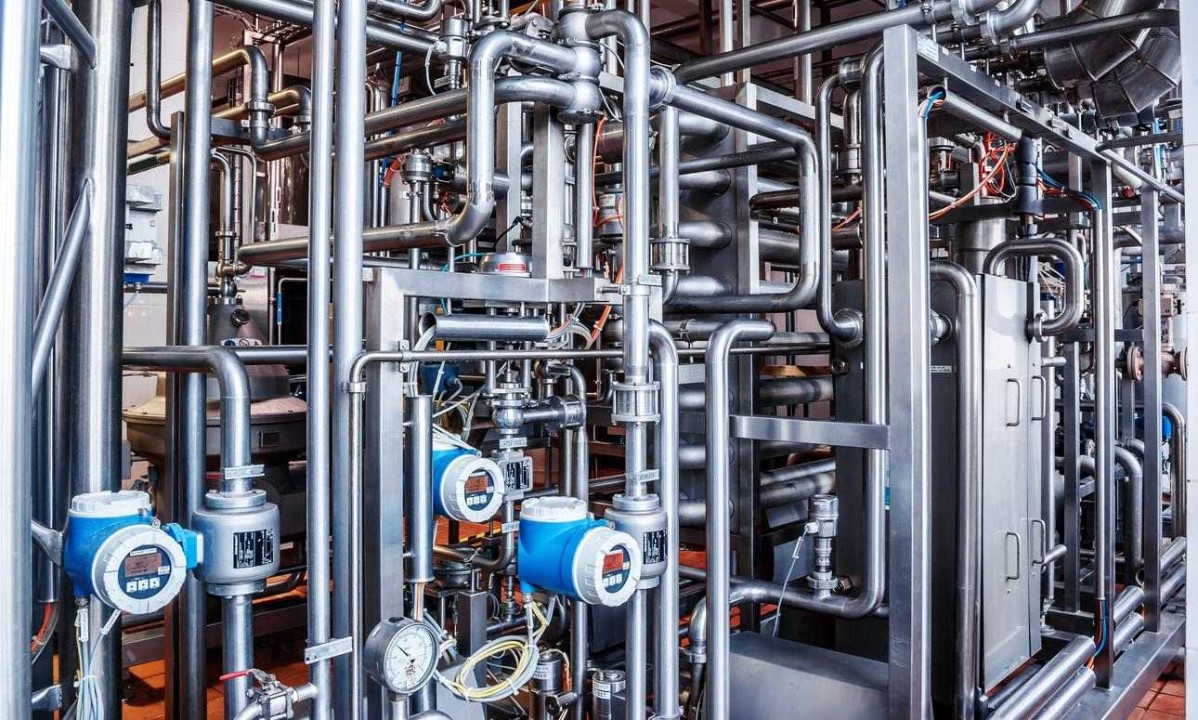
A CIP system is an automated cleaning solution used to clean the internal surfaces of food processing tanks, pipelines, valves, and fittings. Instead of manual cleaning, CIP systems circulate cleaning solutions through the equipment under controlled conditions of time, temperature, flow rate, and chemical concentration.
In food processing tanks, CIP systems are widely used in dairy plants, beverage factories, breweries, sauce production lines, and other liquid food applications. Proper CIP system design for food processing tanks ensures reliable cleaning performance while meeting hygiene and regulatory standards.
Food processing tanks are in direct contact with products such as milk, juice, beer, edible oil, and sauces. Residual product buildup inside tanks and pipelines can lead to bacterial growth, contamination, and product recalls if not properly cleaned.
An effective CIP system design for food processing tanks helps to:
Without a properly designed CIP system, even high-quality food-grade tanks and piping systems cannot maintain long-term hygienic performance.
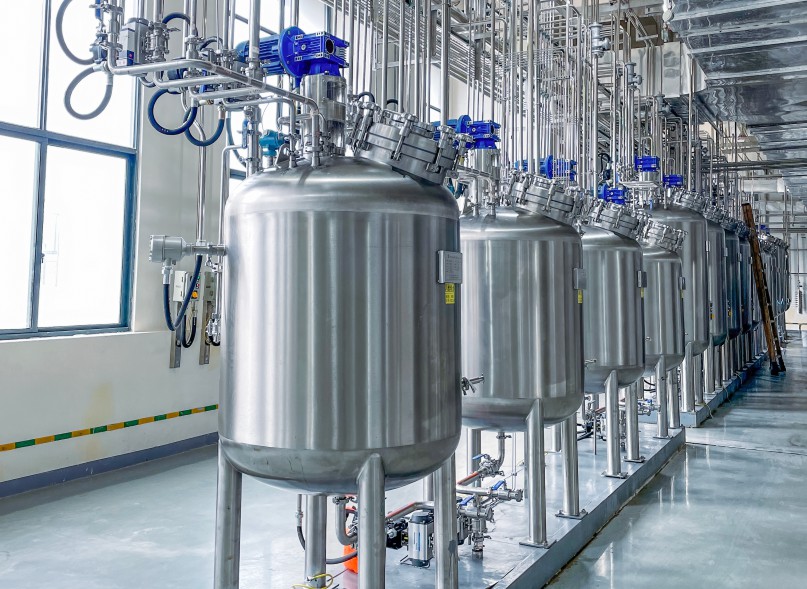
A complete CIP system for food processing tanks typically includes:
CIP tanks store cleaning solutions such as water, alkaline detergents, and acidic solutions. These tanks are usually made of stainless steel and connected to the food processing tanks through sanitary piping.
CIP pumps provide the necessary flow rate and pressure to circulate cleaning solutions through tanks and pipelines. Proper pump selection is critical to ensure effective cleaning coverage.
Sanitary tubes and fittings form the circulation pathways of the CIP system. Smooth inner surfaces, high-quality welds, and hygienic connections ensure that cleaning solutions reach all internal surfaces without dead corners.
Automatic valves and control systems regulate cleaning cycles, chemical dosing, temperature, and flow direction. They allow precise control of each cleaning step.
Adequate flow velocity is essential to create turbulence that removes residues from tank walls and pipelines. CIP system design must ensure sufficient flow rates through all sections of the food processing tank and piping system.
Inside food processing tanks, spray balls or rotary spray devices distribute cleaning solutions evenly across internal surfaces. Proper placement and sizing are key aspects of CIP system design for food processing tanks.
Dead legs are sections of piping where cleaning solutions do not circulate effectively. Sanitary tube routing, fitting selection, and pipe length ratios must be carefully designed to eliminate dead zones.
Sanitary tubes, fittings, and tank interiors should have smooth, polished surfaces to enhance cleanability and reduce residue adhesion.
Sanitary tubes and fittings are essential to effective CIP system design for food processing tanks. Their functions include:
Tri-clamp fittings are commonly used in CIP systems due to their ease of assembly and cleaning, while welded connections are preferred for permanent pipelines.
A typical CIP cycle for food processing tanks includes:
The exact sequence depends on product type and hygiene requirements, and must be considered during CIP system design for food processing tanks.
CIP systems are widely applied in:
In each application, CIP system design must be adapted to product characteristics and cleaning challenges.
Effective CIP system design for food processing tanks is essential for maintaining hygiene, product safety, and operational efficiency in modern food manufacturing. By combining properly designed tanks, sanitary tubes, fittings, pumps, and control systems, food processors can achieve reliable and repeatable cleaning performance.
Investing in a well-engineered CIP system helps food manufacturers reduce contamination risks, comply with food safety standards, and ensure long-term performance of food-grade tank and piping systems.
Learn More : Stainless steel piping solution for food processing tanks




[…] procedures, and documentation. In food and beverage plants, electropolished tubing can support CIP systems by promoting smooth, hygienic circulation pathways for cleaning […]